Or let us design one for you. Science-backed aquarium education for hobbyists and professional luxury aquarium design for homeowners, interior designers, architects, and commercial spaces.
Free • Instant Access • Beginner Friendly
Trusted by aquarium hobbyists learning to build stable, low-maintenance ecosystems.
40+ Articles • 9 Guides • Built for Beginners
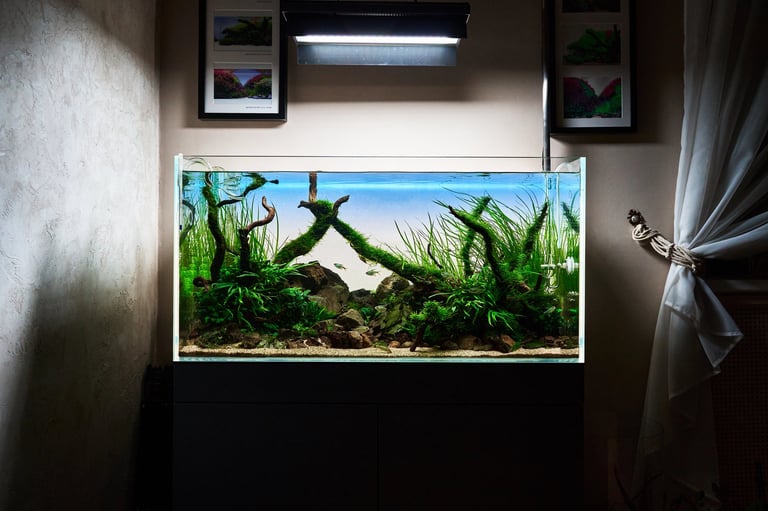
Create a breathtaking living centerpiece professionally designed for your home or commercial space — built to complement your architecture and lifestyle.
We work with:
From beginner aquarium enthusiasts to architects designing luxury spaces, we help everyone build thriving self-sustaining freshwater ecosystems
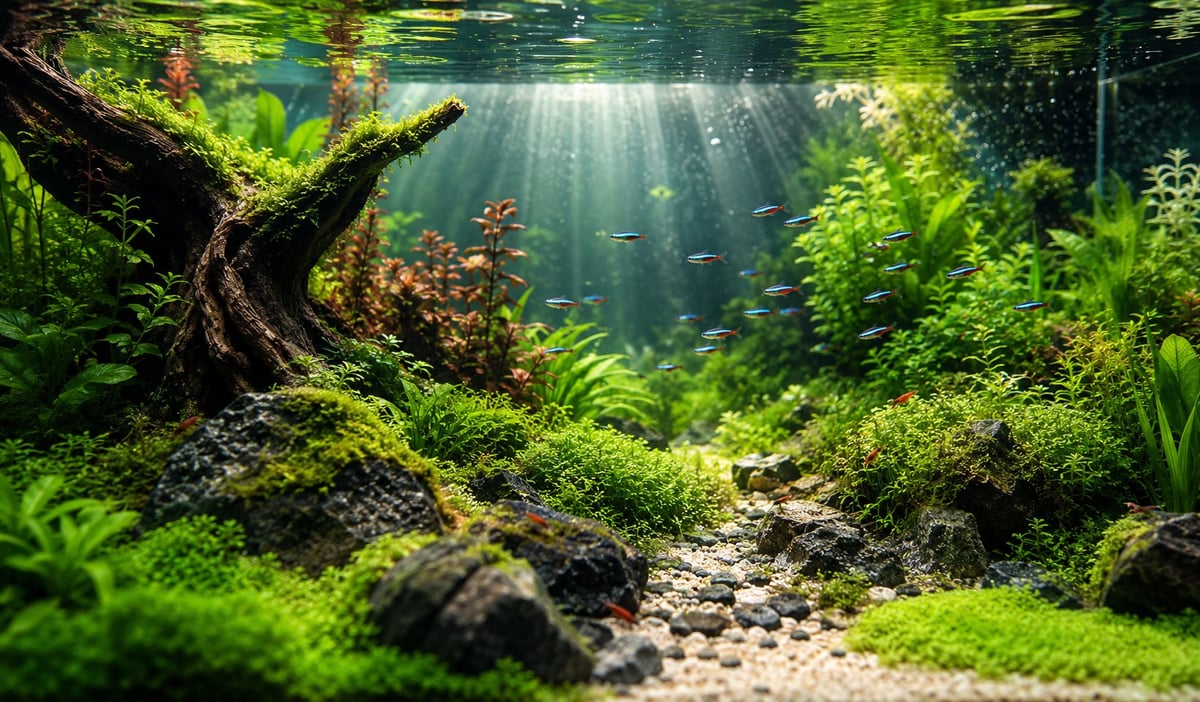
A self-sustaining aquarium is a balanced freshwater ecosystem where plants, beneficial bacteria, substrate nutrients, and livestock work together to maintain stable water conditions with minimal manual maintenance.
Strong biological filtration through established nitrifying bacteria.
Substrate layers that provide continuous nutrition for plant roots.
Optimal plant density that maintains oxygen and absorbs nutrients.
Livestock matched to filtration capacity for stable parameters.
After years of testing, tracking parameters, and perfecting tank builds, we've distilled the science into four essential pillars that create truly balanced ecosystems.
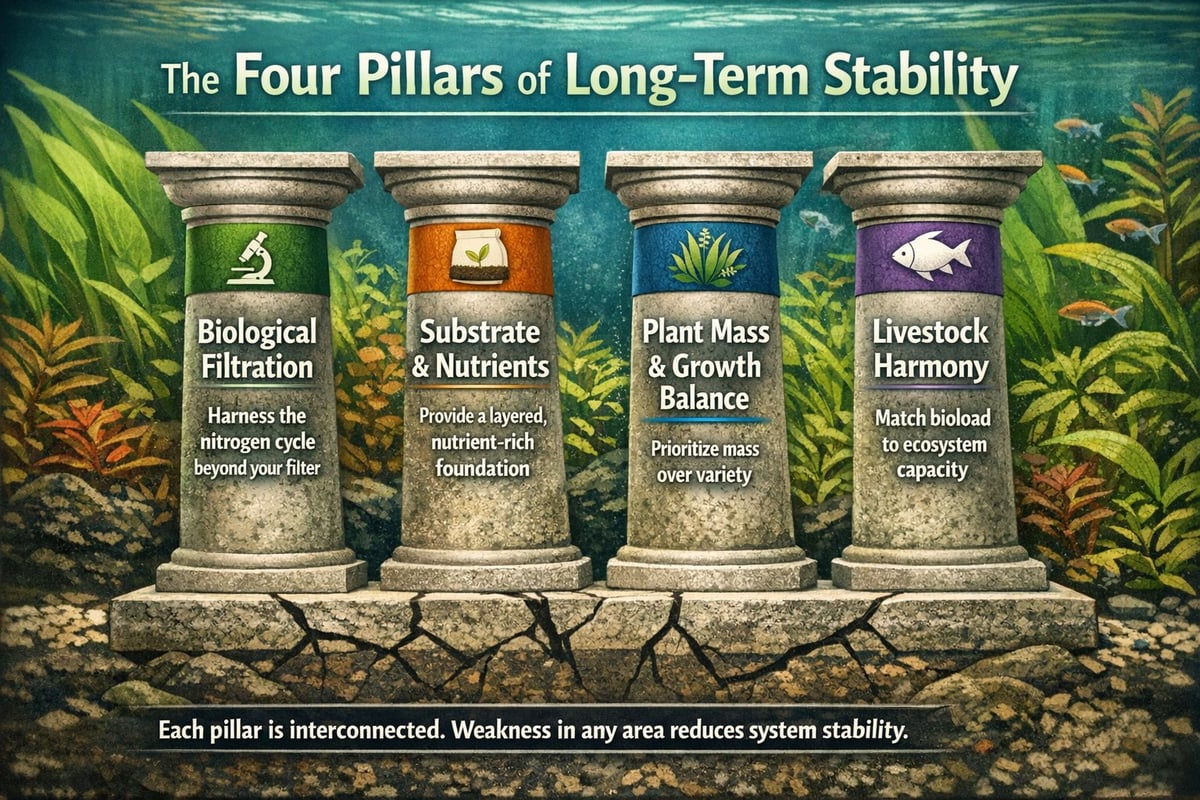
The invisible engine of your tank. Learn how beneficial bacteria create the foundation for crystal-clear water and stable parameters.
Get the full breakdown in our guide →Your substrate is a living nutrient bank. Discover the layering technique that feeds plants for months without intervention.
Get the full breakdown in our guide →Plants are your real filtration system. Find the sweet spot for coverage that keeps your tank balanced without constant trimming.
Get the full breakdown in our guide →The "inch per gallon" rule doesn't work. Learn how to match your fish to your ecosystem's capacity for true harmony.
Get the full breakdown in our guide →When all four pillars work together—biological filtration processing waste, substrate providing nutrients, plants absorbing those nutrients, and livestock matched to the system's capacity—you create a genuinely self-sustaining aquarium. One that requires only occasional top-ups for evaporation and minimal intervention to thrive.
Unlike generic pet blogs, every method we teach comes from hands-on testing in real tanks. We've cycled new setups, tracked parameters weekly for years, killed plants, restarted substrates, and learned from every failure.
Our approach combines the science of aquatic biology with practical, real-world experience. We reference published research, but we also know what works in a beginner's living room versus a controlled lab environment.
What sets us apart: We document our tank builds with real data—water parameters over time, plant growth rates, livestock survival rates, and substrate performance after 6, 12, and 24+ months.
Every substrate, plant, and method tested in our own tanks before recommending
Documented tank builds from start to maturity with photo evidence
Weekly water parameter logs showing stability over months and years
Years of iterative improvement based on what actually works
Research-referenced approaches combined with practical application
See how a self-sustaining ecosystem approach compares to traditional aquarium maintenance
While self-sustaining tanks require more initial investment and patience during setup, they offer significantly lower long-term costs, reduced maintenance time, and a more natural ecosystem for your fish and plants to thrive in.
Whether you're a hands-on hobbyist or a homeowner looking for a stunning living centerpiece, we offer two clear paths to a beautiful freshwater aquarium.
Master the art of self-sustaining planted aquariums with science-backed education designed for hobbyists and beginners.
Professional aquarium design for those who want a breathtaking living art centerpiece without the hands-on work.
Get your free self-sustaining tank stability checklist to start building the aquarium you've always wanted — or explore our luxury design services for a custom centerpiece.
Whether you're building your first planted aquarium or designing a luxury centerpiece for a custom home, Aquascape Oasis provides the education and professional expertise to create thriving, beautiful freshwater ecosystems.
Get answers to the most common questions about building and maintaining a self-sustaining planted aquarium.
Yes, absolutely. A truly self-sustaining aquarium is one where the nitrogen cycle, plant nutrient uptake, and bioload are perfectly balanced. In such a system:
The key is achieving balance—it takes 3-6 months of patience, but once achieved, maintenance drops dramatically.
Typically 4-8 weeks for initial cycling, but 3-6 months for true stability. Here's the timeline:
Rushing this process is the #1 cause of tank failures. Patience during the initial period pays off with years of easy maintenance.
No, CO2 injection is optional for low-maintenance setups. Here's what you need to know:
A self-sustaining low-tech tank is entirely achievable and far easier for beginners to maintain long-term.
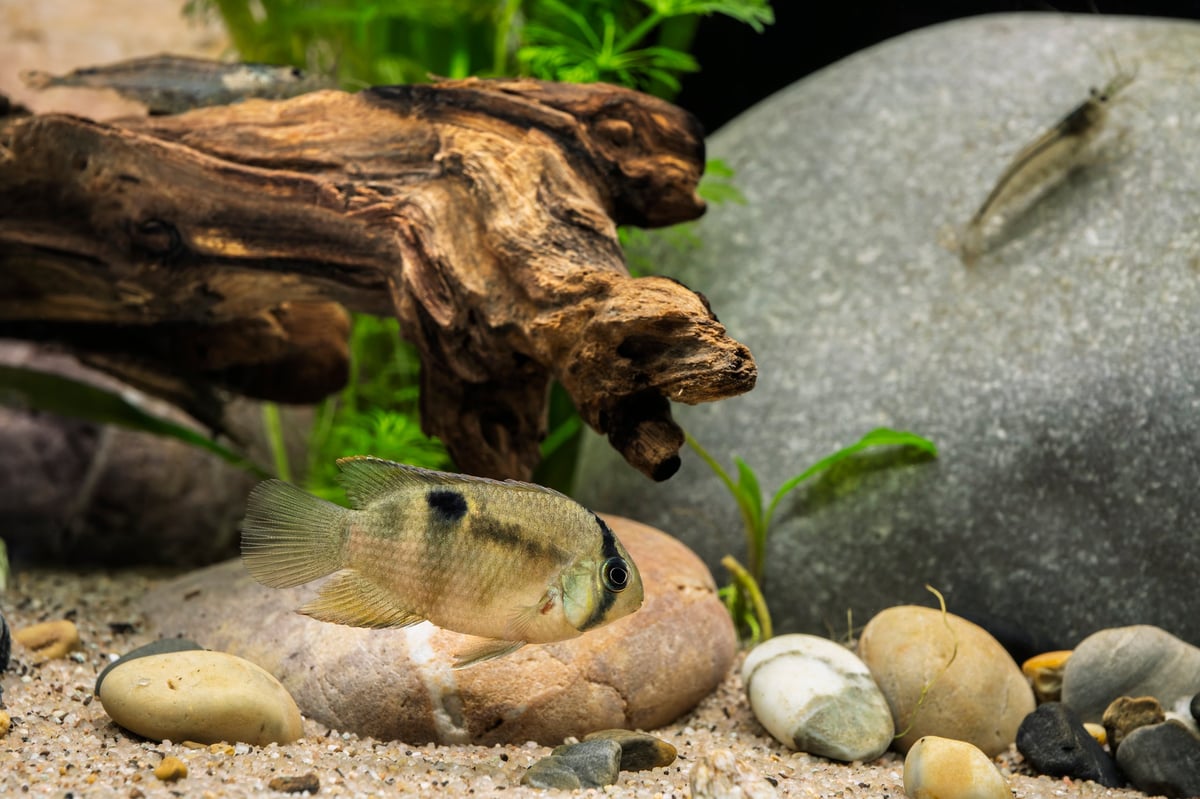
Small, peaceful species with low bioload are ideal. Our top recommendations:
Avoid: Large cichlids, aggressive species, goldfish (high waste), and overstocking. Remember—the less livestock, the easier the balance.
Yes, cherry shrimp are excellent for self-sustaining tanks. Here's why:
We recommend starting with 10-20 cherry shrimp in a planted tank. They'll establish a breeding colony within a few months if water parameters are stable.
It depends on your goals. Both have pros and cons:
Our take: For beginners, aquasoil is more forgiving. For long-term low-maintenance, dirted tanks (properly capped) can last much longer.
Substrate layering creates a nutrient gradient that feeds plants while maintaining water clarity. Here's how to layer:
The key principle: nutrients release slowly from the bottom layers into the root zone, while the top layer prevents them from leaching into the water column. This creates a self-feeding system that lasts 2+ years.
For self-sustaining planted tanks, focus on these key parameters:
Pro tip: In a self-sustaining tank, consistency matters more than perfection. A stable pH of 7.0 is better than a fluctuating pH of 6.5.
Ready to start building?
Get Your Free Checklist