
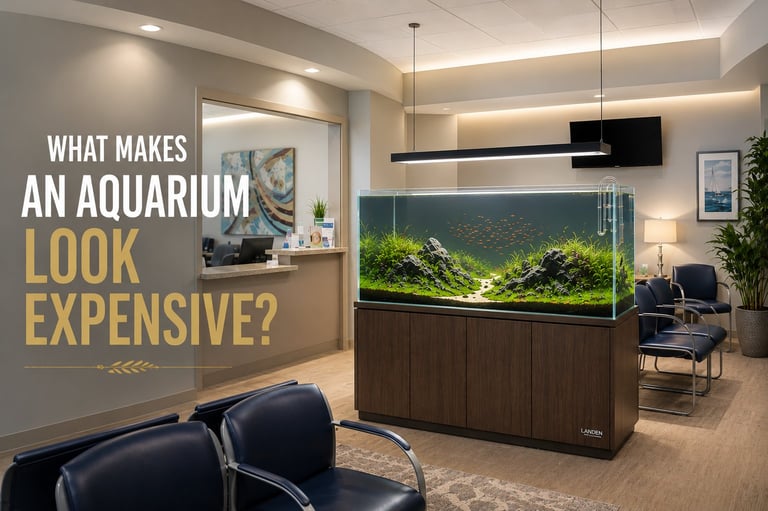
What Makes an Aquarium Look Expensive?
Discover the 7 design secrets behind luxury aquariums — from plant density to negative space.
Walk into many of today's most beautiful luxury homes and commercial spaces and you'll notice they all share something — they feel alive. Discover why biophilic design is transforming modern interiors and how custom aquariums have become the ultimate expression of this timeless design philosophy.
Aquascape Oasis Team
Luxury Aquarium Design Specialists
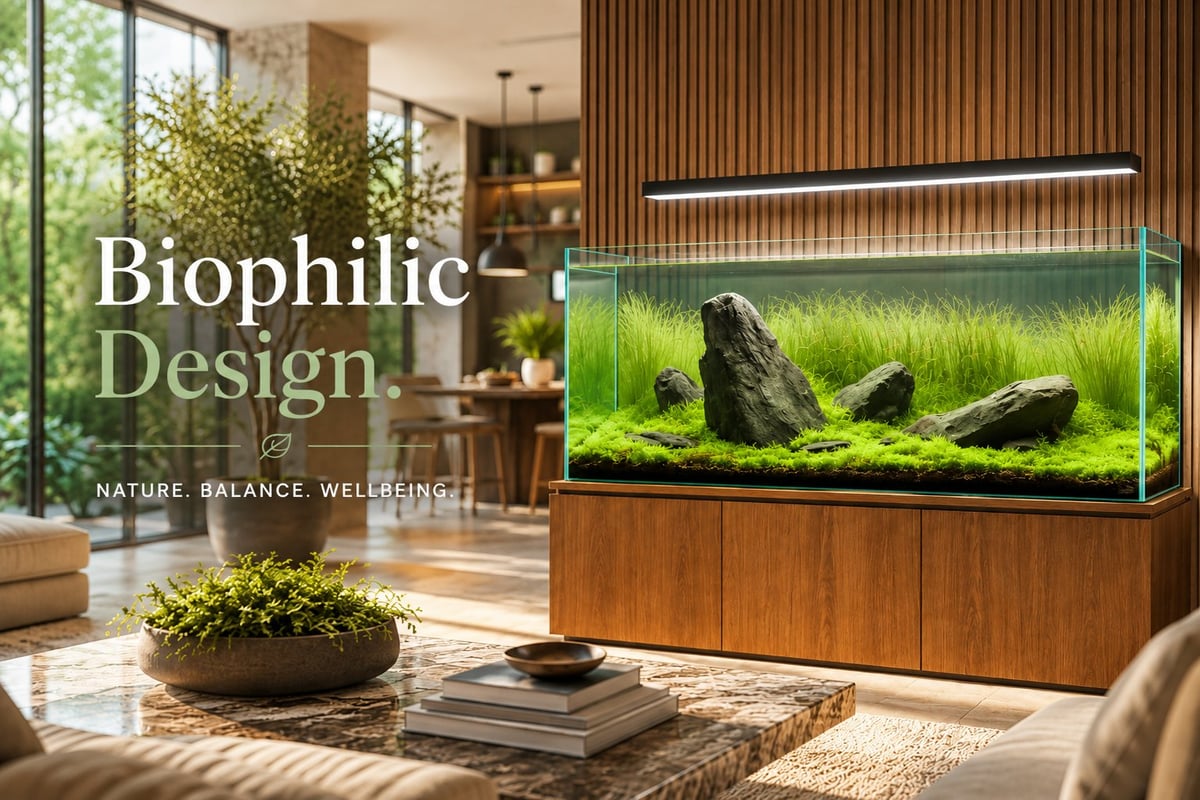
A custom rimless planted aquarium integrated into a modern luxury living room demonstrates how biophilic design blends nature, architecture, and living art to create a calming, sophisticated space.
Want to bring biophilic design into your own space? Explore our luxury aquarium design service — custom freshwater aquariums that blend seamlessly into modern interiors.
Explore Luxury DesignWalk into many of today's most beautiful luxury homes and commercial spaces and you'll notice something they all seem to share.
They feel alive.
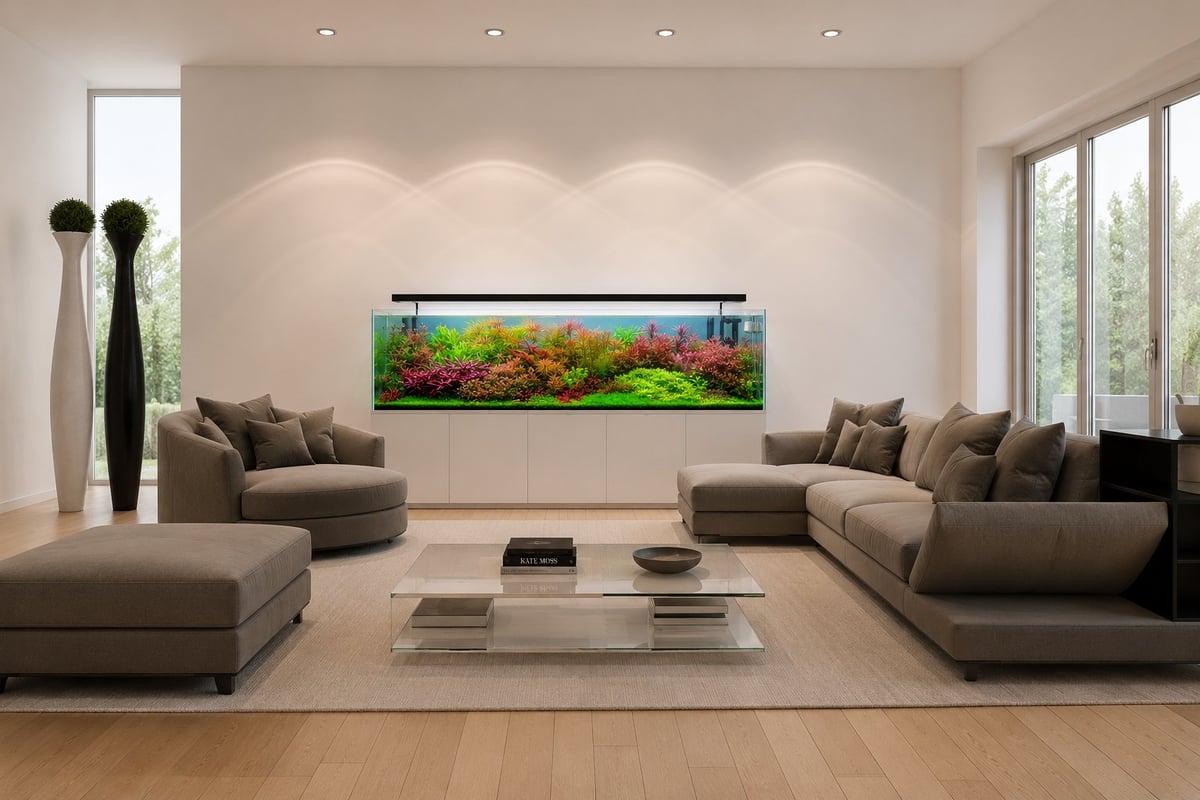
Sunlight pours through oversized windows. Natural materials like wood and stone dominate the space. Large indoor plants soften modern architecture. The colors are calming instead of overwhelming.
And increasingly, you'll find one feature quietly stealing the show: A beautifully designed aquarium.
This isn't a coincidence.
It's part of a growing design movement known as biophilic design — a philosophy centered on bringing people closer to nature through architecture and interior design. While the concept has been around for years, it's becoming one of the defining trends in luxury homes and commercial spaces because it combines timeless beauty with everyday wellbeing.
Planning a nature-inspired space? Explore our luxury aquarium design service to see how a custom aquarium could transform your space.
Biophilic design is the practice of incorporating natural elements into built environments to create spaces that feel healthier, calmer, and more connected to the outdoors.
Rather than decorating with nature, biophilic design makes nature an integral part of the experience.
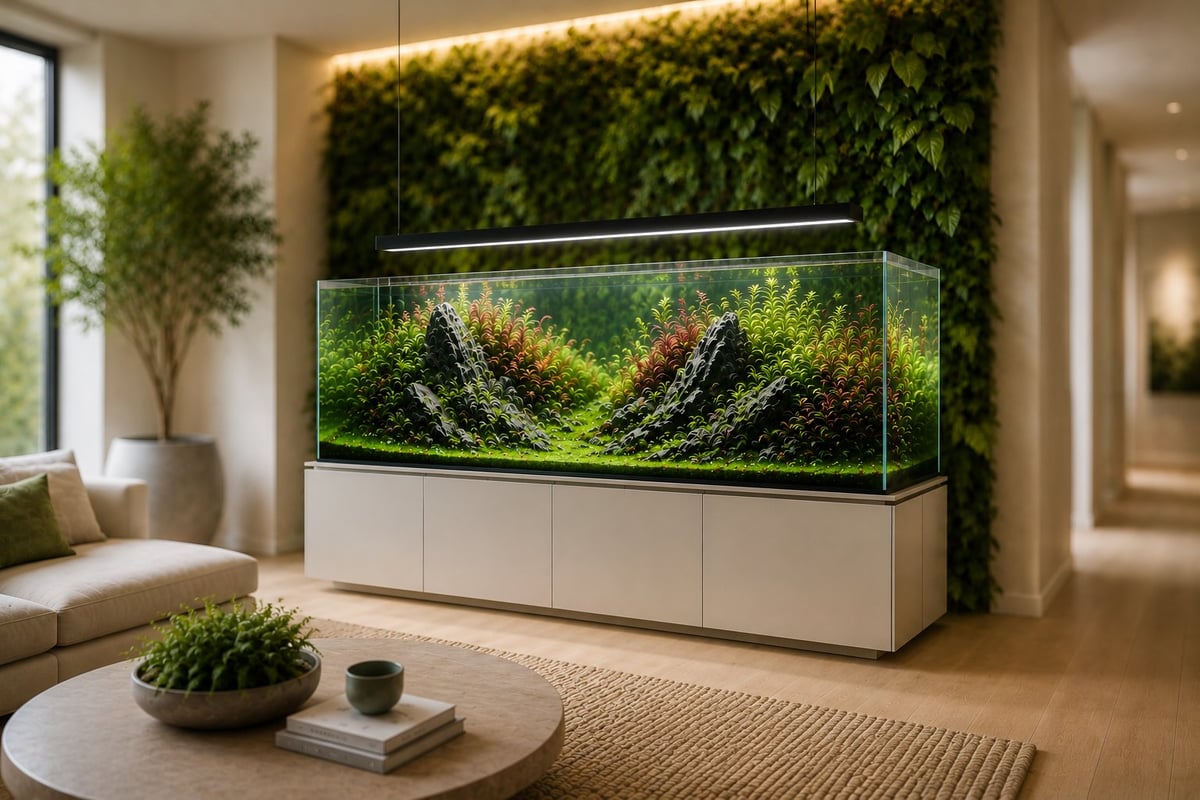
Common elements include:
The goal isn't to mimic nature. It's to create spaces where people naturally feel more relaxed and inspired.
Key Takeaway
Biophilic design weaves nature into the architecture itself — creating spaces that feel healthier, calmer, and timeless rather than trendy.
Luxury today isn't just about expensive finishes. It's about how a space makes you feel.
Many designers and property owners are moving away from flashy interiors in favor of spaces that feel peaceful, welcoming, and timeless. Biophilic design aligns perfectly with that shift.
Spaces designed around natural elements often feel:
Instead of chasing trends, they're designed around principles that never go out of style.
Key Takeaway
Luxury has evolved from ostentatious displays to intentional design that prioritizes how people feel in a space — calm, connected, and at ease.
Curious how biophilic design could transform your space?
Explore Luxury DesignThink about the places where you naturally feel relaxed.
A quiet forest. A mountain trail. A peaceful lake. A lush garden.
These environments have something in common — they're filled with natural patterns, textures, movement, and light.
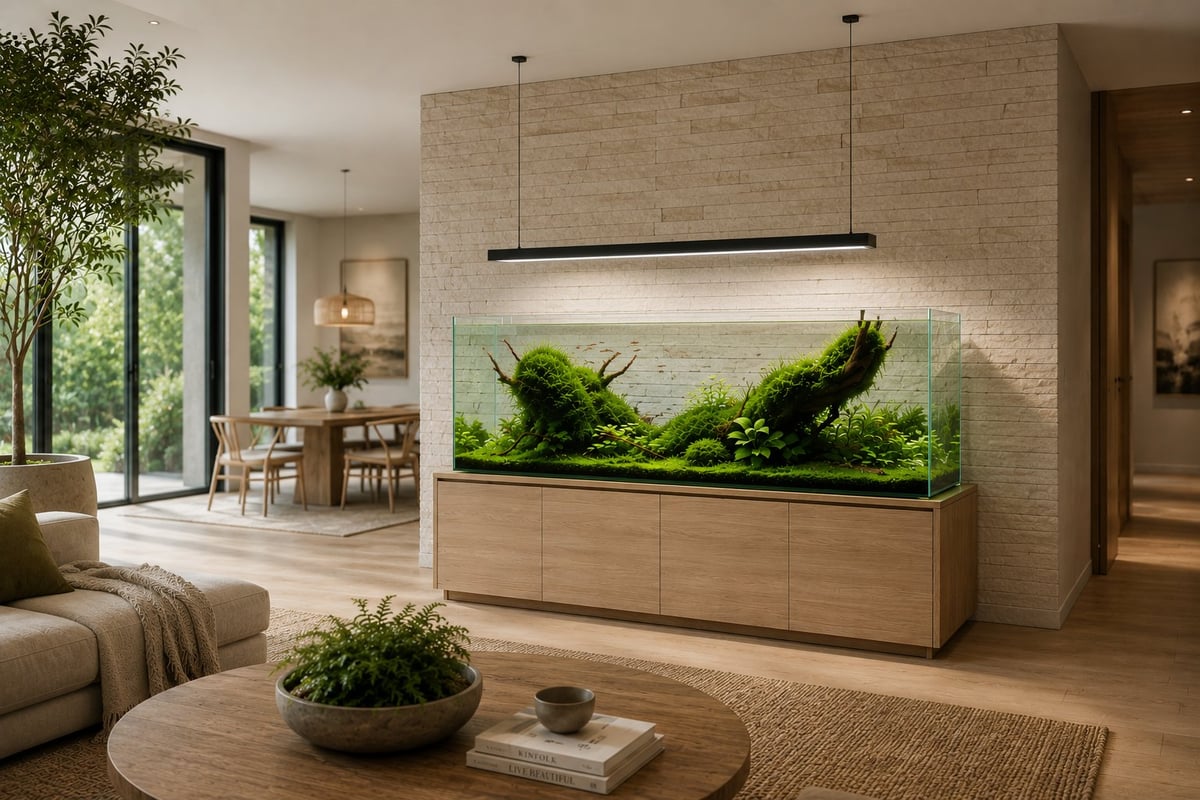
Biophilic design borrows these qualities and brings them indoors. Even small details — like natural stone, flowing water, or living plants — can change the atmosphere of an entire room.
Key Takeaway
The most relaxing spaces borrow from nature's playbook: organic patterns, gentle movement, natural light, and living elements — not just static decoration.
Static décor eventually fades into the background. Living elements don't.
Plants continue to grow. Sunlight changes throughout the day. Water reflects light differently every hour. Fish move gracefully through the aquascape.
These subtle changes keep a room feeling dynamic and alive. That's one reason professionally designed aquariums have become such powerful focal points in luxury homes and commercial spaces.
Key Takeaway
Living elements — plants, water, fish, natural light — create ever-changing experiences that static décor can never replicate.
Want a living centerpiece for your space? Explore our luxury aquarium design service — we create custom aquariums that become the soul of any room.
Few design features combine as many natural elements as a planted freshwater aquarium.
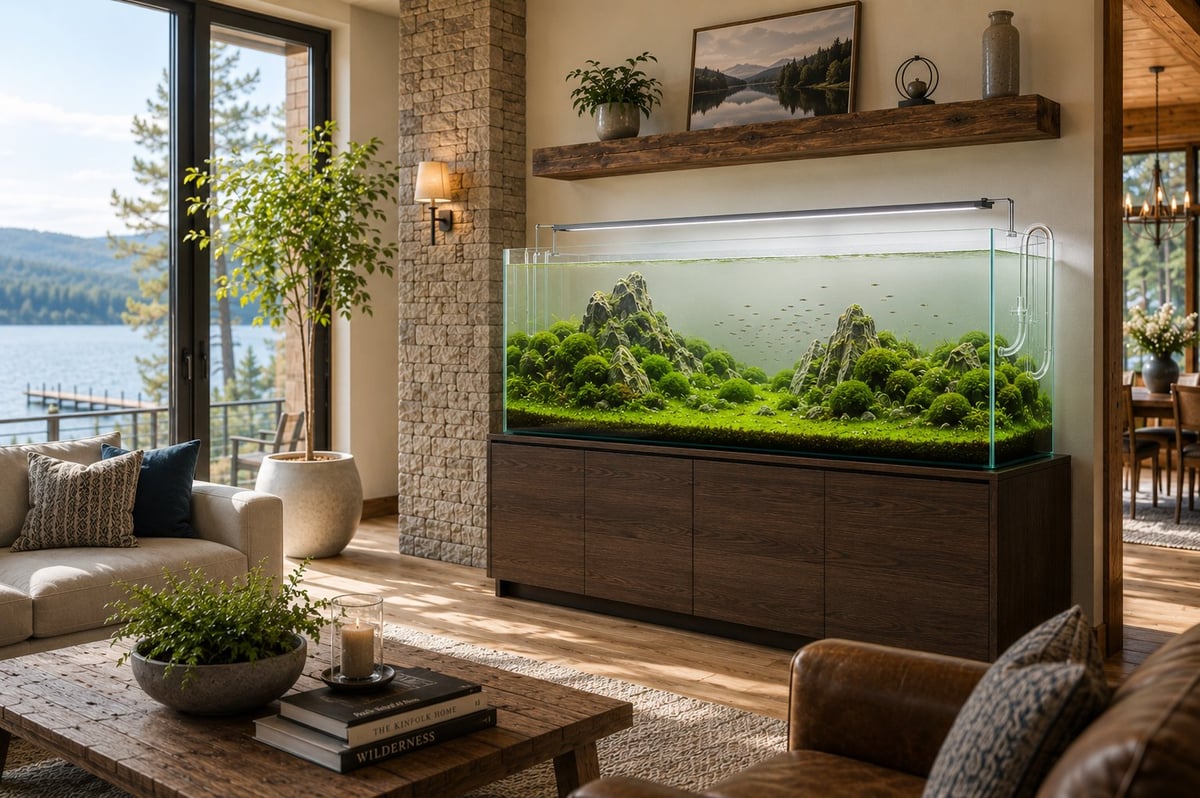
A thoughtfully designed aquarium includes:
Unlike artwork or furniture, an aquarium is always changing. The plants mature. The fish interact. The landscape evolves. It becomes living art.
Key Takeaway
A planted aquarium is one of the most complete expressions of biophilic design — combining water, plants, stone, movement, and light into a single, evolving focal point.
Many people still picture colorful gravel, plastic castles, and bubbling ornaments when they hear the word "aquarium." Modern aquascaping is something entirely different.
Today's luxury freshwater aquariums are inspired by natural landscapes. Clean lines. Minimalist layouts. Thoughtfully placed stone. Lush greenery. Elegant schools of fish.
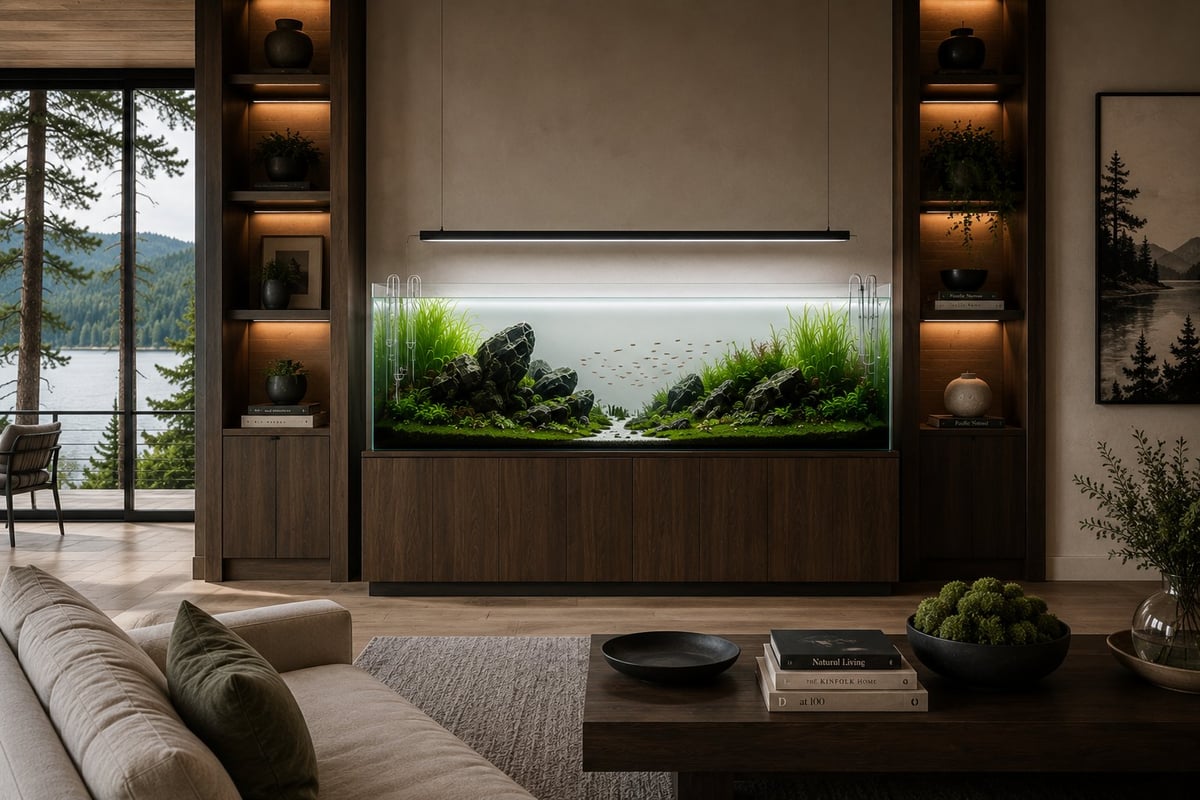
Rather than demanding attention, they create a sense of calm that complements the surrounding architecture.
Key Takeaway
Modern luxury aquariums are inspired by nature itself — minimalist, balanced, and designed to complement architecture rather than compete with it.
One of the defining characteristics of biophilic design is restraint. Instead of filling every corner, designers intentionally leave space. The same principle applies to aquariums.
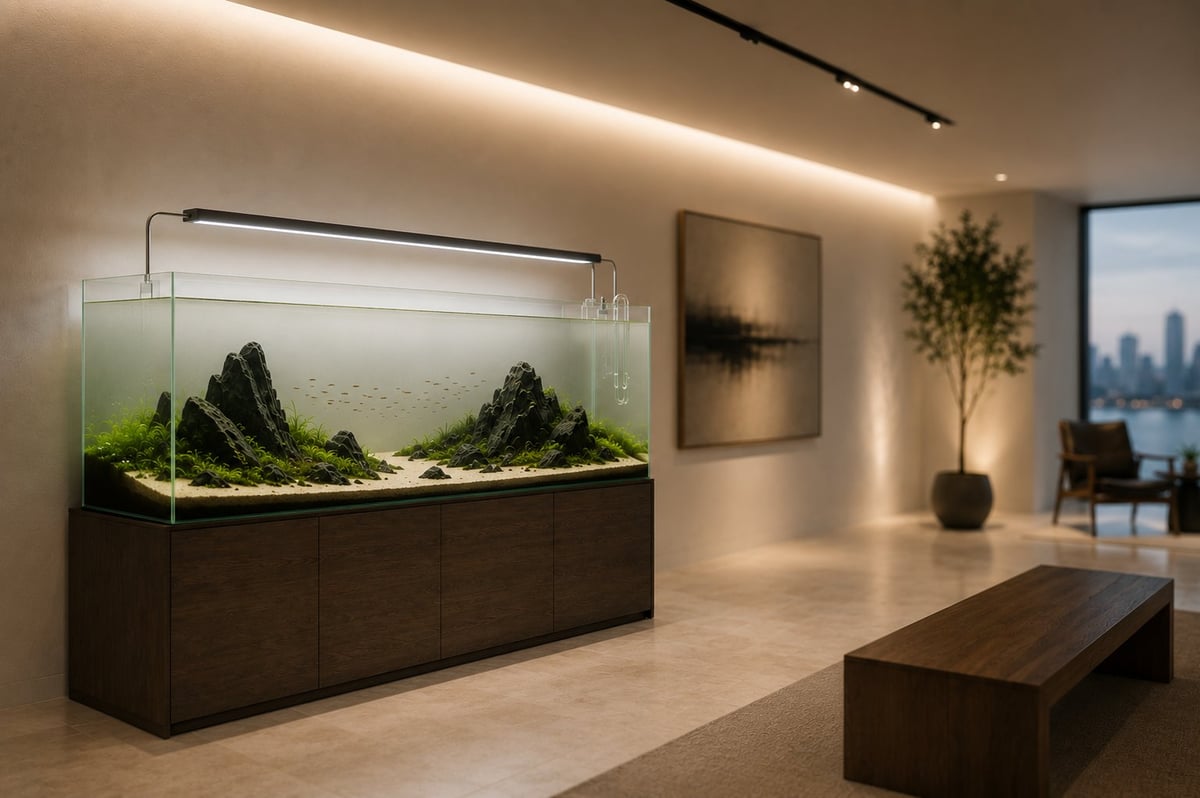
Luxury aquascapes often feature:
The result feels balanced rather than busy.
Key Takeaway
Restraint creates elegance. The most luxurious aquascapes use negative space, limited materials, and intentional composition — just like the best biophilic interiors.
Ready to design your own living art? Explore our luxury aquarium design service — we create custom aquariums that feel truly luxurious and become the soul of any room.
Natural light plays a major role in biophilic interiors. Within an aquarium, lighting has a similar purpose.
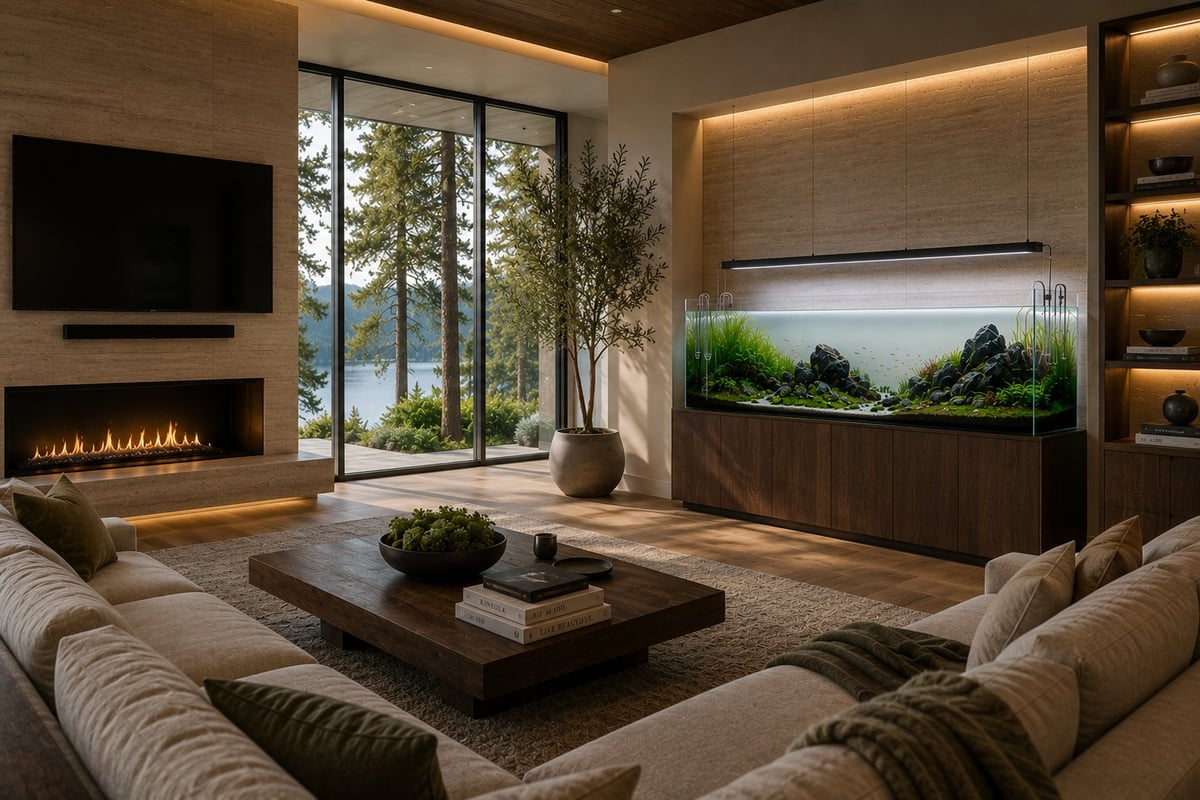
High-quality lighting highlights textures, creates depth, and allows plants to thrive.
The goal isn't to create a spotlight. It's to produce soft, natural illumination that feels like an extension of the room. When done well, the aquarium appears to belong there rather than stand apart from the space.
Key Takeaway
Lighting should integrate the aquarium into the room — creating soft, natural illumination that feels like an extension of the building's architecture.
Luxury spaces often include statement pieces. Fireplaces. Grand staircases. Designer lighting. Custom wine walls.
Increasingly, beautifully designed aquariums are joining that list.
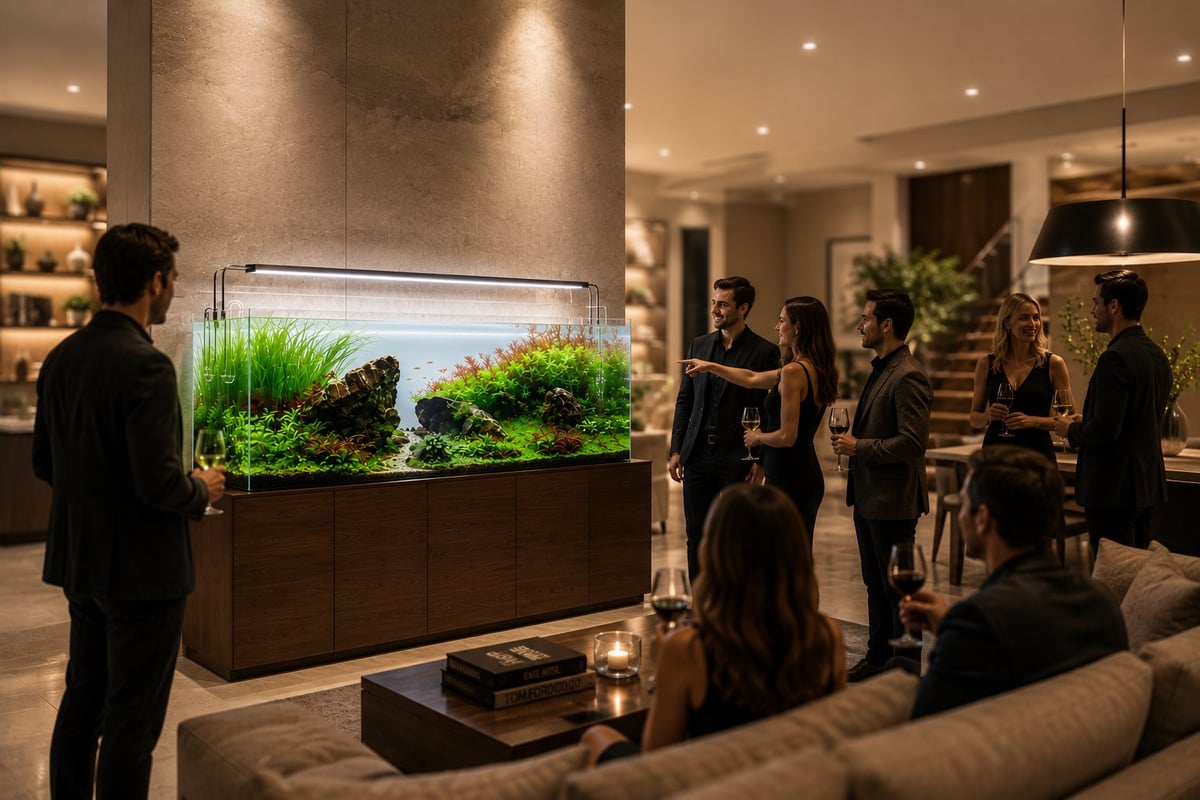
They're memorable because they offer something most people don't encounter every day. Visitors don't simply glance at them. They pause. They watch. They gather around them.
It's an experience rather than a decoration.
Key Takeaway
A well-designed aquarium becomes a social focal point — guests don't just look at it, they experience it. That's what makes it unforgettable.
The most impressive aquariums rarely happen by accident. Every decision matters:
When these elements work together, the aquarium enhances the room instead of competing with it. That's why planning is just as important as the aquarium itself.
Key Takeaway
Great aquariums are the result of intentional design — every element from size to fish selection must work together to enhance the room.
Luxury design has evolved. It's no longer defined by excess. It's defined by intention.
Biophilic design reflects that shift by creating spaces that feel peaceful, balanced, and connected to the natural world. A custom planted aquarium embodies those same principles.
It combines water, plants, stone, movement, and light into a living landscape that transforms the way a room feels. When thoughtfully integrated into a space, it becomes more than décor. It becomes an experience.
If you're planning a luxury home or commercial space, remodeling an existing property, or simply looking for a truly unforgettable centerpiece, a custom aquarium can become one of the most impactful features in your space.
Our Luxury Aquarium Design service helps property owners, architects, interior designers, and builders create custom freshwater aquariums that blend seamlessly into modern interiors.
Common questions about biophilic design and luxury aquariums
Dive deeper into luxury aquarium design and biophilic interiors
Discover the 7 design secrets behind luxury aquariums — from plant density to negative space.
Learn the key principles that separate an average aquarium from one that transforms a room.
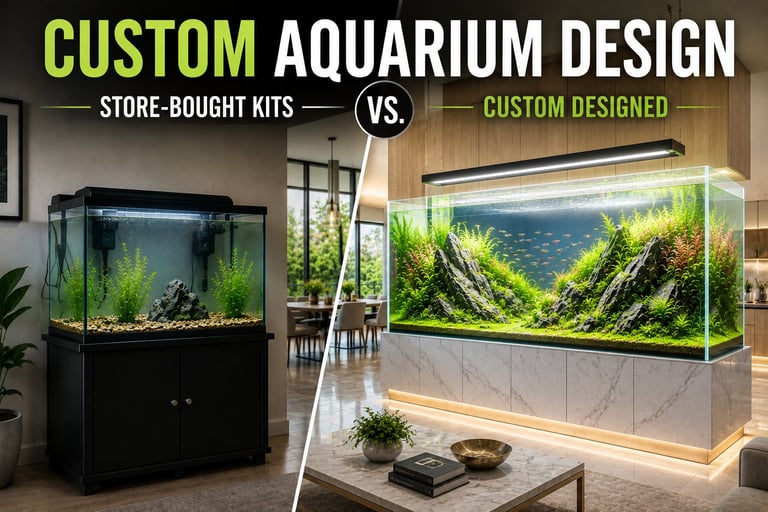
Compare custom-built aquariums and store-bought kits for appearance, value, and performance.
Our Luxury Aquarium Design service creates custom freshwater aquariums that blend seamlessly into modern interiors — transforming any room into a calm, living space.