
Ecosystem Balance
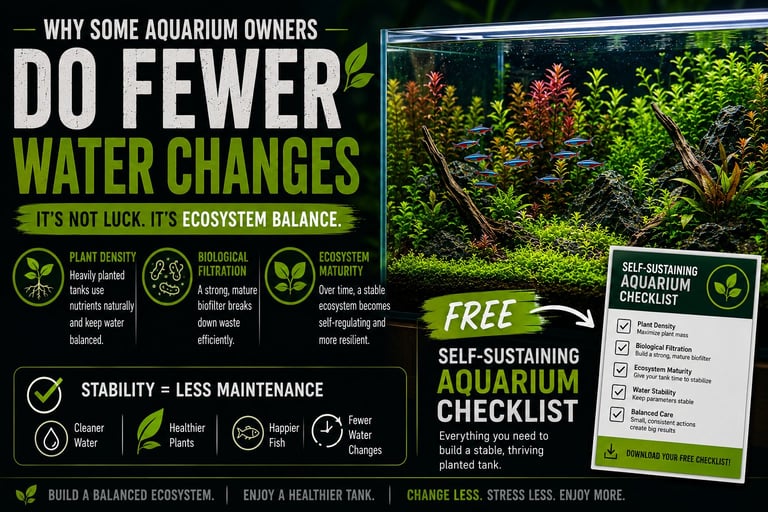
Why Some Aquarium Owners Do Fewer Water Changes
Learn how plant density, biological filtration, and ecosystem maturity naturally reduce the need for frequent water changes.
Read Article
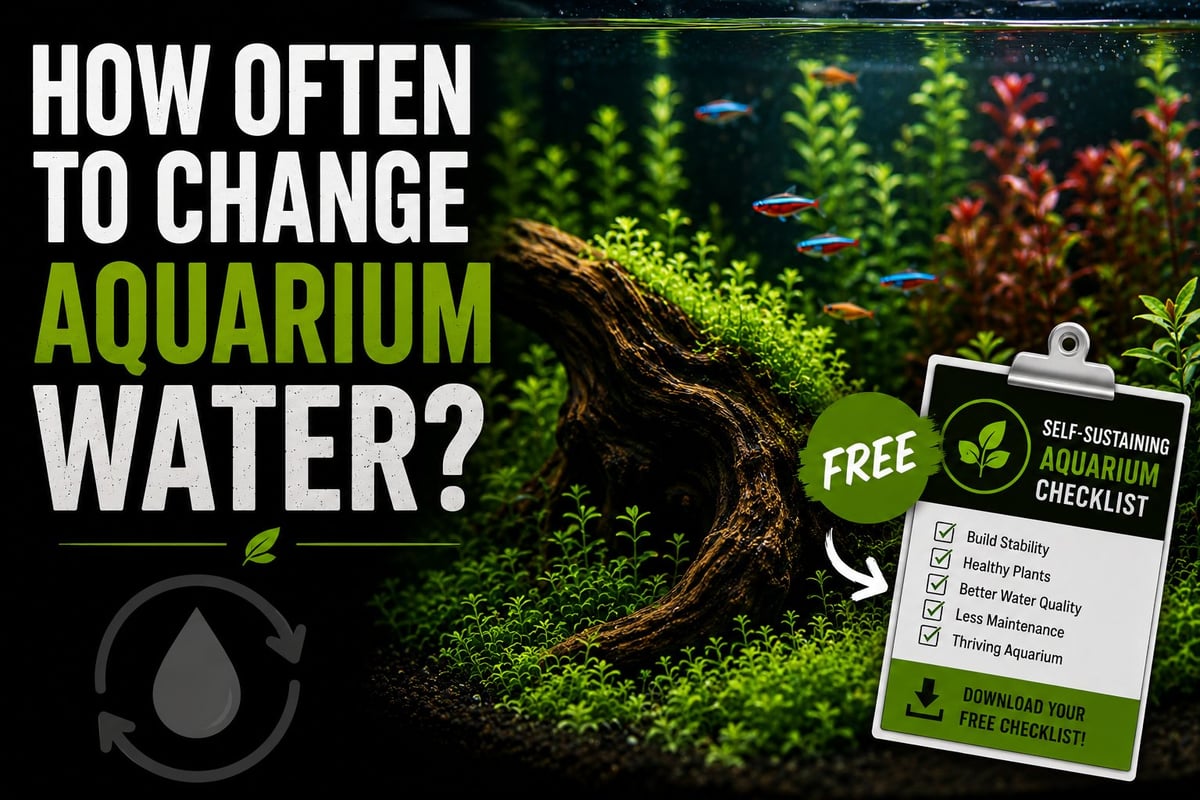
One of the most common questions new aquarium owners ask. Learn what factors affect water change frequency and why aquarium stability matters more than a rigid schedule.
Aquascape Oasis Team
Planted Tank Specialists
Stop guessing about your aquarium maintenance routine. Download our free checklist covering the key stability factors successful aquarists monitor to create healthier, more predictable planted tanks.
Send Me the ChecklistWater changes help remove substances that can accumulate over time in any aquarium. These may include organic waste, excess nutrients, dissolved compounds, debris, and detritus.
Water changes can also help maintain stable conditions for fish, shrimp, and plants. For new aquariums, regular water changes are often an important part of establishing a healthy environment.
But here's what most beginners don't realize: the reason behind water changes matters more than the frequency itself. Understanding your aquarium's specific needs will guide you toward a routine that actually works.
A planted aquarium is more than a glass box filled with water. It's a living ecosystem where plants, beneficial bacteria, fish, and water chemistry all interact. When one piece falls out of balance, problems often appear — and water changes are just one tool to help restore that balance. Learn why some aquarium owners do fewer water changes and how mature planted tanks naturally reduce maintenance needs.
Many beginners search for a simple rule like 25% every week, 50% every two weeks, or once per month.
The problem is that every aquarium is different.
Factors that influence water change frequency include:
A lightly stocked, heavily planted aquarium behaves very differently than a crowded aquarium with few plants.
Key insight: Rather than following a rigid calendar, successful aquarium owners learn to read their tank's signals. The goal isn't hitting a date on the calendar — it's maintaining a stable, healthy ecosystem.
New aquariums are still developing biological stability.
During the first few months, beneficial bacteria colonies are expanding and nutrient cycles are becoming established.
This period often includes:
Because of this, newer aquariums generally require closer monitoring and more frequent maintenance. As your tank matures, you may find that the need for intervention gradually decreases.
Pro tip: During the first 90 days, focus on consistency rather than perfection. Small, regular water changes often work better than large, infrequent ones while your tank finds its balance.
Healthy plants play an important role in aquarium stability.
As plants grow, they interact with nutrients, waste products, oxygen levels, and biological processes in ways that can dramatically reduce the need for frequent water changes.
Heavily planted aquariums often behave differently than sparsely planted tanks. This is one reason many successful aquascapers focus heavily on plant growth and ecosystem balance rather than rigid maintenance schedules.
The healthiest aquariums aren't necessarily the ones with the most equipment. They're often the ones with the most stable ecosystems.
One mistake beginners make is focusing entirely on a schedule.
Successful aquarium owners often pay more attention to stability than specific dates. Instead of asking "Has it been seven days?" they ask "How is my aquarium performing?"
Healthy plants, stable conditions, and a mature ecosystem often provide more useful information than a calendar reminder.
Worth knowing: Many experienced aquarists develop an intuition for when maintenance is needed. They notice subtle changes in plant growth, water clarity, and fish behavior long before a test kit would catch a problem.
Stop guessing. Learn to read your tank like experienced aquarists do.
Get the Free Stability ChecklistEvery aquarium is unique, but common warning signs can indicate that something within the ecosystem may need adjustment:
These symptoms often indicate that something within the ecosystem may need adjustment. Learning to recognize them early can help you intervene before small issues become major problems.
Many beginners believe successful aquariums require endless work.
In reality, experienced aquarists often focus on building stable ecosystems that become easier to manage over time. The healthiest planted tanks aren't necessarily maintained through constant intervention.
They're usually built around balance:
When these factors work together, maintenance often becomes much simpler.
Key insight: Rather than chasing a specific water change schedule, focus on creating a stable planted aquarium. As stability improves, your maintenance routine can become more predictable and effective. The goal isn't simply changing water — it's creating an environment where fish, shrimp, and plants can thrive long-term.
Ready to build a stable aquarium that practically maintains itself?
Download Free Stability ChecklistQuick answers about aquarium water changes and maintenance
Go deeper into aquarium water management and ecosystem stability
Learn how plant density, biological filtration, and ecosystem maturity naturally reduce the need for frequent water changes.
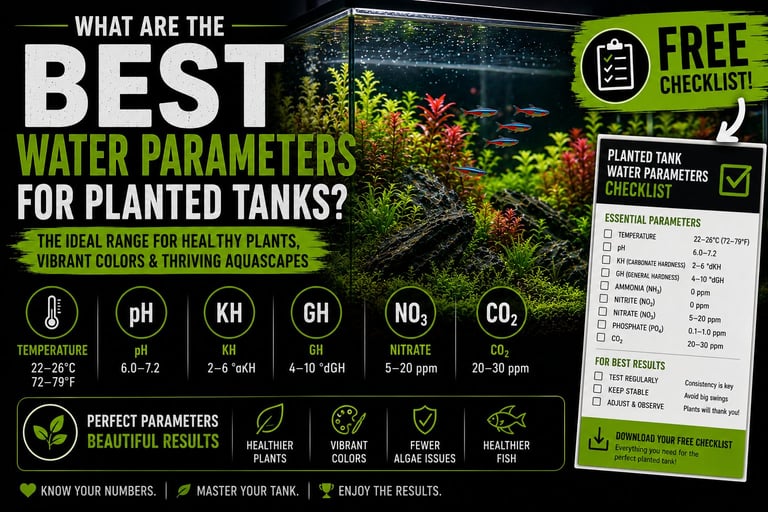
Master pH, KH, GH, temperature, and nutrients — understand what your test results mean and how to maintain optimal conditions.
Rather than chasing a specific water change schedule, focus on creating a stable planted aquarium. As stability improves, your maintenance routine can become more predictable and effective.
The goal isn't simply changing water. The goal is creating an environment where fish, shrimp, and plants can thrive long-term.
Healthy Plant Growth
Stable Parameters
Less Maintenance
No spam. Just a practical checklist for your aquarium.