
Fertilizers
Complete Fertilizer Dosing Guide for Planted Aquariums
Master plant nutrition with precise fertilizer dosing schedules and troubleshooting techniques.
Not sure whether to use root tabs or liquid fertilizer? Learn the difference, which aquarium plants need each, and how to keep your planted tank healthy without wasting money on products you don't need.
Aquascape Oasis Team
Planted Tank Specialists
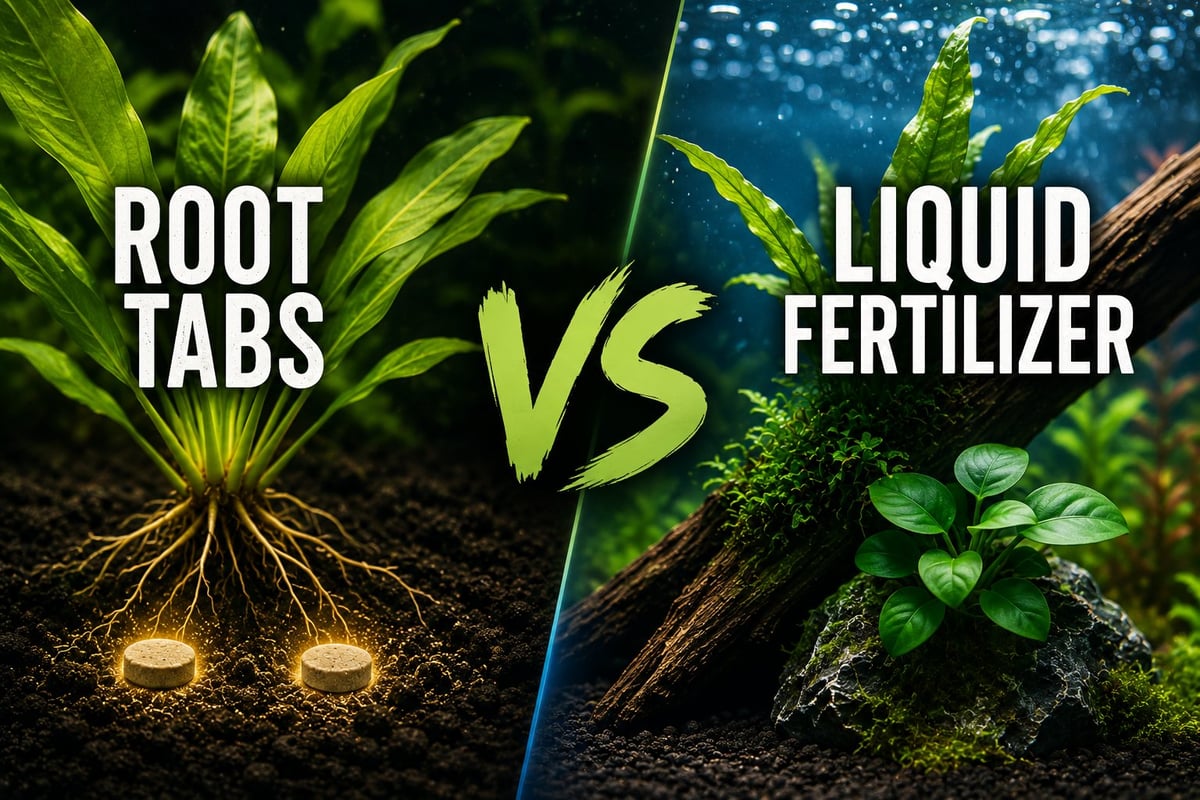
A visual comparison of root tabs and liquid fertilizer, highlighting the different nutrient needs of root-feeding and water-column-feeding aquarium plants.
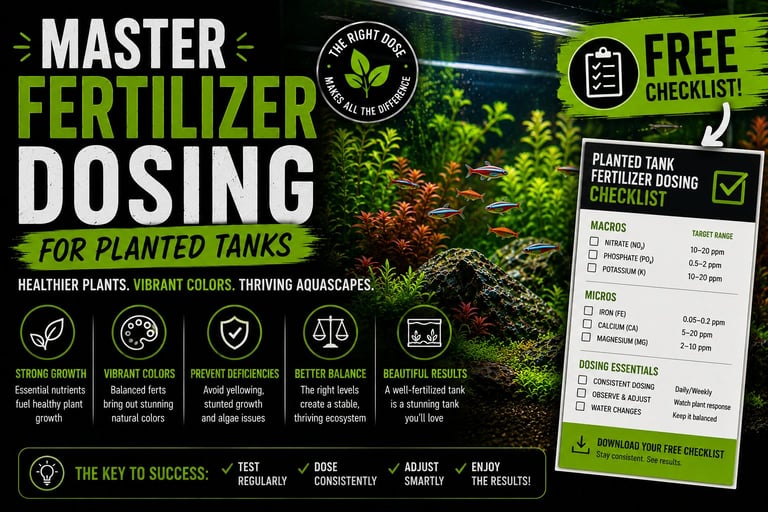
Want healthier aquarium plants with less guesswork? Download our free checklist covering the fundamentals of planted tank stability.
Send Me the ChecklistRoot tabs are slow-release fertilizer capsules or tablets that are pushed into the substrate beneath your plants.
Instead of dissolving into the water column, they gradually release nutrients around the plant's root system. Think of them like fertilizer spikes for houseplants — they're designed for plants that do most of their feeding through their roots.
Key takeaway: Root tabs feed the substrate, not the water. If your plants are heavy root feeders, root tabs deliver nutrients exactly where they're needed most.
Liquid fertilizer is added directly to the aquarium water. Once dissolved, nutrients become available throughout the water column — and plants absorb them through their leaves, stems, and roots.
Liquid fertilizers are especially useful for plants attached to rocks or driftwood because their roots aren't buried in nutrient-rich substrate.
Key takeaway: Liquid fertilizer feeds the water column. It's the go-to choice for epiphytic plants like Java Fern and Anubias that absorb nutrients through their leaves.
The biggest difference isn't the fertilizer itself — it's where the nutrients become available.
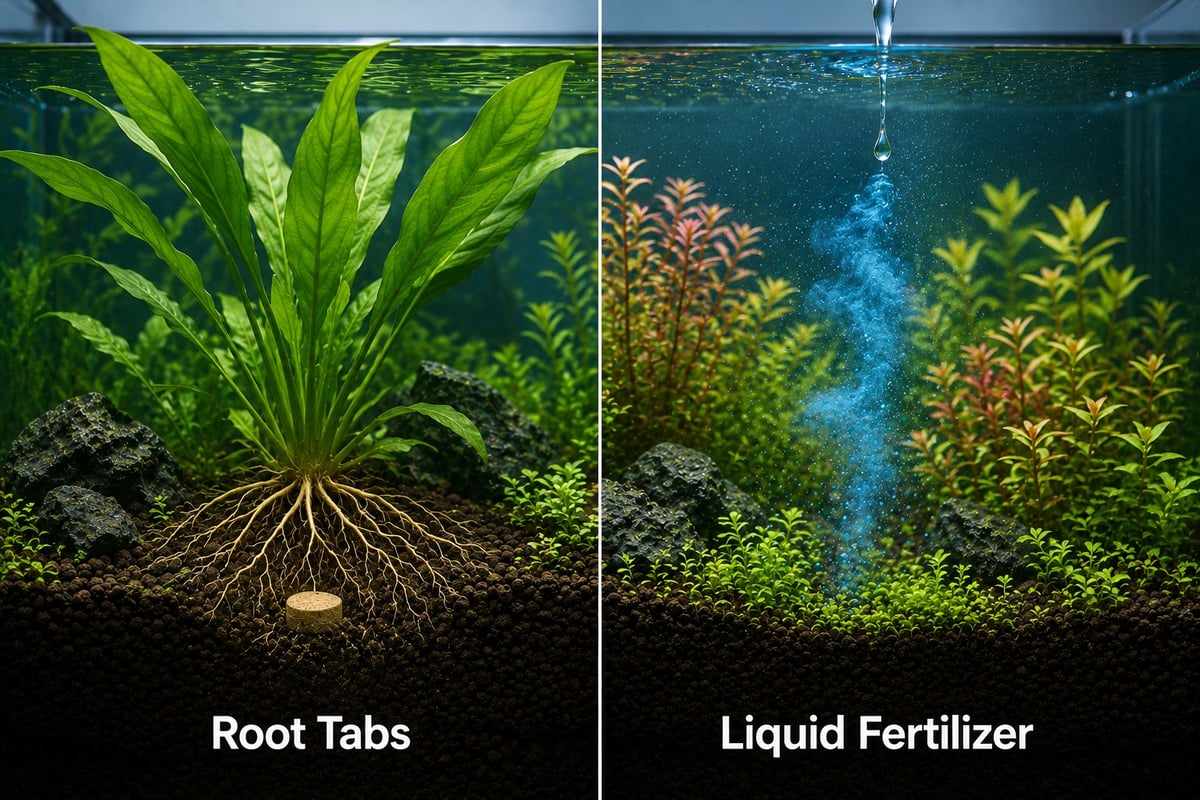
Root tabs deliver nutrients directly into the substrate where root-feeding plants can absorb them, while liquid fertilizers distribute nutrients throughout the water column for plants that primarily feed through their leaves and stems.
Feed the substrate
Feeds the water column
Once you understand that, choosing the right product becomes much easier.
Many popular beginner aquarium plants are considered heavy root feeders. These plants often benefit from root tabs placed nearby.
These species develop extensive root systems and can draw a significant portion of their nutrients from the substrate. If they're planted in an inert substrate like gravel or sand, root tabs can make a noticeable difference over time.
Remember: Root tabs work best when placed near the plant's root zone. Simply push a tab into the substrate every 4-6 inches around heavy root feeders.
Other plants absorb most of their nutrients directly from the water. These include many of the plants beginners love because they're easy to grow.
Since these plants are often attached to wood or rocks, burying root tabs underneath them provides little benefit. Liquid fertilizer is usually the better choice.
Download the free Self-Sustaining Tank Stability Checklist and learn the simple principles that help planted aquariums become more stable — and easier to fertilize correctly.
Download Free ChecklistSometimes. Many planted aquariums contain a mix of root feeders and water-column feeders.
For example, a typical mixed aquarium might include:
In this type of aquarium, using both root tabs and a liquid fertilizer can help ensure each plant has access to nutrients in the way it naturally prefers. That doesn't mean every tank requires both, but it's a common approach for mixed planted aquariums.
Absolutely. Many beautiful planted aquariums rely primarily on liquid fertilizer.
If your tank mostly contains Java Fern, Anubias, mosses, and floating plants, liquid fertilizer alone is often enough.
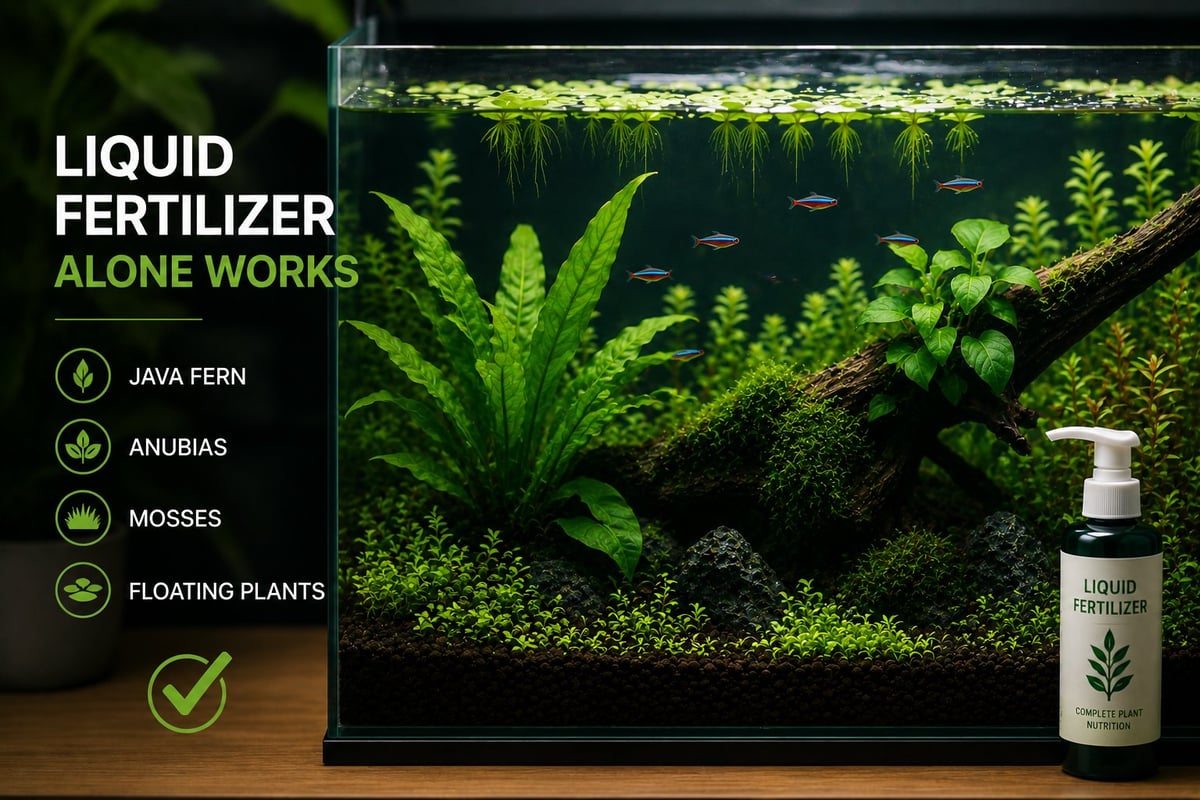
Many low-tech planted aquariums flourish with liquid fertilizer alone. Plants such as Java Fern, Anubias, mosses, and floating plants often absorb nutrients directly from the water column, making liquid fertilizer an excellent choice.
Can you use only root tabs? You can, but only if most of your plants are heavy root feeders. If your aquarium contains mostly epiphytes or floating plants, root tabs won't provide much benefit.
Most root tabs slowly release nutrients over several weeks or months. Rather than replacing them on a strict calendar, pay attention to your plants. If healthy growth begins slowing and other conditions haven't changed, it may be time to refresh the root tabs.
Plants need balanced nutrients — not excessive nutrients. Adding more fertilizer won't solve problems caused by poor lighting, unhealthy roots, or unstable aquarium conditions.
Java Fern shouldn't have its rhizome buried in the substrate. Because of that, root tabs placed underneath usually provide little benefit. Liquid fertilizer is a better fit.
Plants like Amazon Swords may survive without root tabs, but they often perform much better when nutrients are available around their roots.
Instead of asking "What fertilizer should I buy?", ask "How do my plants naturally absorb nutrients?" That question usually leads you to the right answer.
The free checklist covers the fundamentals that help prevent common fertilizing mistakes before they happen.
Get The Free Checklist| Root Tabs | Liquid Fertilizer |
|---|---|
| Feed the substrate | Feed the water column |
| Best for root feeders | Best for water-column feeders |
| Long-lasting | Regular dosing |
| Great for Amazon Swords | Great for Java Fern |
| Ideal for Cryptocoryne | Ideal for Anubias |
| Hidden in substrate | Added directly to water |
Root tabs themselves generally don't cause algae because most of their nutrients remain in the substrate. Liquid fertilizers also don't automatically cause algae.
Algae is usually the result of an imbalance involving lighting, nutrients, plant growth, and overall aquarium stability. Healthy plants are your best defense against algae.
For most beginner planted aquariums, neither product is universally "better." It depends on the plants you're growing.
Java Fern, Anubias, mosses?
Start with liquid fertilizer.
Amazon Swords, Crypts in gravel?
Root tabs are worth adding.
Mix of both?
Using both gives the best results.
Want healthier aquarium plants with less maintenance and fewer algae problems? Download the free checklist and learn the simple principles that help planted aquariums become more stable over time.
Inside, you'll discover practical tips for improving plant health, preventing common beginner mistakes, and creating an aquarium that gets easier — not harder — to maintain.
🚀 Get The Free Checklist NowFree download • No spam • Unsubscribe anytime
Continue learning about planted aquarium care and plant nutrition
Master plant nutrition with precise fertilizer dosing schedules and troubleshooting techniques.
Not sure when to fertilize? Learn a simple weekly schedule that promotes healthy plant growth.
Match your dosing schedule to your tank's actual needs and avoid the most common fertilizer mistakes.
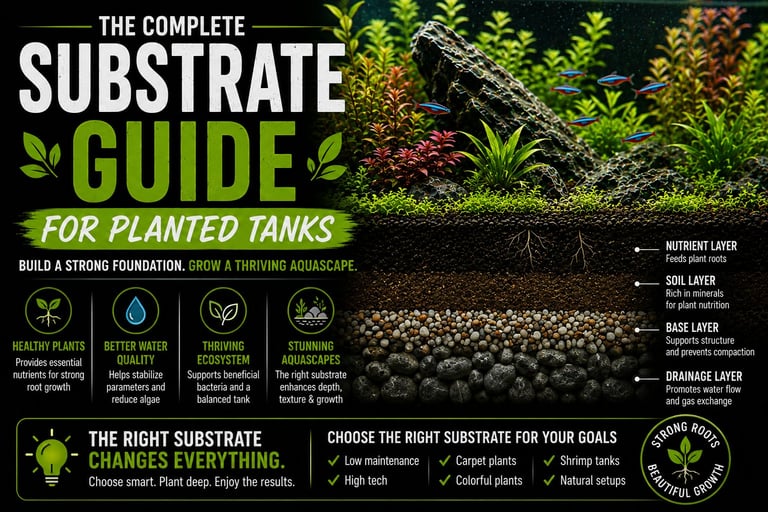
Master the foundation of aquascaping with proven layering methods and expert substrate techniques.