

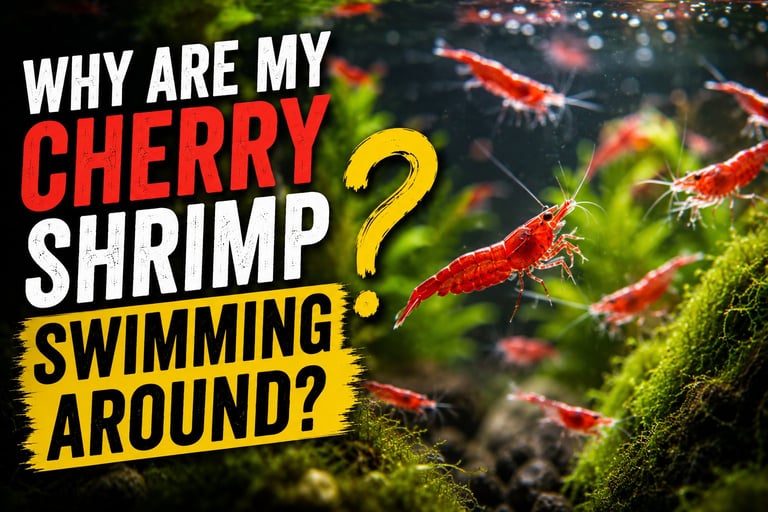
Cherry Shrimp Behavior
Why Are My Cherry Shrimp Swimming Around the Tank?
Learn common causes including mating behavior, stress, water changes, molting, and oxygen changes.
You walk by and notice your shrimp hanging near the waterline. Your heart sinks. But before you panic — this behavior is often more surprising than serious.
Aquascape Oasis Team
Shrimp Care Specialists
Cherry shrimp occasionally spend time near the waterline, floating plants, or surface of an aquarium due to normal behavior or changes within the aquarium environment.
Want a shrimp tank with healthier, more predictable behavior? Download our free checklist covering the key factors successful aquarists monitor.
Send Me the ChecklistSometimes, yes.
Cherry shrimp are curious little creatures. They don't always stay on the substrate or plants. They may occasionally:
Seeing one shrimp near the top every now and then usually isn't a reason to panic.
However, if most of your shrimp are suddenly at the top, they weren't doing this yesterday, and they seem restless or stressed — then it's worth taking a closer look.
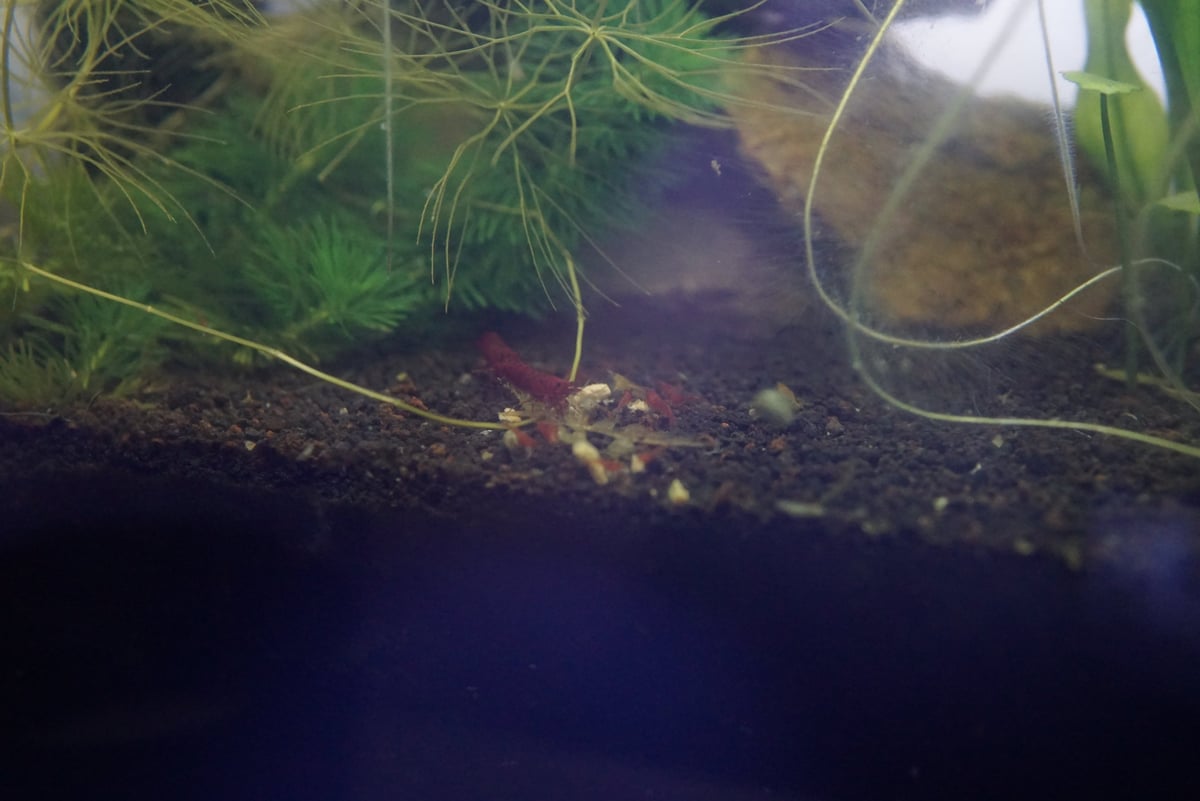
Cherry shrimp naturally forage across all levels of the aquarium, from substrate to surface.
Seeing your cherry shrimp at the top of the tank can definitely be alarming, but it doesn't always mean something is seriously wrong. Sometimes the behavior is completely normal. Other times, your shrimp may simply be trying to tell you that something in the aquarium has changed.
Understanding shrimp behavior gets easier with a mature tank. Grab the free stability checklist →
Believe it or not, the surface of an aquarium can be a buffet for shrimp.
Floating plants, filter outputs, and the waterline often develop:
Shrimp love to graze. Sometimes they simply discover food near the surface and decide that's where they want to hang out.
If your shrimp are calmly picking at surfaces and don't seem stressed, this could be all that's happening.
Shrimp love stability.
One of the biggest lessons new shrimp keepers learn is that shrimp usually prefer consistency over constant changes.
Things that may cause behavioral changes include:
When something changes, shrimp may temporarily behave differently. Sometimes this includes spending more time near the top of the tank.
This is one reason many hobbyists immediately panic when they see shrimp at the top.
Aquatic animals often respond quickly when conditions change. You may notice:
The behavior itself doesn't automatically tell you exactly what is happening. However, if the entire colony suddenly moves upward, it's worth paying attention. Shrimp behavior can sometimes be an early clue that something in the aquarium has changed.
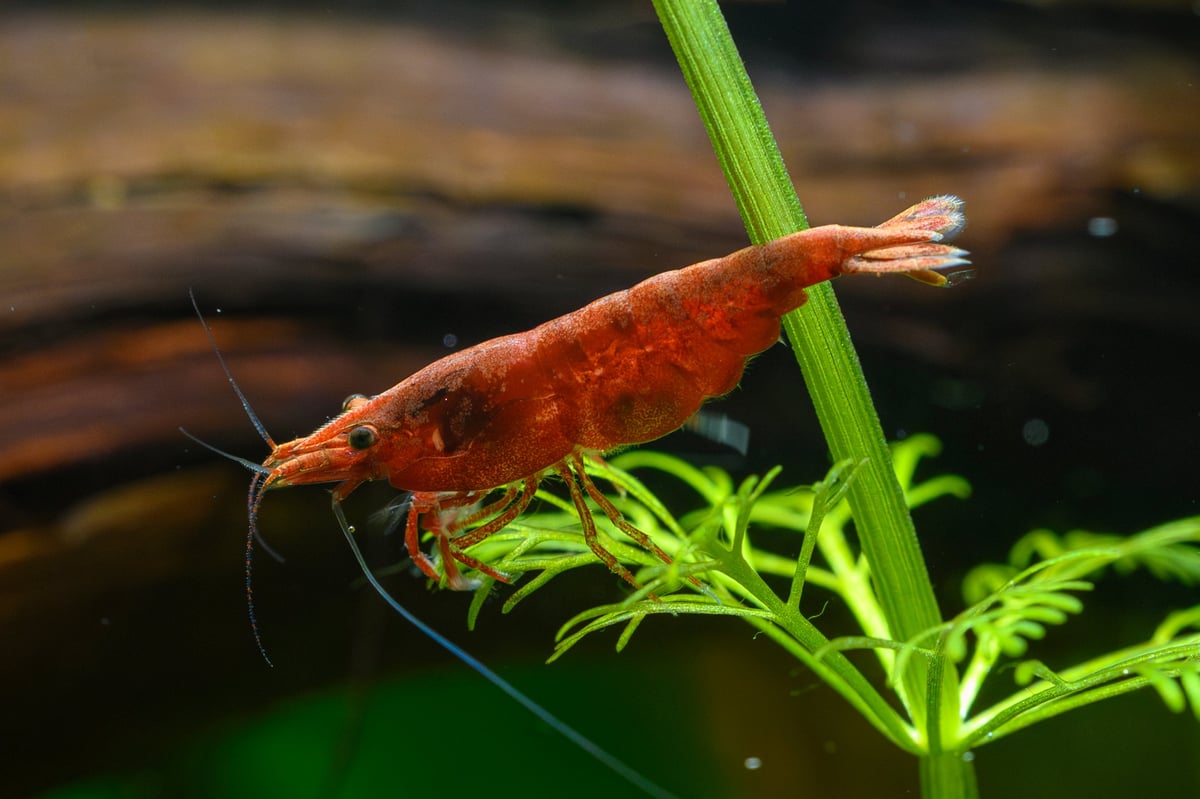
Cherry shrimp explore every surface in a planted aquarium — from leaves to driftwood to filter intakes.
Cherry shrimp are surprisingly adventurous.
Many owners are shocked by the places shrimp decide to visit. It's not uncommon to find shrimp:
Sometimes they're simply exploring. A healthy shrimp colony often has individuals constantly searching for new grazing opportunities.
New aquariums can behave differently than mature aquariums. A newer tank may have:
Because of this, shrimp behavior can sometimes appear more unpredictable. Many hobbyists notice that as aquariums mature, shrimp behavior becomes much more consistent and easier to understand.
Key takeaway: Mature, stable aquariums tend to produce calmer, more predictable shrimp behavior.
Most of the time, seeing a few shrimp at the top isn't an emergency.
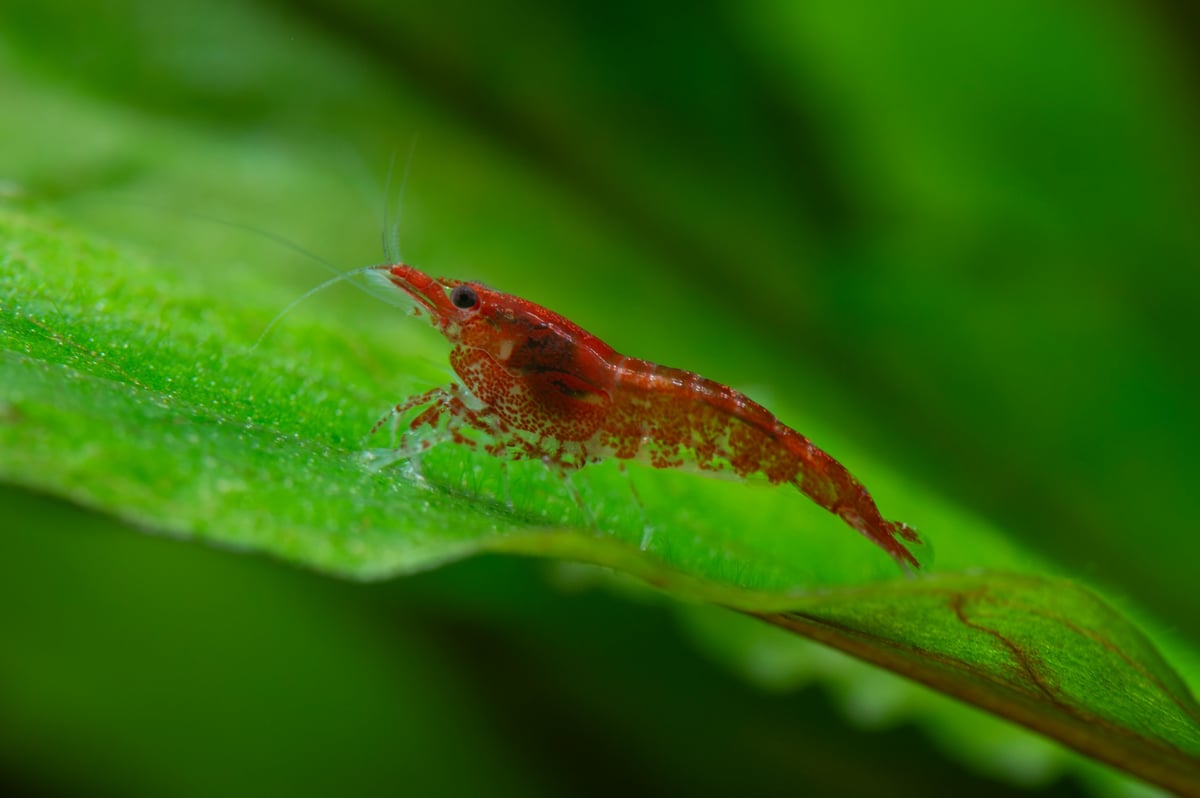
A calm shrimp resting on a leaf — normal, relaxed behavior in a healthy aquarium.
The key is to look for patterns instead of assuming the worst.
Want to feel more confident about shrimp behavior?
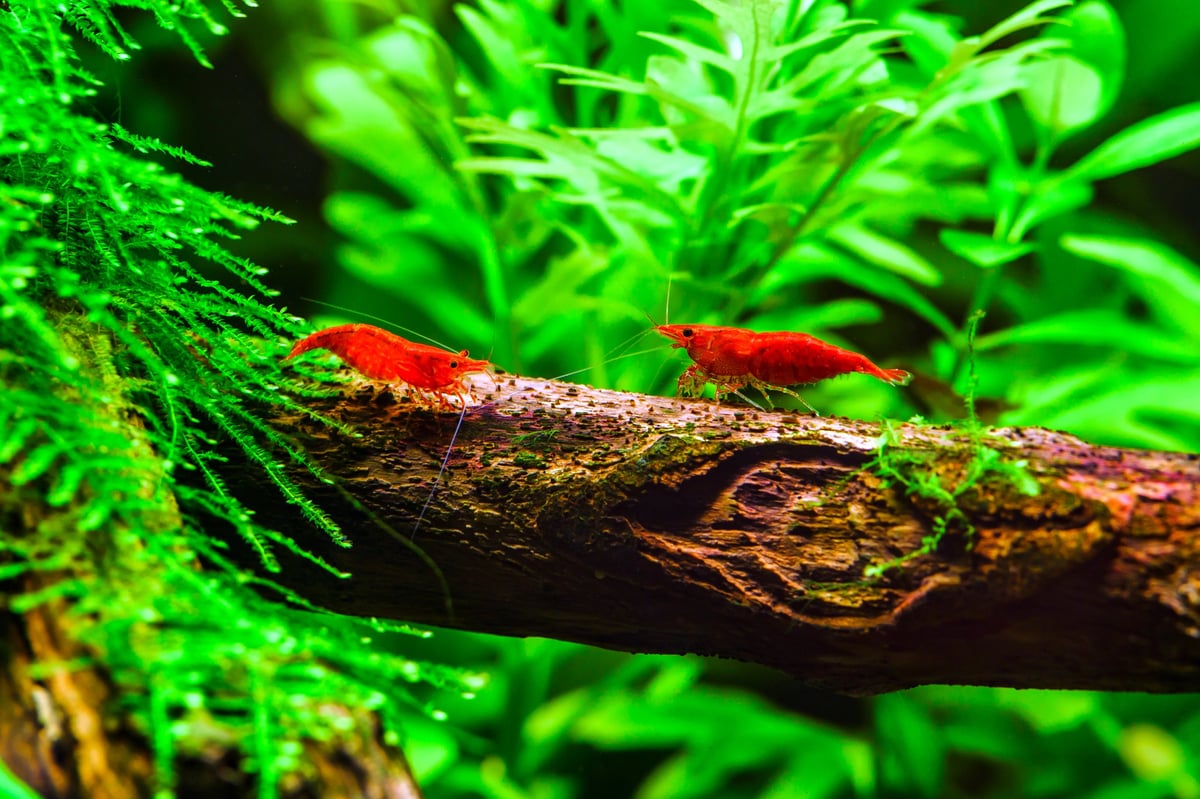
A stable, planted aquarium provides shrimp with consistent conditions and abundant natural food.
One thing experienced shrimp keepers often notice is that stable, mature aquariums tend to have more predictable shrimp behavior.
Healthy ecosystems often provide:
As the aquarium matures, shrimp frequently become easier to understand because the ecosystem itself becomes more stable. This is one reason self-sustaining shrimp tanks often seem to "run themselves" over time.
Key takeaway: Stability — not constant intervention — is what produces calmer, more predictable shrimp behavior.
The moment shrimp move to the top of the tank, many new hobbyists immediately:
Ironically, these sudden changes can sometimes create more instability.
Instead, observe first. Ask yourself:
Often, the answer becomes much clearer once you step back and look at the bigger picture.
Seeing your cherry shrimp at the top of the tank can definitely be scary.
But in many cases, they're simply:
Healthy shrimp occasionally do weird things.
The goal isn't to panic every time they behave differently. The goal is to understand what behaviors are normal and recognize when something truly deserves attention.
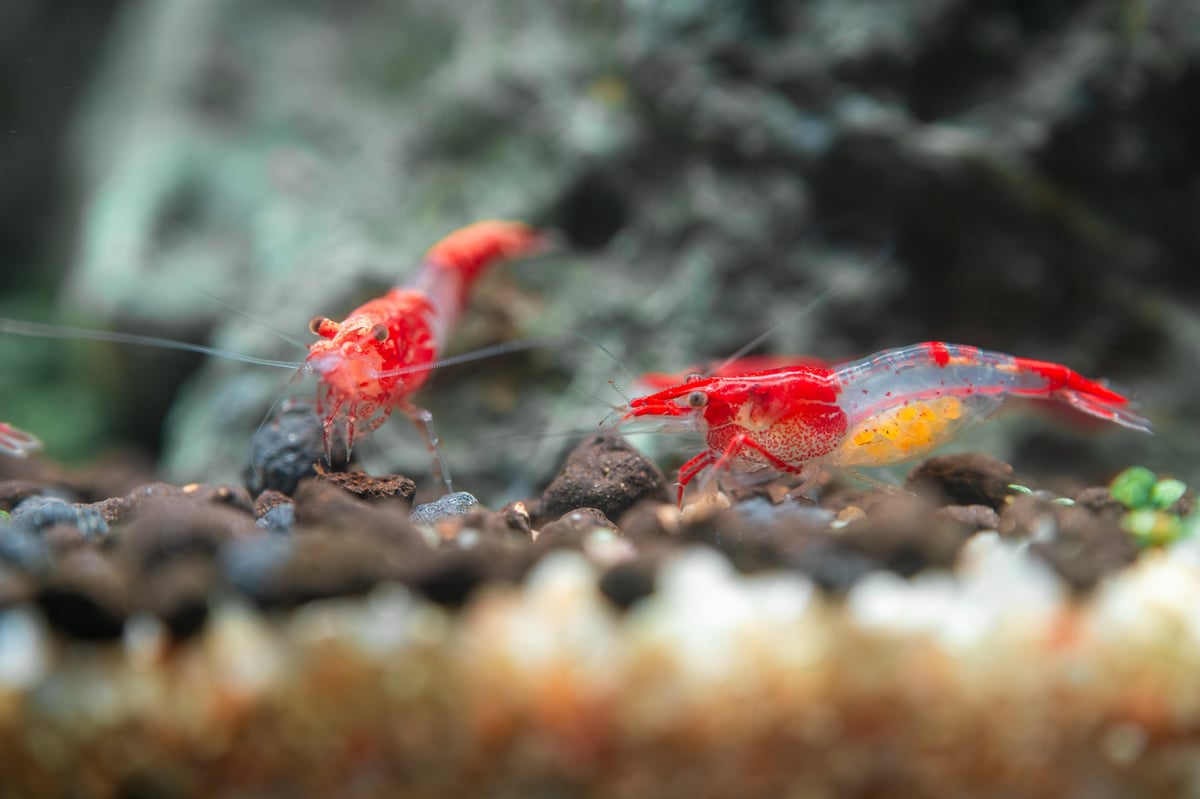
A healthy shrimp calmly grazing on the substrate — the kind of relaxed behavior you'll see more of as your tank matures.
Over time, you'll start to learn your colony's personalities and what's normal for your specific aquarium. And honestly, that's one of the fun parts of keeping shrimp.
Want to build a shrimp tank with healthier, more predictable behavior and fewer surprises? Download our free checklist and learn the key factors successful aquarists monitor when creating stable ecosystems. The checklist helps you identify common stability issues before they lead to shrimp stress, algae outbreaks, or recurring aquarium problems.
Healthier Shrimp
Fewer stress behaviors and more predictable activity
Step-by-Step Checklist
Simple actions that support ecosystem health
Long-Term Stability
Build a tank that gets easier over time
Join thousands of aquarists building healthier shrimp tanks
Common questions about cherry shrimp behavior at the surface
More guides to help you understand and care for your cherry shrimp
Learn common causes including mating behavior, stress, water changes, molting, and oxygen changes.
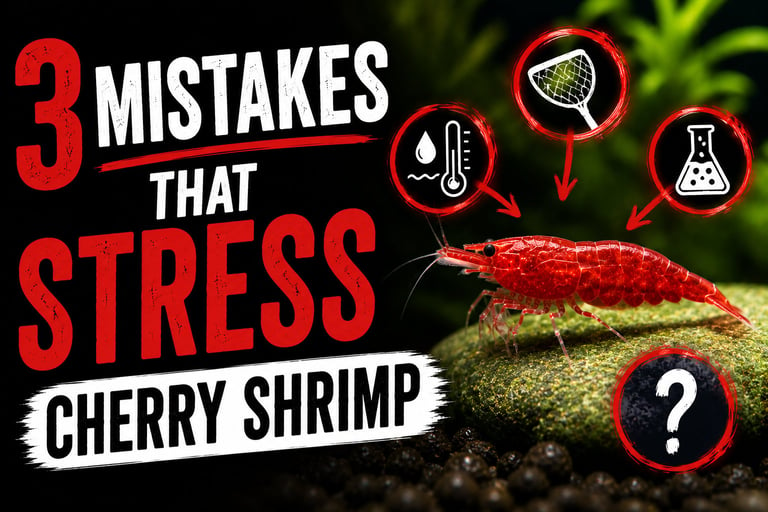
Learn three common mistakes that can cause cherry shrimp stress, including instability and constant changes.