Why Your Cherry Shrimp Population Isn't Growing | Aquascape Oasis
Livestock Care

Why Your Cherry Shrimp Population Isn't Growing

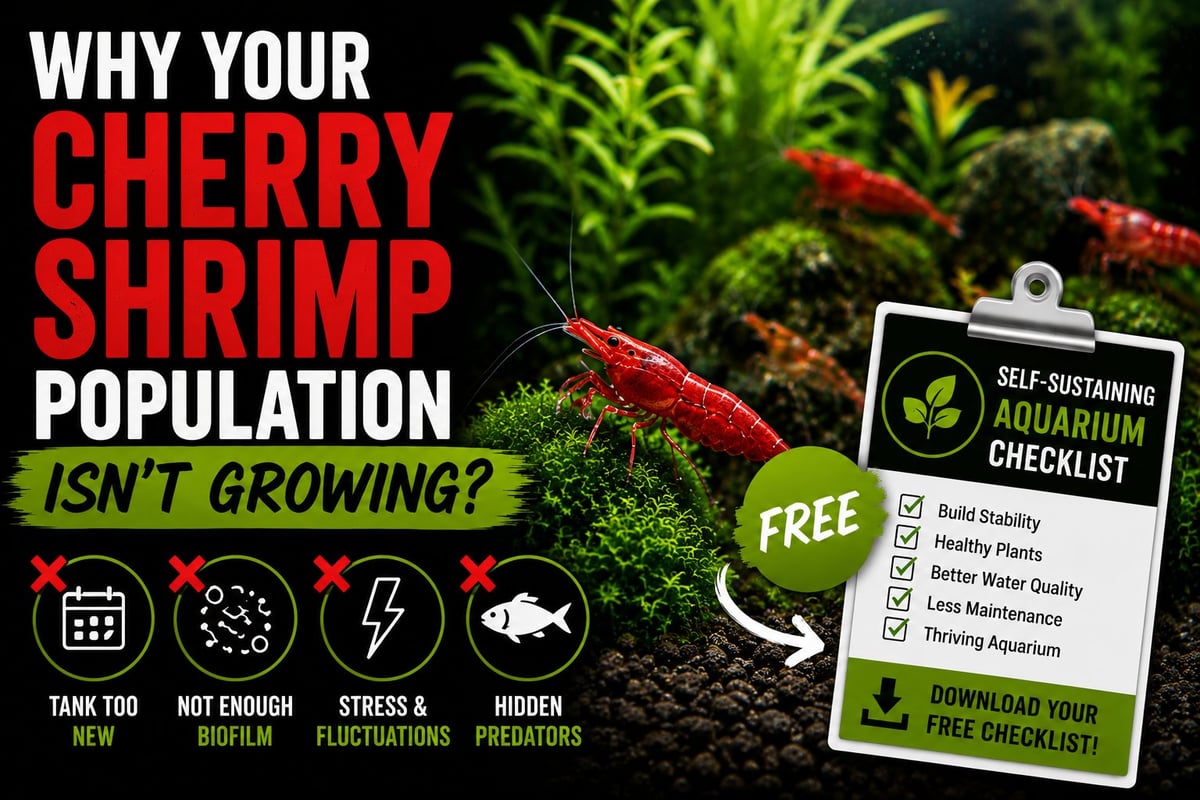
You started with a handful of cherry shrimp. They're alive, eating, and molting — but months later, your colony is still the same size. Here's what might be going on.

Aquascape Oasis Team

Planted Tank Specialists

8 min read

Want a stable aquarium that supports a thriving shrimp colony? Download our free checklist covering what actually matters for ecosystem stability — without the guesswork.

Send Me the Checklist

Surviving Isn't the Same as Thriving

Many shrimp owners assume that if shrimp are alive, everything must be perfect. Unfortunately, shrimp have different standards for survival than reproduction.

A colony can survive in conditions that are less than ideal for breeding. This often leads hobbyists to believe something mysterious is preventing population growth.

In reality, the colony may simply not feel established enough to expand. The difference between a surviving colony and a thriving one often comes down to subtle environmental factors that are easy to overlook.

One of the most common questions shrimp keepers ask is: "Why are my cherry shrimp not breeding?" The frustrating part is that shrimp can appear perfectly healthy while their population remains stagnant.

1

Tank Maturity Matters More Than Most People Realize

One of the most overlooked factors in shrimp colony growth is aquarium maturity. Many hobbyists add shrimp to relatively new aquariums and expect rapid reproduction.

However, mature aquariums often provide:

More biological stability
More microorganisms
More natural food sources
More consistent conditions

A tank that is only a few weeks old behaves very differently than a tank that has been running successfully for several months. This is one reason experienced shrimp keepers often value stability over constant changes.

Key insight: Shrimp colonies often seem to "wake up" once a tank crosses the 3-6 month mark. The ecosystem finally has enough microfauna, biofilm, and stability to support consistent breeding.

2

Biofilm Is a Hidden Food Source

When most people think about feeding shrimp, they think about pellets, wafers, and commercial shrimp foods. But shrimp spend much of their day grazing on naturally occurring surfaces within the aquarium.

These surfaces often contain biofilm, microorganisms, and microscopic food sources that are critical for newly hatched shrimplets. A healthy aquarium ecosystem can provide far more than what is visible to the human eye.

Many shrimp colonies seem to grow faster once these natural food sources become more established. Shrimplets, in particular, rely heavily on biofilm during their first few weeks of life.

What you need to know: You can supplement with commercial foods, but nothing replaces a mature tank's natural biofilm. This is a primary reason patience pays off with shrimp colonies.

3

Small Stress Factors Add Up

Shrimp are surprisingly sensitive to environmental instability. Even if conditions don't appear extreme, ongoing stress can influence colony growth.

Potential stressors may include:

Fluctuating water parameters — even small swings in temperature or pH

Frequent changes — too many adjustments too quickly

Sudden environmental shifts — large water changes, new decor, or filter cleanings

Inconsistent maintenance routines — unpredictability stresses shrimp

Poor ecosystem stability — the tank hasn't found its equilibrium

Many shrimp owners focus on obvious problems while overlooking smaller sources of stress that accumulate over time.

Key insight: Shrimp don't need perfect conditions — they need consistent conditions. A stable "good enough" environment beats a rollercoaster of ideal parameters followed by crashes.

Tired of watching your shrimp colony stay the same size?

Get the free checklist that helps you identify what might be holding your ecosystem back.

Download Free Stability Checklist
4

Hidden Predators Can Limit Population Growth

Sometimes shrimp are breeding. You simply never see the babies survive.

Many fish that appear shrimp-safe may opportunistically consume shrimplets. Even peaceful community fish may reduce survival rates enough to prevent visible colony growth.

This can create the illusion that breeding isn't happening when reproduction is actually occurring behind the scenes. If your adult shrimp seem healthy but the colony never expands, it's worth considering what happens to newly hatched shrimp.

Even "peaceful" tetras and rasboras may snack on tiny shrimplets

Filter intakes without pre-filters can suck up baby shrimp

Lack of dense hiding spaces like moss or fine-leaved plants leaves shrimplets exposed

Critical reality: A shrimp-only tank almost always produces faster colony growth than a community tank. If breeding is your priority, consider whether tankmates are the bottleneck.

5

Why Some Colonies Explode While Others Stall

If you've spent time online, you've probably seen photos of aquariums containing hundreds or even thousands of cherry shrimp. Those colonies rarely appear overnight.

Successful shrimp colonies often benefit from:

Long-term stability

Months of consistent, uninterrupted conditions

Mature ecosystems

Established biofilm, microfauna, and plant growth

Abundant grazing

Natural food sources everywhere, not just feeding time

Low stress

No aggressive tankmates, no constant disruptions

The biggest difference is often consistency rather than a single magic trick. Shrimp colonies that explode are usually in tanks that have been stable and undisturbed for months.

"The best shrimp breeders aren't the ones who do the most. They're the ones who do the least — and do it consistently."

6

The Mistake Many Beginners Make

When shrimp aren't breeding, many hobbyists immediately begin changing things. They:

Change foods

Adjust parameters

Rearrange the tank

Add products

Chase solutions online

Unfortunately, constant changes can sometimes make it harder for a colony to establish itself. Shrimp generally perform best in environments that remain predictable and stable over time.

Critical reality: The irony is that the very act of trying to "fix" a shrimp tank often creates the instability that prevents breeding in the first place. Sometimes the best action is no action at all.

Stop chasing solutions. Start building stability.

Our free checklist walks you through what actually matters for a stable ecosystem that supports thriving shrimp colonies.

Get the Free Stability Checklist

Focus on Stability First

The healthiest shrimp colonies are usually built on a stable foundation. Before worrying about advanced breeding techniques, it's important to ensure the ecosystem itself is healthy.

A thriving aquarium supports more than just shrimp. It supports beneficial bacteria, microorganisms, biofilm production, and long-term biological balance. When these systems work together, colony growth often becomes much easier.

The good news is that survival and reproduction are not the same thing. If your shrimp are alive and molting, you're already halfway there. The second half is creating the kind of stability that makes a colony feel safe enough to expand.

The Best Shrimp Keepers Think Differently

Experienced shrimp keepers often focus less on quick fixes and more on understanding how their ecosystem functions. Instead of asking "What product should I buy next?" they ask "Is my tank stable enough for breeding?"

They know that mature biofilm, consistent water parameters, dense plant cover, and the absence of predators matter far more than any commercial shrimp food or supplement.

Stability beats constant intervention. The shrimp colonies you see online with hundreds of bright red adults didn't get there because someone was constantly tinkering. They got there because someone set up the right conditions — and then had the patience to let nature do the rest.

Stop chasing quick fixes. Start building a stable ecosystem.

Download our free checklist and learn what successful shrimp keepers actually monitor.

Grab Your Free Checklist
Frequently Asked Questions

Common questions about cherry shrimp breeding, colony growth, and creating a stable shrimp tank

Download the Free Self-Sustaining Tank Stability Checklist

Want to build a healthier aquarium that supports thriving shrimp colonies? Learn the key factors successful aquarists monitor to create stable ecosystems.

Identify Stability Issues

Spot problems before they lead to shrimp stress or poor colony growth

Reduce Guesswork

Learn what actually matters instead of chasing endless solutions

Support Thriving Colonies

Create an ecosystem where shrimp breed naturally and consistently

Get Your Free Checklist Now

No spam. Unsubscribe anytime. Simple, actionable stability checklist.