They're alive, active, and eating — but months later, your colony still
hasn't grown. Learn five common reasons cherry shrimp colonies fail to
reproduce and what to do about it.
The confusing part is that shrimp can survive for a long time without
reproducing successfully. Many hobbyists assume something must be
wrong with the shrimp themselves. In reality, reproduction is often a
reflection of the environment.
Let's look at five common reasons cherry shrimp colonies fail to grow.
1. Your Aquarium Isn't Mature Yet
One of the biggest factors affecting shrimp reproduction is aquarium
maturity. Many shrimp keepers add shrimp to relatively new aquariums
and expect immediate breeding activity.
However, mature aquariums often provide things shrimp rely on that
aren't obvious to the human eye. These can include:
Biofilm — the thin layer of microorganisms
that coats surfaces in established tanks
Microorganisms — tiny life forms that serve as
a natural food source for shrimp of all ages
Stable biological processes — consistent
nitrogen cycling and decomposition patterns
Natural grazing opportunities — surfaces
covered in edible material for shrimp to continuously
forage
A tank may be fully cycled and still not offer the same conditions
as a mature ecosystem. This is one reason experienced shrimp keepers
often value tank age and stability.
2. Small Stress Factors Are Adding Up
Shrimp don't need dramatic problems to experience stress. Even small
environmental disruptions can influence behavior and reproduction.
Potential stressors may include:
Frequent changes — constant adjustments to the
tank setup or layout
Inconsistent conditions — fluctuations in
lighting schedules, feeding times, or routines
Environmental fluctuations — temperature
swings or parameter shifts
Ongoing disturbances — excessive activity near
the tank or frequent maintenance
The challenge is that shrimp don't always display obvious signs of
stress. Instead, breeding activity may simply slow down or stop.
This often leaves hobbyists wondering why the colony isn't growing
despite healthy-looking shrimp.
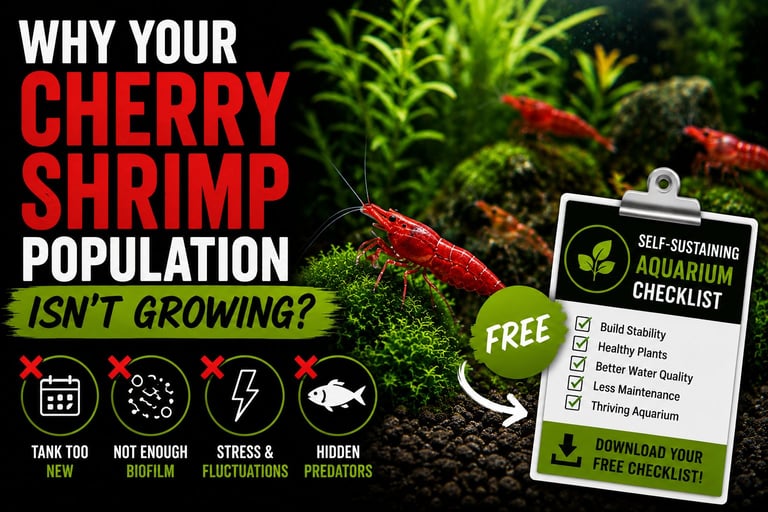
Free Download: Tank Stability Checklist
Stress is often invisible until it's too late. Our
Self-Sustaining Tank Stability Checklist helps you
catch hidden problems before they stall your colony.
Many beginners focus entirely on commercial shrimp foods. While
supplemental feeding is important, shrimp spend much of their day
grazing.
In healthy aquariums they often consume:
Biofilm — the foundational food source for
shrimp colonies
Microorganisms — a diverse range of
microscopic life
Organic materials — decomposing plant matter
and detritus
Microscopic food sources — infusoria and other
tiny organisms
A shrimp colony may survive with limited natural grazing
opportunities, but reproduction can sometimes be less consistent.
This is one reason mature ecosystems often support stronger colony
growth.
4. Hidden Predators Are Affecting Survival
Sometimes shrimp are reproducing. You simply never see the
results.
Many fish that appear shrimp-safe may still consume:
Shrimplets — newly hatched shrimp are
extremely small and vulnerable
Newly molted shrimp — soft shells make them
easy targets
Small juveniles — young shrimp that haven't
reached full size
This creates a situation where breeding is occurring, but population
growth remains difficult to notice. Many hobbyists assume
reproduction isn't happening when young shrimp simply aren't
surviving long enough to become visible.
Protect Your Colony — Free Checklist
Hidden predators aren't the only silent threat. Download our
Self-Sustaining Tank Stability Checklist and learn
what to watch for — before your colony pays the price.
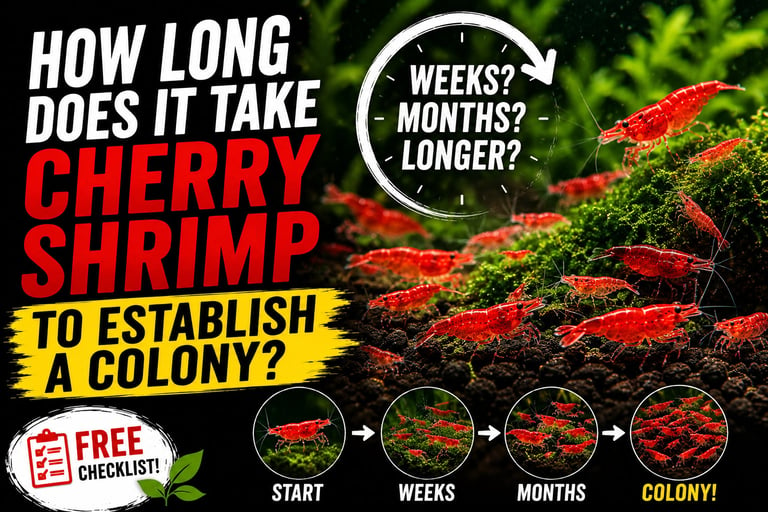
One of the most common mistakes in shrimp keeping is expecting rapid
population growth. Cherry shrimp colonies usually don't explode
overnight. Most successful colonies grow gradually.
The process often includes:
Acclimation — shrimp need time to adjust to
their new environment
Ecosystem development — the tank's biological
processes need time to mature
Multiple generations — colony growth often
accelerates after the first few successful batches
Colony maturity — a stable breeding rhythm
takes time to establish
Many hobbyists become discouraged during the early stages and start
changing things before the colony has had time to establish itself.
Patience is often one of the most important ingredients in
successful shrimp keeping.
Why Healthy Shrimp Don't Always Breed
Many hobbyists assume healthy shrimp automatically reproduce.
Unfortunately, it's not always that simple. Survival and
reproduction are different goals. Shrimp can survive in conditions
that aren't ideal for colony growth. This often explains why shrimp
appear healthy while population numbers remain unchanged.
The Mistake Many Shrimp Keepers Make
When a colony isn't growing, hobbyists often begin making constant
adjustments. They may:
Change foods
Change routines
Adjust parameters
Add products
Each change introduces another variable. In some cases, these
adjustments create additional instability that makes breeding even
less likely. Many successful shrimp colonies are built on
consistency rather than constant experimentation.
Focus on the Environment First
The healthiest shrimp colonies are usually the result of healthy
ecosystems. Instead of focusing entirely on breeding, many
experienced hobbyists focus on:
Stability
Biological maturity
Natural food production
Long-term consistency
When these factors come together, colony growth often follows
naturally.
Frequently Asked Questions
Cherry shrimp typically begin breeding once they reach sexual
maturity, which is around 4-6 months of age. However, even
mature shrimp may not breed immediately if they were recently
introduced to a new tank. Acclimation can take anywhere from a
few weeks to a couple of months. The key is providing stable
conditions and giving the colony time to settle in.
Cherry shrimp are fairly adaptable but breed best in stable
parameters: temperature 68-78°F (20-26°C), pH 6.5-7.8, GH 6-8,
KH 2-4, and TDS 150-250. More important than hitting exact
numbers is keeping those numbers consistent. Sudden swings in
temperature or parameters are a common reason colonies stop
breeding.
Almost all fish will eat baby shrimp (shrimplets), even species
marketed as "shrimp-safe." If you want maximum colony growth, a
shrimp-only tank is ideal. If you must keep fish, provide dense
ground cover like Java moss or subwassertang where shrimplets
can hide. Some hobbyists use a separate breeding box or
dedicated shrimp tank to protect the next generation.
Stressed shrimp may show subtle signs: reduced activity, hiding
more than usual, loss of color, clamped appendages, or erratic
swimming. However, many shrimp show no visible signs at all —
they simply stop breeding. This is why breeding activity itself
is often the best indicator of overall colony health. If your
shrimp are active, eating, and colorful but not breeding, focus
on environmental stability rather than looking for obvious
stress signals.
For a healthy breeding colony, feed small amounts 3-4 times per
week rather than daily. Shrimp spend most of their time grazing
on biofilm and microorganisms, so commercial food should
supplement — not replace — natural food sources. Overfeeding can
foul the water, cause parameter swings, and stress the colony. A
mature tank with abundant biofilm and occasional high-quality
shrimp foods (like blanched vegetables, algae wafers, or
specialized shrimp pellets) creates ideal conditions for
reproduction.
Download the Free Tank Stability Checklist
A thriving shrimp colony is rarely created through shortcuts. It's
built through a stable environment that supports shrimp over the
long term.
Our
Self-Sustaining Tank Stability Checklist helps
you identify common stability issues before they lead to stalled
colony growth, shrimp stress, algae outbreaks, or other aquarium
problems.