Shrimp Breeding
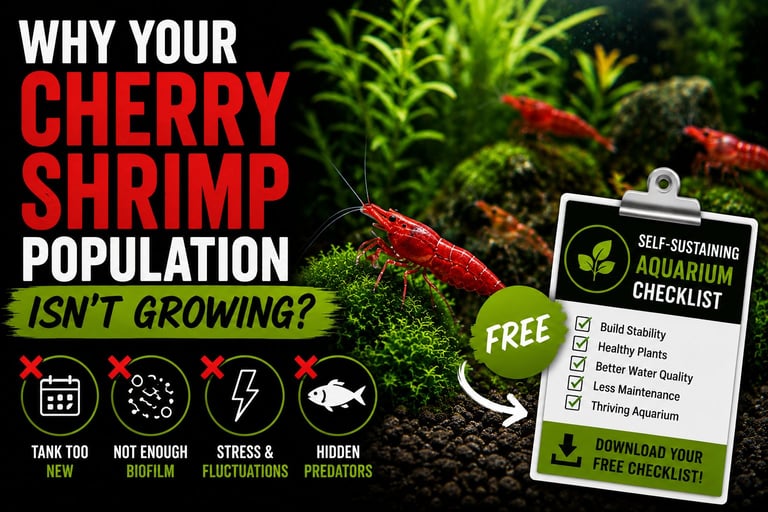
Why Your Cherry Shrimp Population Isn't Growing
Learn why survival and reproduction are not the same thing — and what might be holding your colony back.
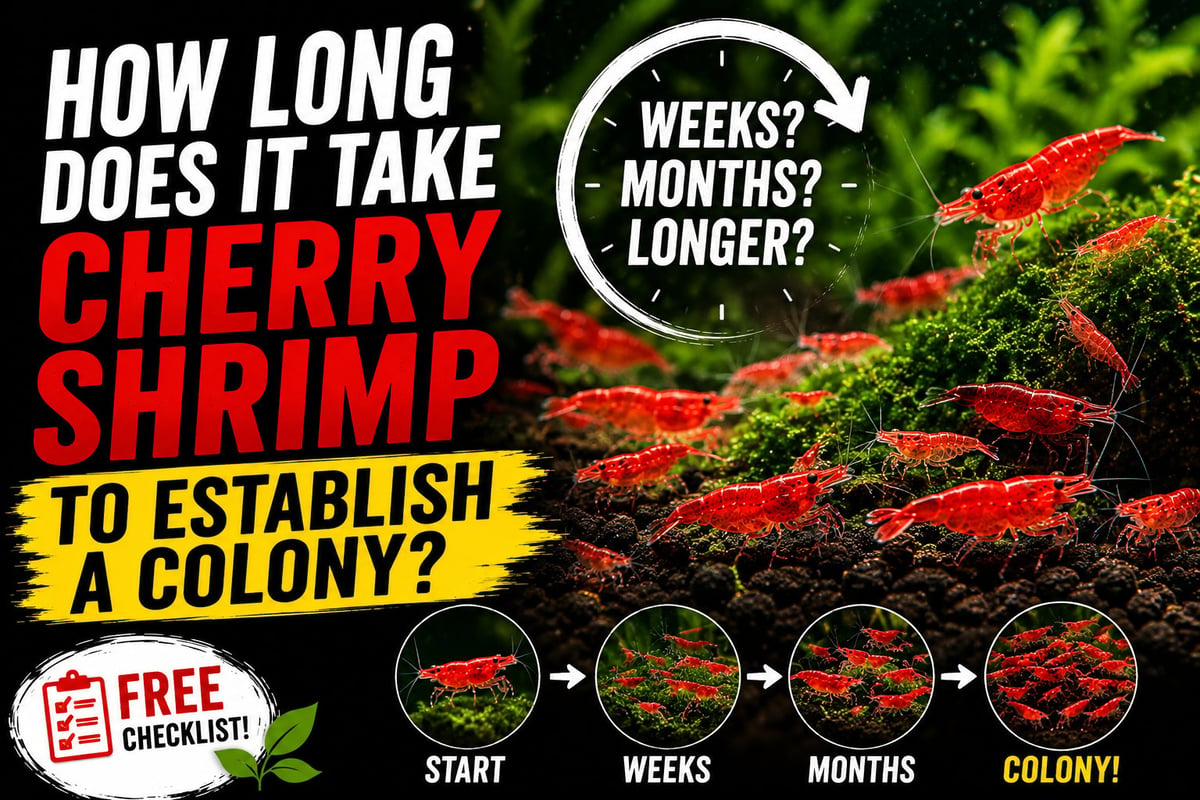
You started with a handful of cherry shrimp. Weeks pass. Months pass. The shrimp are alive — but when does a few shrimp become a thriving, self-sustaining colony?
Aquascape Oasis Team
Planted Tank Specialists
Cherry shrimp colonies often grow slowly at first before accelerating as the aquarium ecosystem matures.
Send Me the ChecklistMany beginners assume a colony is established as soon as shrimp begin reproducing. In reality, a colony usually becomes established when reproduction is occurring consistently and multiple generations are present within the aquarium.
An established colony often contains adult shrimp, juvenile shrimp, newly hatched shrimplets, and multiple breeding females — all coexisting naturally. At this point, population growth often becomes much more noticeable.
One of the most common questions shrimp keepers ask is: "How long does it take a cherry shrimp colony to establish itself?" The answer depends on several factors — tank maturity, environmental stability, and whether conditions encourage long-term colony growth. Related: how long does it really take a shrimp colony to grow and 7 signs your shrimp colony is thriving.
One of the biggest reasons hobbyists become discouraged is unrealistic expectations. Cherry shrimp don't instantly fill an aquarium. Even under favorable conditions, colony growth typically happens in stages.
First, shrimp acclimate. Then they settle in and establish routines. The environment stabilizes. Only then does colony expansion begin to accelerate.
Many successful shrimp keepers spend months building the foundation that eventually supports long-term growth. The early period isn't wasted time — it's the setup phase for everything that follows.
Key insight: A female cherry shrimp carries 20–30 eggs for about 30 days. After hatching, shrimplets take 60–90 days to reach sexual maturity. That means even under ideal conditions, it takes roughly 3–4 months just to complete one full generation cycle.
It's common for shrimp to survive without multiplying quickly. This often confuses beginners. If shrimp are healthy, shouldn't the colony explode?
Not necessarily. A shrimp colony may grow slowly because the environment has not fully matured. Factors such as stability, natural food availability, and ecosystem development can all influence reproduction rates. The shrimp may simply be waiting for conditions to become more favorable.
Think of it like planting a garden. You don't expect flowers the day after you put seeds in the ground. The soil needs time to develop, the roots need time to spread, and the ecosystem needs time to find its balance.
What you need to know: Shrimp colonies often seem to "wake up" once a tank crosses the 3–6 month mark. The ecosystem finally has enough microfauna, biofilm, and stability to support consistent breeding.
Many experienced shrimp keepers place enormous value on mature aquariums. Why? Because mature systems often provide things shrimp rely on but hobbyists rarely see.
These may include biofilm, microorganisms, stable biological processes, and consistent environmental conditions. A mature aquarium often feels very different to shrimp than a newly established tank.
This is one reason colonies frequently accelerate after the aquarium has been running successfully for an extended period. The tank itself becomes a better place for shrimp to thrive.
Key insight: A tank that is only a few weeks old behaves very differently than a tank that has been running successfully for several months. Patience with tank maturity is one of the most undervalued tools in shrimp keeping.
Wondering why your shrimp colony isn't growing as fast as you expected?
Get the free checklist that helps you identify what might be holding your ecosystem back.
Download Free Stability ChecklistOne of the most frustrating experiences in shrimp keeping is seeing a colony stop growing. The shrimp remain alive. The tank looks healthy. Yet population numbers barely change.
Several factors can contribute to stalled colony growth, including environmental instability, ongoing stress, lack of biological maturity, and inconsistent conditions.
Fluctuating water parameters — even small swings in temperature or pH can disrupt breeding
Frequent changes — too many adjustments too quickly
Inconsistent maintenance routines — unpredictability stresses shrimp
Poor ecosystem stability — the tank hasn't found its equilibrium
The challenge is that these issues are not always obvious. Many hobbyists spend months looking for a single cause when the real issue is often overall ecosystem stability.
Critical reality: Shrimp don't need perfect conditions — they need consistent conditions. A stable "good enough" environment beats a rollercoaster of ideal parameters followed by crashes.
Some shrimp keepers assume colony growth depends primarily on aquarium size. While space matters, stability is usually more important.
A stable, mature aquarium often outperforms a larger aquarium that experiences constant fluctuations. Successful colonies are generally built on consistency rather than size alone.
Months of consistent, uninterrupted conditions
Established biofilm, microfauna, and plant growth
Natural food sources everywhere, not just feeding time
No aggressive tankmates, no constant disruptions
The biggest difference between a stalled colony and an exploding one is often consistency rather than a single magic trick. Shrimp colonies that thrive are usually in tanks that have been stable and undisturbed for months.
"The best shrimp breeders aren't the ones who do the most. They're the ones who do the least — and do it consistently."
Many shrimp colonies experience what feels like a "quiet period." For months, little seems to happen. Then suddenly, shrimp appear everywhere.
What changed? Often, the colony was growing the entire time. Juveniles were developing. New generations were emerging. The ecosystem was maturing. The visible population simply hadn't reached a tipping point yet.
This delayed growth pattern is surprisingly common. One day you look at the tank and realize there are shrimp of every size — from tiny specks barely visible to the eye to large berried females. That's the moment you know the colony has truly established.
Critical reality: The irony is that the very act of trying to "fix" a shrimp tank often creates the instability that prevents breeding in the first place. Sometimes the best action is no action at all.
Stop chasing solutions. Start building stability.
Our free checklist walks you through what actually matters for a stable ecosystem that supports thriving shrimp colonies.
Get the Free Stability ChecklistMany beginners underestimate how important patience can be. When colony growth feels slow, it's tempting to change feeding routines, adjust parameters, add products, and constantly modify the aquarium.
Unfortunately, excessive changes can sometimes create the very instability that slows colony growth. The healthiest shrimp colonies often develop in environments that remain consistent over long periods.
Instead of focusing entirely on shrimp numbers, many successful hobbyists focus on the environment itself. Healthy plants. Biological stability. Natural food sources. Consistent conditions. When those pieces come together, colony growth often follows naturally.
Many shrimp keepers become obsessed with breeding speed. But the healthiest colonies aren't necessarily the fastest-growing colonies. The healthiest colonies are usually the most stable.
A stable colony can continue reproducing for years while requiring surprisingly little intervention. That's the long-term goal — not a quick population spike followed by a crash, but a self-sustaining ecosystem that maintains itself.
Stability beats constant intervention. The shrimp colonies you see online with hundreds of bright red adults didn't get there because someone was constantly tinkering. They got there because someone set up the right conditions — and then had the patience to let nature do the rest.
Stop chasing quick fixes. Start building a stable ecosystem.
Download our free checklist and learn what successful shrimp keepers actually monitor.
Grab Your Free ChecklistCommon questions about cherry shrimp colonies, breeding timelines, and creating a stable shrimp tank
Continue learning about cherry shrimp keeping and aquarium stability
Learn why survival and reproduction are not the same thing — and what might be holding your colony back.
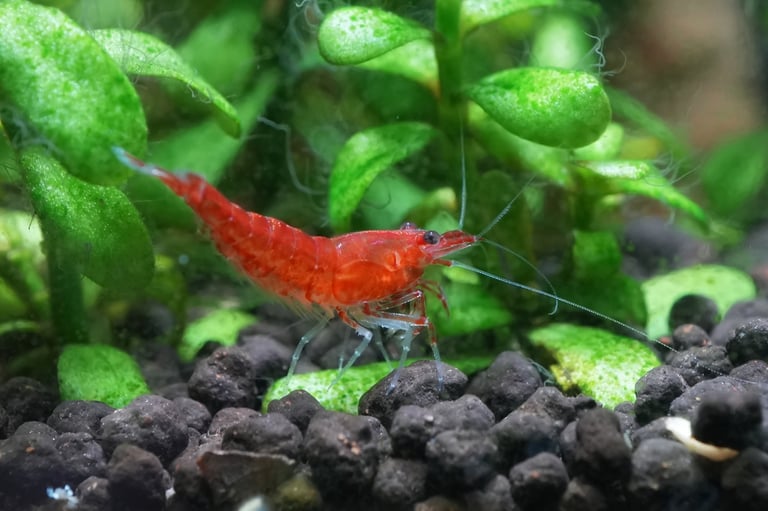
Learn what cherry shrimp actually eat, what they ignore, and why realistic expectations lead to healthier shrimp tanks.
Want a stable aquarium that supports a thriving shrimp colony? Download our free checklist covering what actually matters for ecosystem stability — without the guesswork.
Send Me the Checklist