Shrimp Breeding
How Long Does It Take Cherry Shrimp to Establish a Colony?
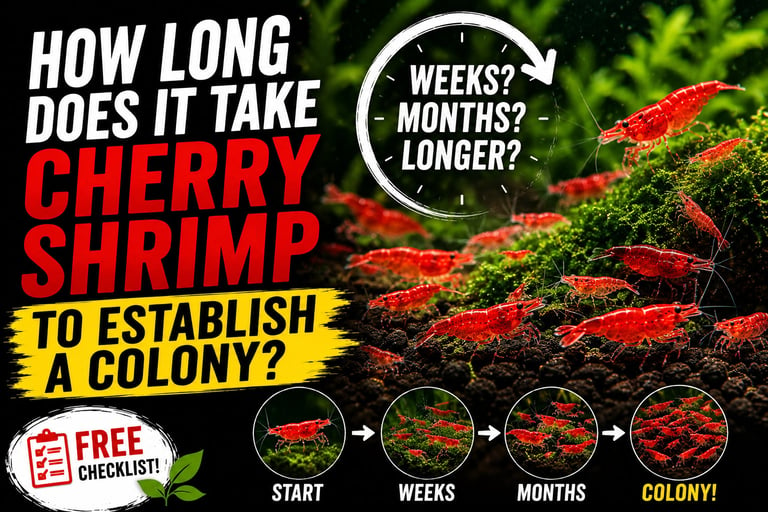
Learn why colony growth takes time, what influences population expansion, and why patience is the most undervalued tool in shrimp keeping.
Many aquarium owners buy cherry shrimp expecting tiny underwater janitors. Add a few shrimp. Watch them clean the tank. Enjoy a spotless aquarium forever. Unfortunately, that's not how it works.
Aquascape Oasis Team
Planted Tank Specialists
If you've been wondering whether cherry shrimp actually clean aquariums, the answer is both yes and no. Let's clear up one of the biggest myths in the aquarium hobby.
Send Me the ChecklistCherry shrimp spend much of their day grazing. They're constantly picking at surfaces throughout the aquarium. You'll often see them exploring plants, driftwood, rocks, substrate, and aquarium glass.
Because they're always eating something, many people assume they're cleaning everything they touch. The reality is a bit more complicated. Cherry shrimp are not miracle cleaners. They're simply taking advantage of available food sources.
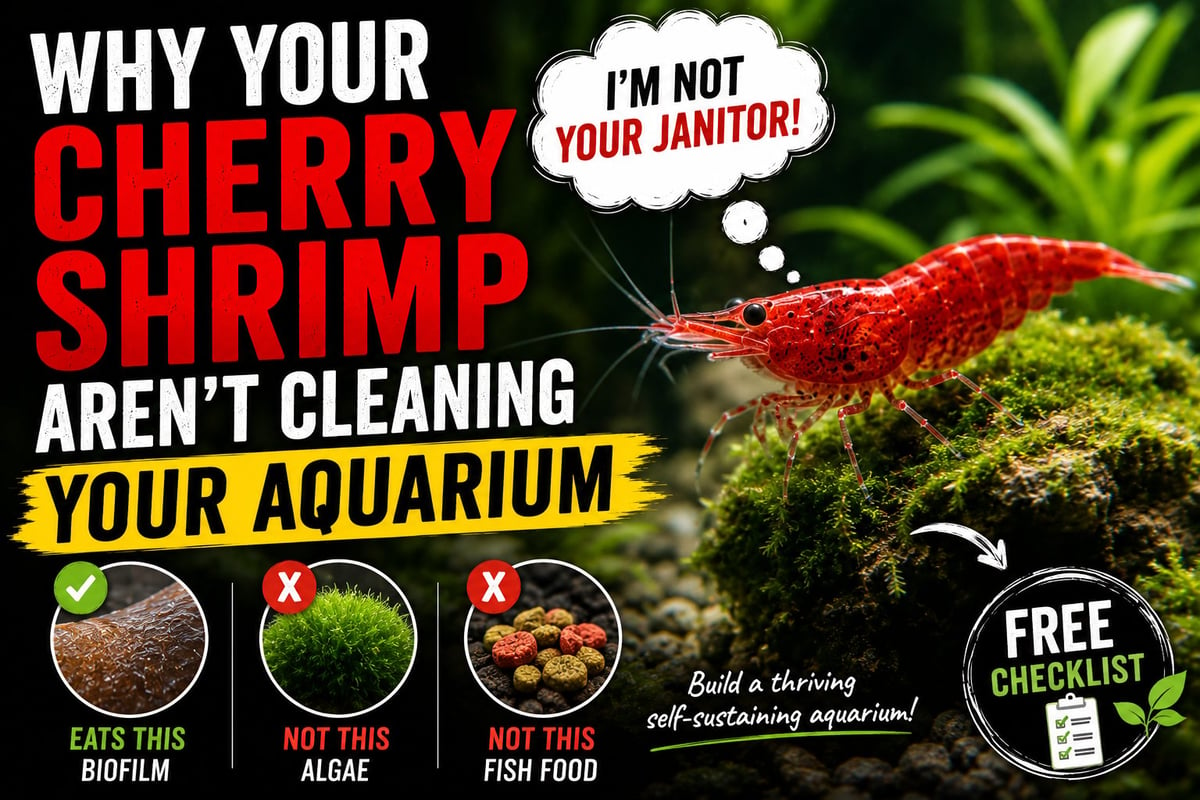
One of the most common questions new shrimp keepers ask is: "Do cherry shrimp clean aquariums?" The answer is both yes and no. Cherry shrimp can provide valuable benefits to a planted aquarium, but many hobbyists have unrealistic expectations about what these tiny crustaceans actually do.
One of the reasons cherry shrimp are so popular is that they're opportunistic grazers. Throughout the day, they consume a variety of materials found within the aquarium. These can include biofilm, microorganisms, decaying plant matter, leftover food particles, and organic debris.
This constant grazing behavior helps make shrimp valuable members of many aquarium ecosystems. However, it's important to understand that shrimp are selecting foods they want — not necessarily foods you want removed.
Key insight: Shrimp graze constantly because they're hungry, not because they're on a cleaning mission. The foods they target are the ones they find nutritious — not necessarily the ones you find unsightly.
One of the most important foods for cherry shrimp is biofilm. Biofilm is a thin layer of microorganisms that develops on aquarium surfaces. Most aquarium owners never notice it. Shrimp do.
In fact, many successful shrimp colonies spend much of their day grazing on biofilm. This is one reason mature aquariums often support shrimp much better than newly established tanks. Mature ecosystems generally provide more natural grazing opportunities.
What you need to know: Biofilm is invisible to most hobbyists, but it's often the primary food source for thriving shrimp colonies. A tank that looks "clean" to you may actually be a buffet for your shrimp.
This is where many beginners become disappointed. Some hobbyists assume shrimp will eliminate every visible problem in the aquarium. Unfortunately, shrimp don't always cooperate with those expectations.
Certain algae types — shrimp may ignore tough, filamentous, or unpalatable algae species
Large algae outbreaks — a few shrimp can't solve a tank-wide algae problem
Excessive waste accumulation — shrimp produce waste too; they don't eliminate it
Underlying ecosystem problems — adding shrimp to an unhealthy aquarium rarely solves the root cause
Many aquarium problems require broader ecosystem balance rather than additional cleanup crews. Adding shrimp to an unstable tank doesn't fix instability — it just adds more livestock to a struggling system.
Critical reality: Shrimp are not a substitute for proper aquarium maintenance. A healthy tank supports shrimp — not the other way around.
Want a stable aquarium that supports thriving shrimp naturally?
Get the free checklist that helps you identify what your ecosystem actually needs.
Download Free Stability ChecklistOne of the biggest misconceptions surrounding shrimp involves algae. People often assume that if shrimp eat algae, they should completely eliminate it. In reality, biofilm and algae are not the same thing.
Shrimp frequently show strong interest in biofilm because it contains valuable food sources. Algae, on the other hand, varies dramatically depending on the species and conditions present within the aquarium. This is one reason hobbyists often report different experiences with their shrimp. One person sees constant grazing. Another wonders why the algae remains untouched.
Biofilm — a thin microorganism layer rich in proteins and bacteria. Shrimp actively seek it out.
Algae — varies by type. Some species are palatable to shrimp, many are not.
Critical reality: Just because your shrimp are grazing constantly doesn't mean they're eating algae. They're often targeting biofilm — the invisible food source you can't see.
At this point, you may be wondering whether shrimp provide any cleaning benefits at all. The answer is absolutely yes. Cherry shrimp contribute to the aquarium ecosystem in several ways.
Their constant grazing activity helps process organic material and supports overall biological balance. They also encourage hobbyists to build healthier ecosystems that support natural food production.
Shrimp break down decaying matter into smaller particles
Their waste feeds plants and beneficial bacteria
Grazing supports the broader biological community
Healthy, active shrimp signal a stable aquarium
The key is understanding their role. Shrimp are contributors. They are not complete maintenance systems.
"Shrimp don't clean your tank for you. They participate in an ecosystem that, when balanced, largely cleans itself."
Many aquarium owners create what could be called a "cleanup crew shopping list." They purchase shrimp, snails, algae eaters, and other scavengers. Then expect those animals to solve maintenance problems.
Unfortunately, living creatures are not substitutes for ecosystem stability. Even the best cleanup crew struggles when the aquarium itself is out of balance. Healthy tanks support healthy cleanup crews — not the other way around.
Critical reality: The most frustrating aquarium experiences often happen when hobbyists stock a "cleanup crew" to fix a tank that was never stable to begin with. Build stability first. Let the cleanup crew be a bonus, not the solution.
Stop buying cleanup crews. Start building stability.
Our free checklist walks you through what actually matters for a balanced ecosystem that supports shrimp naturally.
Get the Free Stability ChecklistThe most successful shrimp keepers usually have realistic expectations. They don't expect shrimp to eliminate every maintenance task. They don't expect shrimp to cure algae outbreaks. They don't expect shrimp to solve underlying stability problems.
Instead, they view shrimp as one piece of a larger ecosystem. When that ecosystem is healthy, shrimp can thrive and contribute naturally.
The shift from "what can these shrimp do for my tank" to "how can I build a tank where shrimp thrive" is often the turning point for successful shrimp keepers. When you focus on ecosystem health, the cleaning benefits follow naturally.
Many of the benefits shrimp provide become more noticeable in stable aquariums. Stable tanks often support better biofilm production, more natural food sources, less stress, and stronger shrimp colonies.
As the ecosystem matures, shrimp are able to perform the behaviors they evolved to perform. This is one reason experienced shrimp keepers often focus heavily on long-term stability rather than quick fixes.
Build stability, not a cleanup crew. The healthiest shrimp tanks are rarely built around finding animals that perform chores. Instead, they're built around creating balanced ecosystems — healthy plants, stable water conditions, biological maturity, and natural food sources. When these factors come together, shrimp often become one of the most enjoyable parts of the aquarium.
Ready to build a shrimp tank that actually works?
Download our free checklist and learn what successful shrimp keepers actually monitor for long-term stability.
Grab Your Free ChecklistCommon questions about cherry shrimp as aquarium cleaners, their diet, and building a healthy shrimp ecosystem
Continue learning about cherry shrimp keeping and aquarium ecosystem balance
Learn why colony growth takes time, what influences population expansion, and why patience is the most undervalued tool in shrimp keeping.
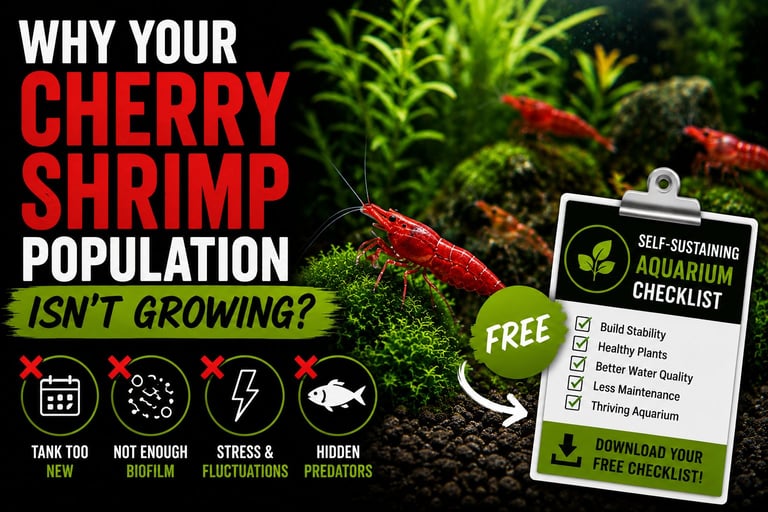
Learn why survival and reproduction are not the same thing — and what might be holding your colony back.
Want a stable aquarium that supports thriving shrimp and a more balanced ecosystem? Download our free checklist covering what actually matters — without the guesswork.
Send Me the Checklist