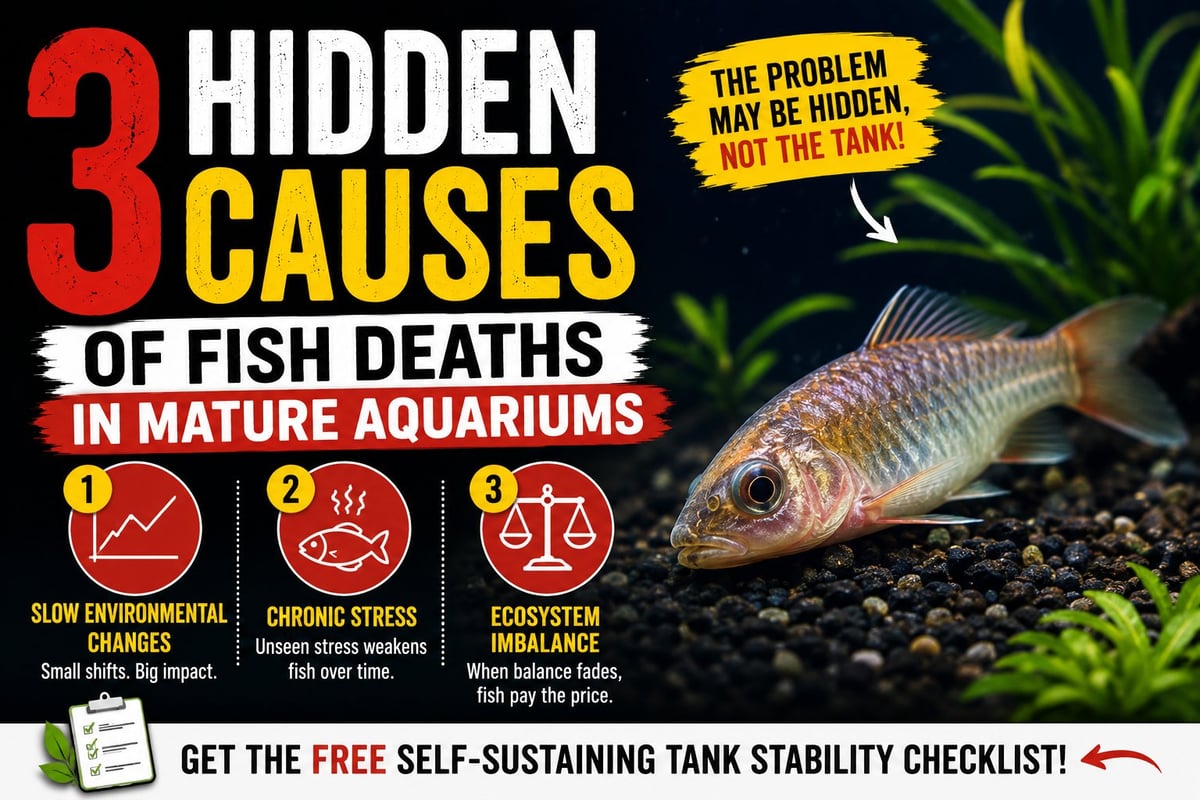
Why fish can die in aquariums that look healthy — and the hidden factors that many hobbyists miss until it's too late.
Aquascape Oasis Team
Aquarium Health Specialists
Don't let your aquarium become another source of frustration. Download our free checklist covering the key stability factors successful aquarists monitor — so your fish can thrive long-term.
Send Me the ChecklistFew things are more frustrating than losing fish in an aquarium that appears healthy.
The water looks clear. The plants look great. The aquarium has been running for months — or even years. Yet fish continue to disappear.
If you've been searching for answers because you're experiencing fish dying in an aquarium, you're not alone.
Many hobbyists expect problems to occur in newly established tanks. What surprises them is that mature aquariums can experience losses too. In many cases, the cause isn't obvious.
Let's look at three hidden factors that may contribute to fish deaths in otherwise healthy-looking aquariums. Related: 7 warning signs your aquarium is losing stability and 9 ways hobbyists accidentally disrupt their aquarium ecosystem.
When fish die in a new aquarium, hobbyists often suspect the tank is still cycling. In a mature aquarium, that explanation usually doesn't make sense.
This often leads owners to assume the problem must be disease or bad luck. While those are possibilities, many aquarium fish deaths are linked to underlying instability that develops gradually over time.
The challenge is that mature aquariums often hide problems extremely well. The water looks clear, plants appear healthy, and everything seems fine — until fish start dying suddenly.
Want to spot hidden problems before your fish pay the price?
Get the Free Stability ChecklistMany fish tank problems don't occur suddenly. Instead, conditions may shift slowly over weeks or months. Because the changes happen gradually, they often go unnoticed.
Examples can include:
Fish are constantly responding to their environment. Even when conditions appear acceptable, ongoing changes can create stress that accumulates over time.
This is one reason stable aquariums often outperform aquariums that experience frequent adjustments. Consistency matters more than perfection.
Stress is one of the most overlooked factors in aquarium fish deaths. Many hobbyists look for obvious signs of disease while ignoring ongoing stressors that weaken fish gradually.
Potential sources of chronic fish stress in an aquarium may include:
The challenge is that stressed fish don't always display dramatic symptoms immediately. Instead, stress may weaken fish gradually, making them more vulnerable to problems later.
By the time fish start dying suddenly, the original source of stress may have been present for weeks or even months — and may be difficult to identify.
Healthy aquarium ecosystems are more than glass boxes filled with water. They are complex ecosystems where fish depend on countless biological processes occurring behind the scenes.
When balance begins to decline, fish are often affected before hobbyists recognize the problem. Signs of ecosystem imbalance can include:
Many fish losses occur after an aquarium has been showing warning signs for weeks or months. The signs simply weren't recognized as part of a larger pattern.
When fish keep dying despite acceptable water test results, look beyond the numbers. The problem is often hiding in the broader ecosystem balance.
Tired of guessing why your fish keep dying? Get clear, actionable steps.
Download the Free ChecklistOne of the most confusing experiences in aquarium keeping is losing fish despite receiving acceptable test results. This happens because water tests only measure a small portion of what's happening inside the ecosystem.
A test kit may not reveal:
Numbers are useful. But they don't always tell the entire story. Observing fish behavior, plant growth, maintenance trends, and overall aquarium stability often provides valuable clues that a test strip can't.
When fish begin dying, many hobbyists immediately start making changes. They may:
While some actions may be helpful, rapid changes can sometimes create additional instability. This often makes diagnosing the original issue even more difficult — and can turn fish tank problems into a recurring cycle.
Stop the cycle of fish losses. Get a proven stability framework.
Get the Free Checklist NowMany aquarium owners focus entirely on water quality. While water quality is important, fish also benefit from:
Healthy ecosystems support healthy fish. This is one reason experienced aquarists often spend more time building fish tank stability than chasing perfect numbers on a test kit.
The healthiest aquariums are not necessarily the most complicated. They're often the most stable.
Stable ecosystems allow fish to adapt successfully, experience less stress, recover from minor fluctuations, and thrive over the long term.
Many mature aquariums remain healthy for years because stability becomes the foundation of the system. When that foundation is solid, fish can handle occasional challenges without serious consequences.
When fish deaths occur, it's natural to focus on the individual fish. However, it's often more useful to look at the aquarium as a whole.
Ask yourself:
Patterns often reveal problems long before a single test result does. Learning to read your aquarium's behavior is one of the most valuable skills a hobbyist can develop.
Build stability before problems appear. The best aquarium owners don't wait for fish deaths before focusing on aquarium stability. They build healthy ecosystems from the start — with healthy plants, biological maturity, consistent routines, and predictable conditions. These factors help create an environment where fish can thrive long term.
Common questions about fish deaths in mature aquariums
Still have questions? The checklist covers what to monitor week by week.
Download the Free ChecklistExplore more guides to help you maintain a healthy, thriving aquarium ecosystem.
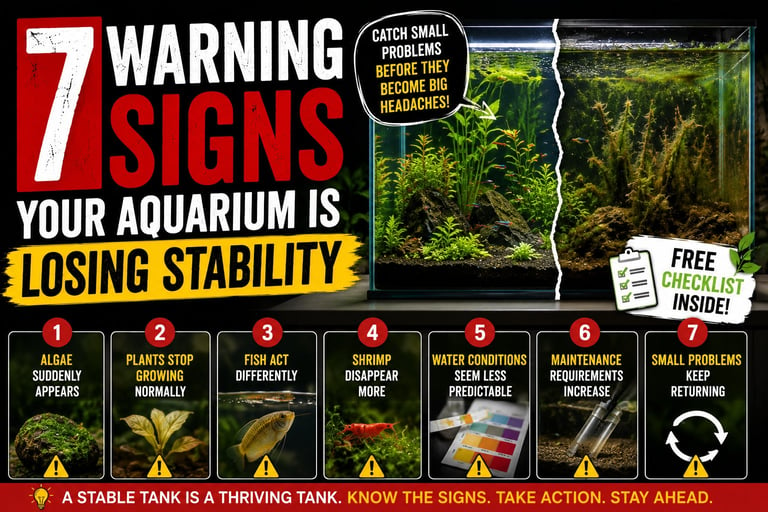
Learn the early warning signs before fish start dying.
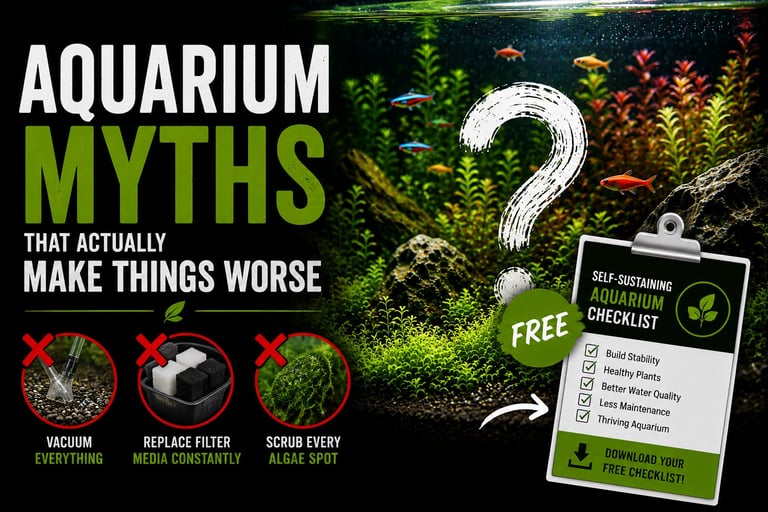
Not all advice ages well. Learn what experienced aquarists do instead.
Ready to stop losing fish and start enjoying your aquarium again?
Get the Free Stability ChecklistWant to create a healthier aquarium that supports long-term fish health? Learn the key factors successful aquarists monitor when creating stable ecosystems.
Identify Issues Early
100% Free Download
No Spam, Ever
Join thousands of aquarium enthusiasts building healthier tanks.