Aquarium Myths That Can Make Your Tank Worse | Aquascape Oasis
Aquarium Myths

Beginner Aquarium Advice That Actually Makes Things Worse

If you've spent any time researching aquariums online, you've probably encountered countless tips, tricks, and "rules" that hobbyists swear by. The problem? Not all of them age well.

Aquascape Oasis Team

Planted Tank Specialists

9 min read

Tired of conflicting aquarium advice? Download our free checklist covering what actually matters for a stable, healthy planted tank — without the myths.

Send Me the Checklist

Not All Aquarium Advice Ages Well

If you've spent any time researching aquariums online, you've probably encountered countless tips, tricks, and "rules" that hobbyists swear by.

The problem?

Not all aquarium advice ages well. Some recommendations were developed decades ago. Others are repeated so often that people assume they're true without ever questioning them.

While most advice is given with good intentions, some common aquarium myths can actually create more work, more instability, and more frustration for aquarium owners.

Let's look at a few examples of popular beginner aquarium tips that may be doing more harm than good.

Understanding why these myths persist — and what many experienced planted tank owners do instead — can save you months of unnecessary frustration.

1

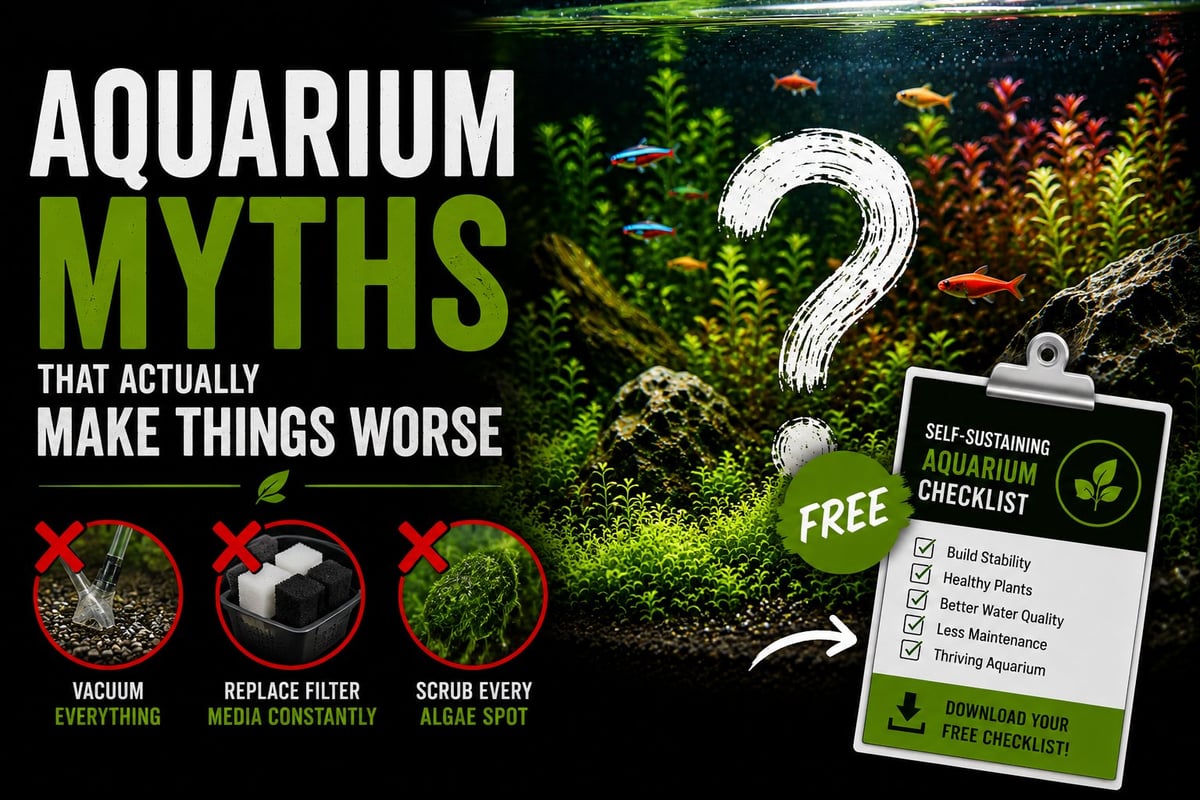
Myth: Vacuum Every Inch of Your Aquarium During Every Water Change

Many beginners are taught that a spotless aquarium is a healthy aquarium. As a result, they aggressively vacuum every area of the substrate during every maintenance session.

While removing excess waste can be beneficial, constantly disturbing every inch of the aquarium may not always be necessary.

Your substrate is more than decorative gravel or sand. It's home to:

Beneficial bacteria
Plant roots
Microorganisms
Biological processes

Key insight: Many successful planted aquarium owners take a much different approach than constantly stripping the substrate of everything living within it. They understand that a healthy substrate is alive, not sterile.

2

Myth: Replace Filter Media Frequently

This may be one of the most expensive aquarium myths ever created. Many aquarium owners believe filter media should be replaced on a strict schedule. Some manufacturers even encourage routine replacement.

The problem is that beneficial bacteria colonize filter media over time. These bacterial communities play an important role in processing waste and supporting biological stability.

Constantly replacing established media can disrupt those bacterial populations and potentially create instability.

What you need to know: This doesn't mean filter maintenance should be ignored. It simply means there may be more happening inside your filter than many beginners realize. Established filter media is valuable — not something to discard on a schedule.

3

Myth: Scrub Away Every Spot of Algae

Few things trigger panic faster than seeing algae appear in a new aquarium. Many hobbyists immediately begin scrubbing glass, removing decorations, deep cleaning hardscape, and chasing every visible patch.

The issue is that algae is often a symptom rather than the root problem. Removing visible algae may temporarily improve appearance, but it doesn't necessarily address why the algae appeared in the first place.

Many experienced aquarists focus more on overall ecosystem balance than fighting individual algae spots. They understand that algae tells them something about their tank's condition.

Key insight: Scrubbing algae without addressing the underlying cause is like mopping the floor while the sink is still overflowing. Aquarium algae myths often lead people to treat symptoms while the real imbalance continues unchecked.

Tired of fighting algae and chasing symptoms?

Get the free checklist that helps you understand what your aquarium is actually telling you.

Download Free Stability Checklist
4

Myth: More Cleaning Always Means a Healthier Tank

This myth surprises many beginners. In most areas of life, cleaning more often is usually a good thing. Aquariums can be different.

An aquarium is a living ecosystem. Beneficial bacteria, microorganisms, plants, and biological processes all contribute to stability. Constantly tearing apart the aquarium in pursuit of perfection can sometimes create the very instability hobbyists are trying to avoid.

Many successful planted tanks thrive because their ecosystems are allowed to mature rather than being reset repeatedly. This is a core principle of the self sustaining aquarium approach.

Over-cleaning disrupts bacterial colonies that process fish waste and maintain water quality

Constant substrate disturbance can release trapped nutrients and trigger algae blooms

Excessive filter cleaning removes the very bacteria keeping your tank stable

Critical reality: Many aquarium maintenance mistakes happen because hobbyists treat their tank like a sterile environment rather than a living ecosystem. The healthiest aquariums are often the ones that are disturbed the least.

5

Myth: Every Aquarium Should Follow the Same Maintenance Schedule

One of the most common aquarium myths is the belief that every tank should follow an identical routine. Water changes every seven days. Filter cleaning every two weeks. Substrate cleaning every month.

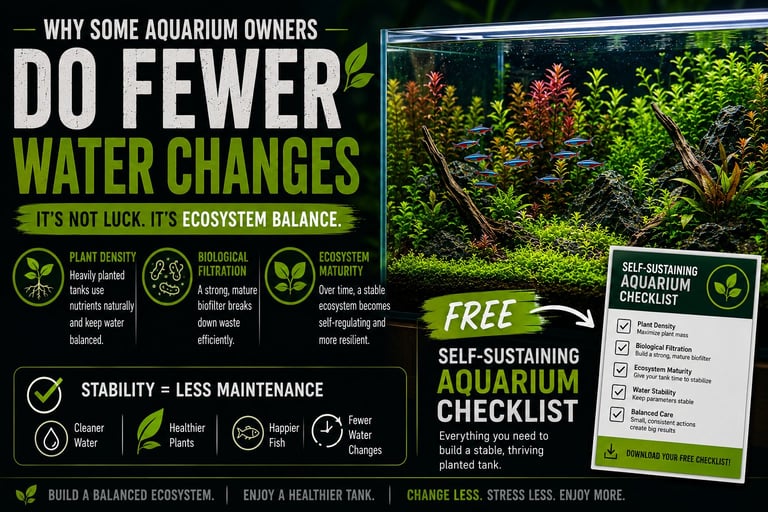
The reality is that aquariums vary tremendously. A heavily planted aquarium with light stocking may behave very differently than a sparsely planted community tank.

Factors that influence maintenance needs include:

Plant density

More plants = more natural filtration

Filtration

Type, capacity, and maturity

Stocking levels

Bioload drives maintenance needs

Tank maturity

Established tanks need less intervention

Feeding habits

Amount and frequency matters

Ecosystem balance

The whole system working together

What works perfectly for one aquarium may be completely wrong for another. Rigid schedules ignore the unique biology of each tank.

"The best aquarium owners don't follow a calendar. They watch their tank and respond to what it's telling them."

Stop following rigid rules. Start understanding your ecosystem.

Our free checklist walks you through what actually matters for a stable planted tank.

Get the Free Stability Checklist

Why These Myths Persist

Most aquarium myths contain a small grain of truth. That's why they survive. Vacuuming can be useful. Filter maintenance is important. Algae should be monitored. Water changes matter.

The issue isn't the concept itself. The issue is applying simple rules to complex ecosystems without considering the bigger picture. A planted aquarium is not a glass box that needs to be scrubbed spotless — it's a living system that requires balance, not perfection.

Understanding this distinction is often what separates frustrated beginners from successful long-term aquarists.

The Best Aquarium Owners Think Differently

Experienced aquarium keepers often focus less on rigid rules and more on understanding how their ecosystem functions. Instead of asking "What maintenance task should I perform today?" they ask "What is my aquarium telling me?"

Healthy plants. Stable water conditions. Strong biological filtration. Balanced livestock. These factors often provide better guidance than generic rules found online.

Stability beats perfection. Many beginners spend months chasing perfect water, perfect algae control, and perfect maintenance schedules. The healthiest aquariums are often not perfect — they're stable. Stable ecosystems are generally more resilient, easier to maintain, and more enjoyable to own.

Stop chasing perfection. Start building stability.

Download our free checklist and learn what successful aquarists actually monitor.

Grab Your Free Checklist
Frequently Asked Questions

Common questions about aquarium myths, maintenance mistakes, and building a stable planted tank

Download the Free Self-Sustaining Tank Stability Checklist

Want to avoid common aquarium myths and build a healthier planted tank? Learn the key factors successful aquarists monitor when creating stable, low-maintenance ecosystems.

Avoid Common Myths

Stop following advice that makes your tank harder to maintain

Reduce Frustration

Learn what actually matters instead of chasing symptoms

Build a Stable Ecosystem

Create a low-maintenance tank that largely takes care of itself

Get Your Free Checklist Now

No spam. Unsubscribe anytime. Simple, actionable stability checklist.