Discover why algae keeps returning no matter how often you clean — and learn the natural, proven ways to restore balance to your aquarium ecosystem.
Aquascape Oasis Team
Planted Tank Specialists
If you've searched for how to stop aquarium algae, you're probably dealing with the same frustrating cycle many aquarium owners face.
You clean the glass. The tank looks great for a few days. Then the algae comes right back.
Green algae on the glass. Hair algae on plants. Brown algae covering decorations. Sometimes it feels like no matter what you do, algae always wins.
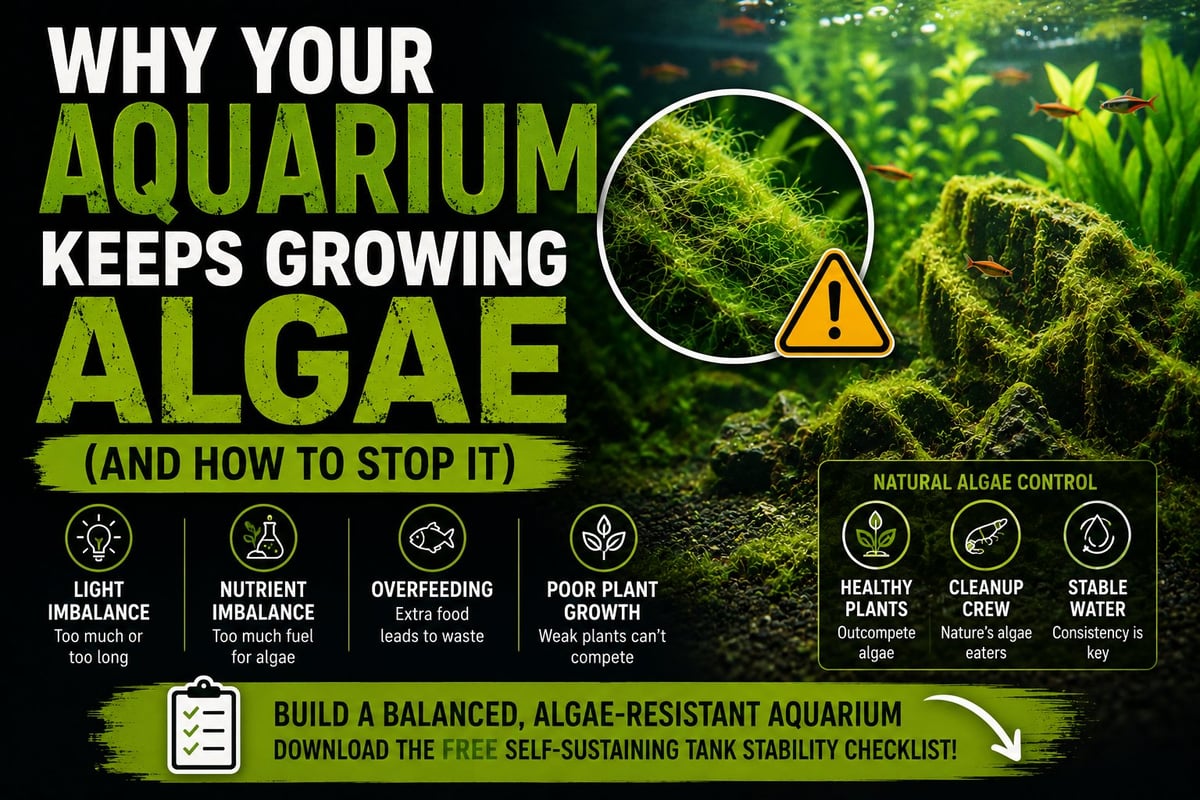
The truth is that algae is rarely the actual problem. Algae is usually a symptom of an imbalance somewhere within your aquarium ecosystem. Until that imbalance is identified and corrected, algae will continue returning no matter how often you clean it away.
Algae naturally exists in virtually every aquarium. The goal isn't to eliminate algae completely — it's to prevent it from taking over. When conditions become favorable, algae grows faster than your plants can compete with it.
Several factors can create conditions where algae thrives. Understanding these is the first step to controlling it.
Light is one of the most common contributors to algae problems. Many aquarists unknowingly provide either too much light or inconsistent lighting schedules.
Long photoperiods, direct sunlight, or powerful lighting systems can create an environment where algae thrives. Even healthy planted aquariums can experience algae outbreaks when lighting isn't properly balanced with the needs of the ecosystem.
If you've recently upgraded your lighting or increased the amount of time your lights stay on, algae may be responding to those changes.
Plants and algae both require nutrients to grow. When nutrients become unbalanced, algae often takes advantage of the situation before plants can.
This doesn't always mean there are "too many nutrients." In some cases, plants struggle because essential nutrients are missing, allowing algae to fill the gap. This is why two aquariums with similar setups can experience completely different results.
Key insight: The difference often comes down to ecosystem balance rather than a single nutrient level. A tank with "perfect" nutrient numbers can still have algae if plants aren't thriving.
Want a stable, balanced aquarium that naturally resists algae?
Download the free checklist that helps you maintain perfect ecosystem balance.
Download Free Stability ChecklistFood that isn't consumed eventually breaks down in the aquarium. As waste accumulates, it can contribute to conditions that encourage algae growth.
Many fish owners accidentally overfeed because they want to ensure their fish are getting enough nutrition. Unfortunately, excess food doesn't simply disappear. It becomes part of the nutrient cycle within the tank.
Over time, this can create an environment where algae gains an advantage.
Simple rule: Feed only what your fish can consume in 2-3 minutes. Any uneaten food becomes fuel for algae.
Healthy plants are one of the best competitors against algae. When plants struggle, algae often fills the available space.
Signs of poor plant growth may include:
Many aquarium owners focus entirely on removing algae without addressing the health of their plants. However, thriving plants are often a key component of long-term algae control.
Think of it this way: Plants and algae compete for the same resources — nutrients and light. When plants are thriving, they naturally outcompete algae. When plants struggle, algae steps in.
One of the biggest mistakes hobbyists make is treating algae itself instead of the underlying cause.
Scrubbing algae, removing decorations, or using algae treatments may provide temporary results. But if the original imbalance remains, the algae usually returns.
Think of algae as a warning sign. The visible algae is simply showing you that something within the ecosystem needs attention. Until the ecosystem becomes more balanced, algae will continue finding opportunities to grow.
"You can scrub algae off your glass every weekend for years. Or you can spend one weekend fixing the root cause and never scrub again."
Stop scrubbing. Start solving.
Our free checklist helps you identify the root causes of algae so you can fix them permanently.
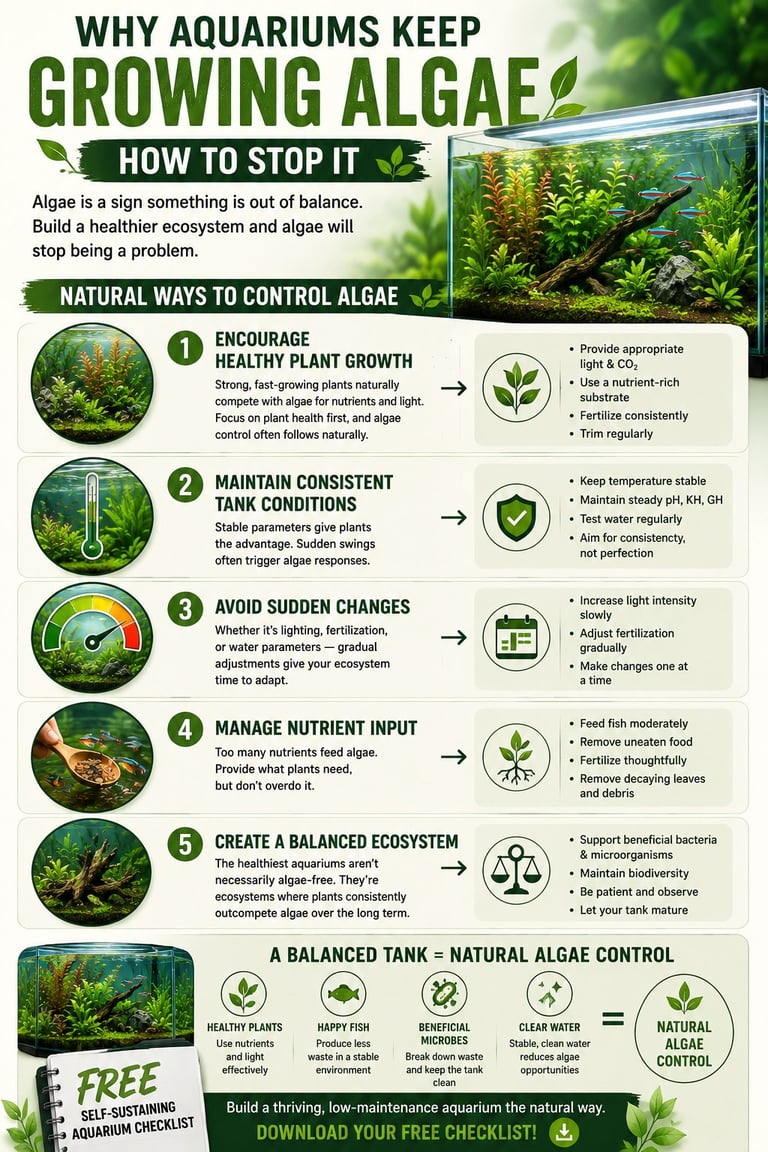
Get the Free Stability ChecklistMany successful aquarium keepers focus on creating conditions that naturally discourage algae growth. This often involves improving overall ecosystem health rather than relying solely on quick fixes.
Thriving plants naturally outcompete algae for nutrients and light. Focus on plant health first, and algae control often follows naturally.
Stable parameters give plants the advantage. Sudden changes often trigger algae responses.
Whether it's lighting, fertilization, or water parameters — gradual adjustments give your ecosystem time to adapt.
Feed moderately, fertilize thoughtfully, and remove decaying plant matter before it breaks down.
The healthiest aquariums aren't necessarily algae-free. They're ecosystems where plants consistently outcompete algae over the long term.
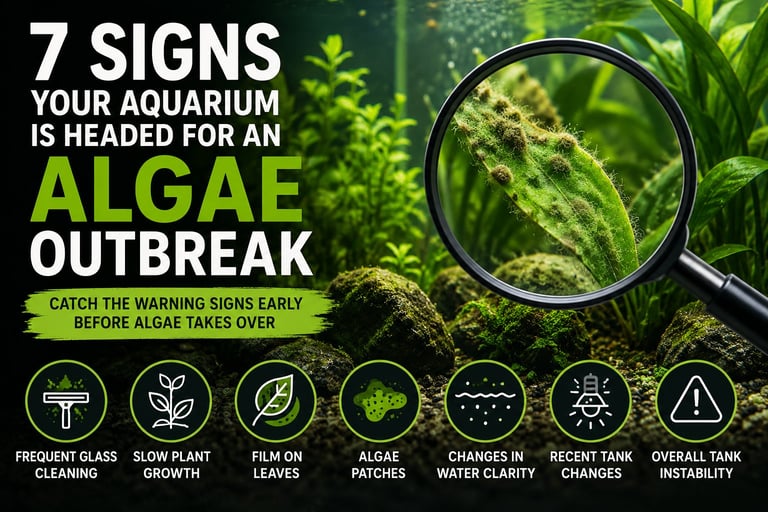
Once a major algae outbreak develops, restoring balance can become challenging. That's why prevention is often far easier than trying to reverse an established problem.
Many aquarists unknowingly create algae-friendly conditions during the first few weeks of setting up a tank. By recognizing potential issues early, you can often prevent algae from becoming a serious problem in the first place.
The most successful planted aquarium owners focus on stability rather than constantly reacting to new symptoms.
The best time to prevent algae is before it starts.
Download our free checklist and learn what successful aquarists monitor to keep their tanks algae-free.
Grab Your Free ChecklistCommon questions about aquarium algae — what causes it and how to stop it
Want to learn the key factors that help prevent algae before it takes over your aquarium? Discover the critical areas successful aquarists monitor to keep their tanks balanced and healthy.
Identify issues before they turn into visible problems
Keep your aquatic plants thriving and healthy long-term
Create a balanced ecosystem from day one
No spam. Unsubscribe anytime. Simple, actionable stability checklist.