7 Signs Your Aquarium Is Headed for an Algae Outbreak | Aquascape Oasis
Warning Signs

7 Signs Your Aquarium Is Headed for an Algae Outbreak

An algae outbreak rarely happens overnight. Learn to spot the early warning signs weeks before algae becomes a major problem — and keep your aquarium balanced and healthy.

Aquascape Oasis Team

Planted Tank Specialists

11 min read
Infographic showing 7 warning signs of aquarium algae outbreaks, including frequent cleaning, slow plant growth, film, patches, water clarity changes, tank instability, and visible algae.

Algae Outbreaks Don't Happen Overnight

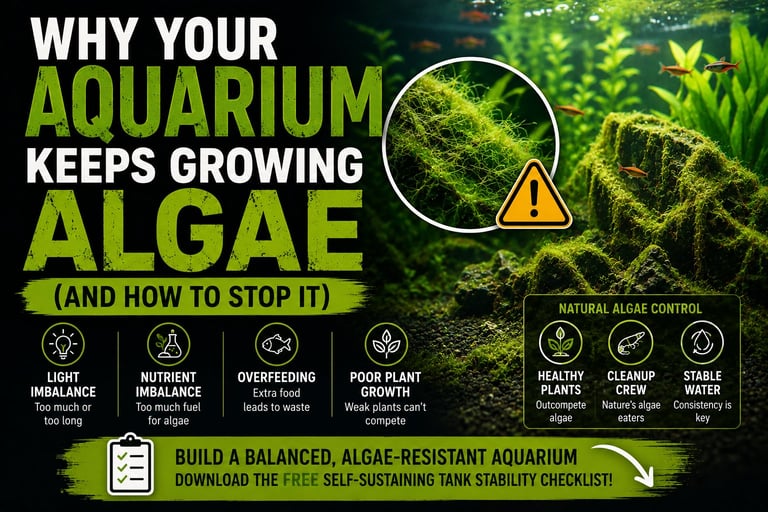
In most cases, your aquarium provides warning signs weeks before algae becomes a major problem. The challenge is that many aquarium owners don't recognize those signs until they're scraping green algae off every surface and wondering what went wrong.

If you know what to look for, you can spot potential trouble early and avoid many of the frustrations that come with a full-blown algae outbreak.

Here are seven common algae outbreak signs every aquarium owner should watch for. Recognizing these early indicators can save you weeks of frustration and help keep your tank balanced.

1

You're Cleaning the Glass More Often

A small amount of algae on the glass is completely normal.

However, if you're finding yourself cleaning the glass every few days instead of every week or two, your aquarium may be drifting out of balance.

Key takeaway: Glass algae is often one of the first visible indicators that conditions are becoming more favorable for algae growth. Many major outbreaks start with what appears to be a harmless increase in glass cleaning.

2

Plant Growth Has Slowed Down

Healthy plants compete with algae for resources. When plants stop growing well, algae often gains an advantage.

You may notice:

  • Fewer new leaves emerging
  • Slower growth overall
  • Pale or yellowing coloration
  • Plants looking unhealthy despite your efforts

Key takeaway: Many aquarium owners focus on removing algae while overlooking declining plant health, even though the two are often connected.

3

Plant Leaves Develop a Thin Film

One of the earliest algae outbreak signs is a dusty or slightly fuzzy coating on plant leaves.

At first, it may seem insignificant. Many hobbyists assume it's simply debris or normal buildup.

Key takeaway: This thin coating can be an early indication that algae is beginning to establish itself throughout the aquarium. Don't dismiss it as normal debris.

Want to Catch Problems Before They Spread?

Don't wait until small patches turn into a full-blown outbreak. Get the free checklist and learn what successful aquarists monitor daily.

Download Free Checklist
4

Small Algae Patches Begin Appearing

Large outbreaks almost always start small.

You may notice:

  • A few green spots on the glass
  • Brown coating on decorations
  • Tiny strands of hair algae
  • Green fuzz on rocks or driftwood

Key takeaway: These isolated patches often appear weeks before a tank experiences a significant algae problem. Ignoring them can allow the issue to spread throughout the aquarium.

5

Water Clarity Changes

Many aquarium owners notice subtle changes in water appearance before algae becomes obvious.

You might see:

  • Slight cloudiness that wasn't there before
  • Reduced clarity — the water isn't as crisp
  • A faint green tint developing
  • Water that simply doesn't look as clean as before

Key takeaway: Changes in water clarity don't always indicate algae, but they often signal that something within the ecosystem is shifting. Pay attention when your water doesn't look as crisp as usual.

6

Recent Changes Were Made to the Tank

Algae outbreaks frequently occur after major adjustments to the aquarium.

Common examples include:

New lighting or longer lighting schedules
Adding more fish to the tank
New fertilizers or dosing changes
Large cleanings or substrate disturbance
Significant aquascape changes

Key takeaway: Even positive improvements can temporarily disrupt balance and create opportunities for algae to gain a foothold. Be extra vigilant after any significant change.

7

Your Tank Feels Less Stable

Sometimes the biggest warning sign is difficult to measure — the aquarium simply feels less stable than it did before.

Experienced aquarists understand that algae often follows instability. The more stable an ecosystem becomes, the harder it is for algae to take over.

Key takeaway: Maybe plant growth has slowed. Maybe maintenance requirements have increased. Maybe you're noticing small issues that weren't there a month ago. Trust your instincts — if something feels off, it probably is.

Why These Signs Matter

Most aquarium owners don't notice algae problems until the outbreak is already underway. By then, the root cause may have been developing for weeks.

Recognizing these warning signs early allows you to identify potential issues before algae begins dominating the aquarium.

Think of algae as a symptom. The visible growth is often the result of underlying imbalances that have been building beneath the surface.

Don't Wait Until Algae Takes Over

The sooner you recognize warning signs, the easier it becomes to keep your aquarium moving in the right direction. Download the free checklist and start monitoring what matters.

Get Your Free Checklist

Frequently Asked Questions

Common questions about spotting and stopping algae before it takes over

Don't Wait Until Algae Takes Over

The healthiest planted aquariums aren't necessarily algae-free. They're stable ecosystems where plants, fish, beneficial bacteria, and water conditions remain balanced over time. The sooner you recognize warning signs, the easier it becomes to keep your aquarium moving in the right direction.

Download the Free Self-Sustaining Tank Stability Checklist

Want to catch problems before they turn into algae outbreaks? Learn the key areas successful aquarium owners monitor to maintain a healthier, more balanced ecosystem.

Spot Instability Early

Identify issues before they turn into visible algae problems

Avoid Common Mistakes

Learn what experienced aquarists monitor to keep tanks thriving

Reduce Algae Recurrence

Build a more stable aquarium from the start

Get Your Free Checklist Now

No spam. Unsubscribe anytime. Simple, actionable stability checklist.