Beginner Aquarium Advice That Actually Makes Things Worse
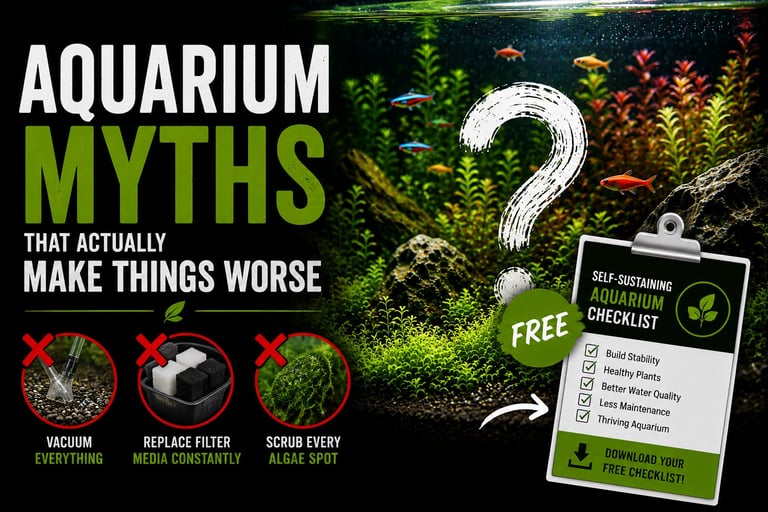
Not all aquarium advice ages well. Discover 5 common myths that may be making your tank harder to maintain β and what experienced aquarists do instead.
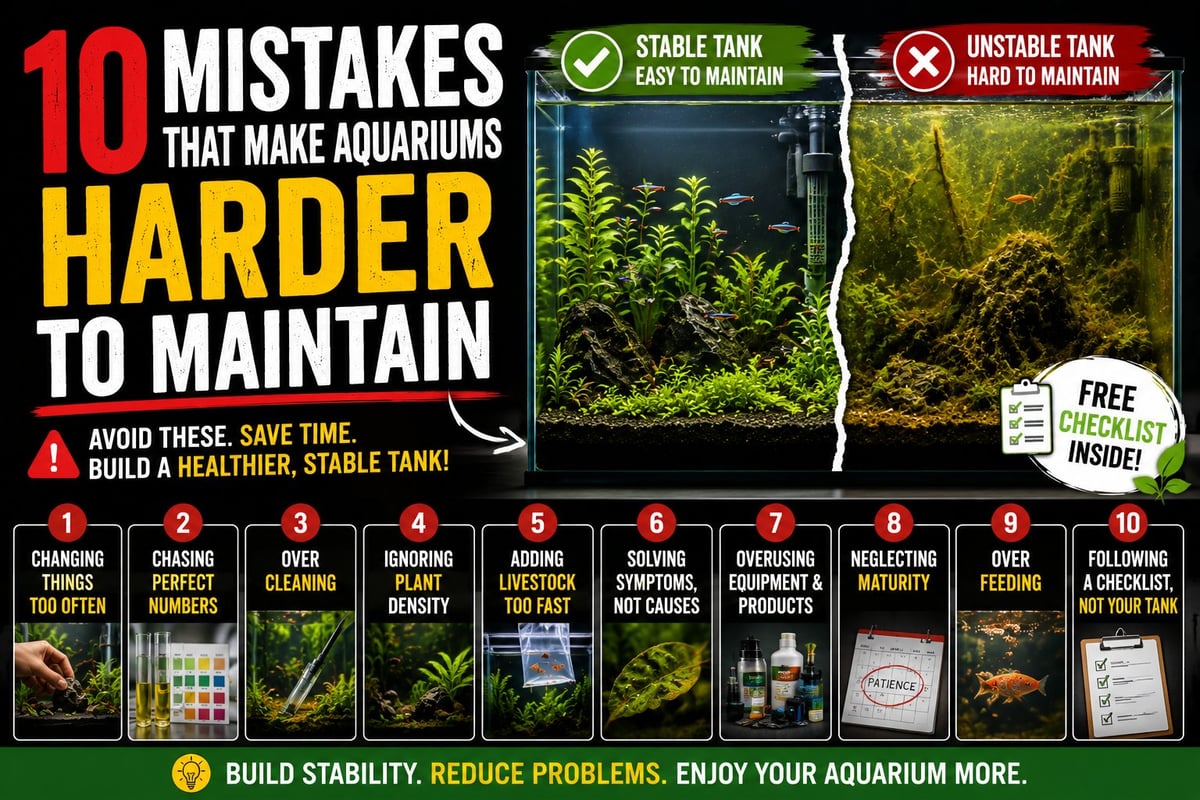
Many aquarium owners believe successful tanks require endless maintenance β constant cleaning, testing, and adjusting. But in many cases, the opposite is true. Learn the 10 most common aquarium maintenance mistakes that create instability, algae, and frustration.
Aquascape Oasis Team
Planted Tank Specialists
If your aquarium feels like a full-time job, one or more of these common aquarium maintenance mistakes may be responsible. Download our free checklist to identify the key stability factors you might be missing.
Send Me the ChecklistMany aquarium owners believe successful tanks require endless maintenance.
Constant cleaning. Constant testing. Constant adjustments.
But in many cases, the opposite is true. Some aquariums become difficult to maintain because of mistakes that create instability and force owners into a cycle of endless troubleshooting.
The good news? Many of these mistakes are completely avoidable.
If your aquarium feels like a full-time job, one or more of these common aquarium maintenance mistakes may be responsible. The healthiest tanks are usually managed based on observation rather than rigid rules.
Let's walk through the 10 most common mistakes β and what to do instead.
One of the biggest mistakes beginners make is changing multiple variables at the same time. They might rearrange the aquascape, change fertilizers, adjust lighting, add new livestock, or modify filtration β all within a short period.
Unfortunately, every change affects the ecosystem. When multiple changes happen at once, it becomes difficult for the aquarium to stabilize.
Key insight: Give each change time to settle before making another. A stable aquarium is built on patience, not constant adjustments.
Many hobbyists spend years trying to achieve perfect water parameters. While water quality matters, chasing perfection often creates more problems than it solves.
Constant adjustments can lead to instability, stress, and inconsistent conditions. Healthy aquariums are often built around stability rather than perfection.
What to remember: Your fish and plants don't need perfect numbers β they need consistent conditions. A slightly "imperfect" but stable tank is far healthier than one constantly being adjusted.
Many people assume a spotless aquarium is a healthy aquarium. As a result, they scrub constantly, deep clean excessively, and disturb substrate frequently.
Aquariums are living ecosystems. Beneficial bacteria and microorganisms require time to establish themselves. Excessive cleaning can sometimes reset important biological processes.
What to remember: A healthy aquarium isn't sterile β it's biologically active. Let your beneficial bacteria and microorganisms do their work.
These first three mistakes are just the beginning.
Download our free checklist to avoid all 10 mistakes and build a more stable aquarium.
Download Free Stability ChecklistPlants do much more than make an aquarium look attractive. Healthy plant growth often contributes to biological balance, nutrient utilization, and ecosystem stability.
Sparse planting frequently makes aquariums harder to manage than heavily planted systems. Many successful low-maintenance tanks rely heavily on plant growth.
Key insight: Think of plants as your aquarium's natural filtration system. The more healthy plants you have, the more stable your ecosystem becomes β and the less maintenance you'll need to do.
It's easy to become excited when setting up a new aquarium. Many hobbyists add fish, shrimp, and other livestock before the ecosystem is fully prepared.
This can create challenges that require ongoing maintenance and correction. Patience during the early stages often pays significant dividends later.
What to remember: A mature biological filter is the foundation of low-maintenance aquarium keeping. Give your tank time to cycle before adding animals β your future self will thank you.
Many aquarium owners spend their time fighting symptoms β scrubbing algae, removing debris, trimming damaged plants. These actions may be necessary, but they don't always address the underlying reason the problem appeared.
Long-term success often comes from understanding root causes rather than repeatedly treating symptoms.
Algae is a symptom β nutrient imbalance or lighting issues are often the cause
Address root causes once instead of fighting symptoms forever
"You can scrub algae every weekend for years β or you can fix the imbalance causing it. One approach is maintenance. The other is problem-solving."
Stop fighting symptoms. Start fixing root causes.
Our free checklist helps you identify what's really causing your aquarium problems.
Get the Free Stability ChecklistMore equipment does not automatically create a healthier aquarium. Many beginners assume every problem requires new equipment, new additives, and new products.
In reality, some of the healthiest aquariums are surprisingly simple. Strong ecosystems often outperform complicated setups.
Key insight: Before buying another piece of equipment, ask yourself: is this solving a real problem, or am I overcomplicating something that could be handled naturally?
Aquariums change dramatically as they mature. New systems often experience algae outbreaks, plant adjustments, and parameter fluctuations.
Many hobbyists become frustrated because they expect immediate stability. Mature aquariums often become easier to maintain because biological processes have had time to establish themselves.
What to remember: Time is one of the most powerful tools in aquarium keeping. The longer a tank runs undisturbed, the more resilient it becomes. Trust the process.
Overfeeding remains one of the most common maintenance mistakes in the hobby. Excess food can contribute to increased waste, algae growth, and water quality issues.
Many aquarium owners are surprised by how little food fish and shrimp actually require. A tiny pinch is often more than enough for most community tanks.
Practical tip: Feed only what your fish can consume in 1-2 minutes. If food hits the substrate, you're likely feeding too much. Less food means less waste, less algae, and less maintenance.
Many hobbyists focus entirely on schedules β clean every week, change water every week, vacuum every week. While routines are useful, successful aquarium owners often pay more attention to the aquarium itself than the calendar.
The healthiest tanks are usually managed based on observation rather than rigid rules. If your tank doesn't need a water change, don't do one just because it's Saturday.
"The best aquarium keepers aren't the ones who do the most β they're the ones who know when to do nothing."
Ready to stop the cycle of endless maintenance?
Download our free checklist and learn the key stability factors that make aquariums easier β not harder β to maintain.
Grab Your Free ChecklistHave you ever noticed that experienced hobbyists often spend less time fighting problems? That's usually because they've built systems that naturally support stability.
Healthy plants. Mature biological filtration. Balanced stocking. Consistent conditions. These factors often reduce the need for constant intervention.
The easiest aquariums to maintain are rarely the ones receiving the most attention. They're usually the ones supported by stable ecosystems.
When stability improves, many common problems become less frequent. Maintenance becomes more predictable. And the aquarium becomes more enjoyable.
The Goal Isn't More Work
Many beginners assume successful aquarium keeping requires doing more β more cleaning, more testing, more products, more adjustments. In reality, many experienced hobbyists focus on doing fewer things β but doing the right things consistently.
Get the Free ChecklistCommon questions about aquarium maintenance mistakes and how to build a more stable tank
Learn more about building a stable, low-maintenance aquarium that practically takes care of itself
Not all aquarium advice ages well. Discover 5 common myths that may be making your tank harder to maintain β and what experienced aquarists do instead.
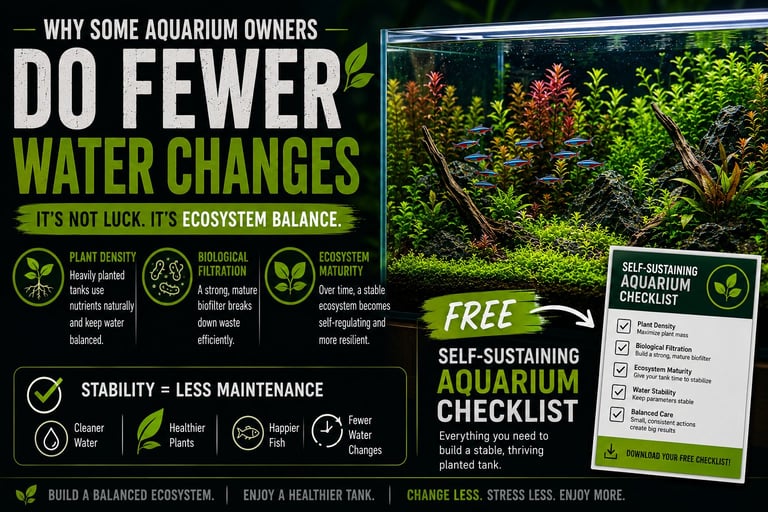
Discover how plant density, biological filtration, and ecosystem maturity work together β allowing some successful aquarists to perform far fewer water changes than you'd expect.
Want to build a healthier aquarium that requires less maintenance? Our Free Self-Sustaining Tank Stability Checklist helps you identify common stability issues before they lead to algae outbreaks, plant melt, fish stress, excessive maintenance, or other aquarium problems.
Clear, practical checklist items you can implement immediately
No cost, no catch β just proven stability strategies that work
Your email is safe β we'll only send valuable aquarium resources
We respect your privacy. Unsubscribe at any time.