Balanced Aquarium
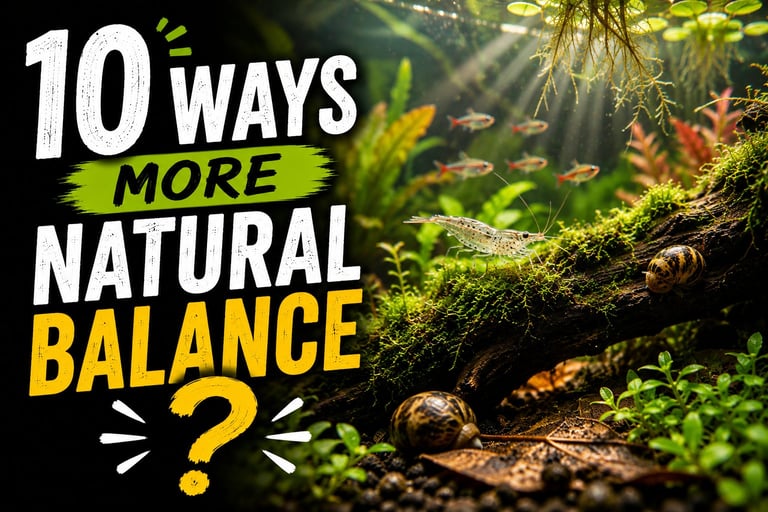
10 Ways to Create More Natural Balance in Your Aquarium
Learn 10 practical ways to create a balanced aquarium with healthier plants, stable conditions, and a more resilient ecosystem.
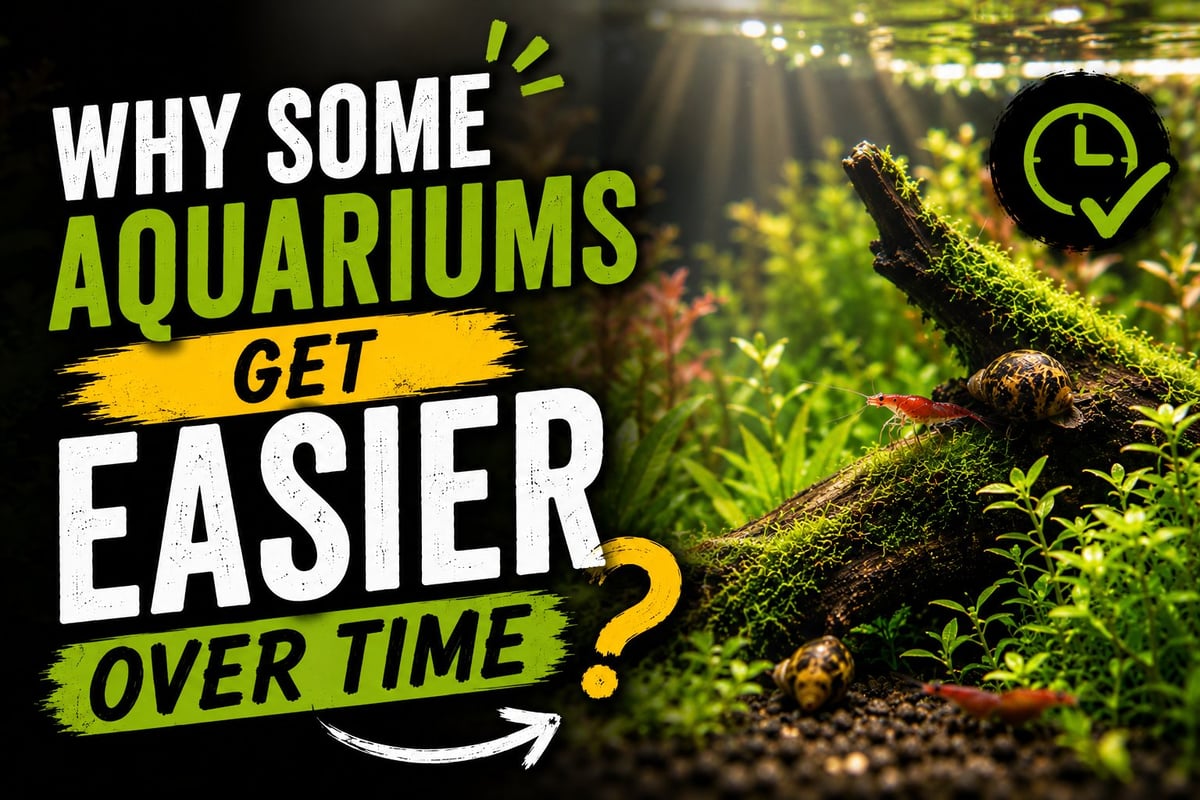
Many beginners assume aquarium maintenance gets harder as tanks age. Surprisingly, some aquariums actually become easier to manage — here's why.
Aquascape Oasis Team
Planted Tank Specialists
Mature aquarium ecosystems often become more stable and predictable, requiring less maintenance and fewer interventions over time.
Want to build a low maintenance aquarium that becomes easier to care for over time? Download our free checklist covering the key factors successful aquarists monitor when creating stable ecosystems.
Send Me the ChecklistA low maintenance aquarium isn't an aquarium that never needs care.
Instead, it's an aquarium ecosystem that has become stable enough that it requires less intervention and fewer corrections.
These aquariums often experience:
The key difference is that the ecosystem begins helping maintain itself. See also 5 signs you're building a tank that will last for years and 10 ways to create more natural balance.
One of the biggest reasons some aquariums become easier to maintain is biological maturity.
Over time, healthy aquariums develop:
These systems work together behind the scenes every day. Many of the processes that support stability simply become stronger with time. This is one reason mature aquariums often feel more resilient than newly established tanks.
Key takeaway: Biological maturity makes aquariums more resilient and easier to maintain over time.
Healthy plants frequently make maintenance easier.
As plants mature, they often:
A heavily planted aquarium often feels different from a sparsely planted one. The ecosystem begins performing more naturally and requires less intervention.
Key takeaway: Established plants contribute to stability and reduce the amount of intervention your aquarium needs.
New aquariums can feel like a roller coaster.
One week: cloudy water. The next week: algae. Then: plant melt. Then: another issue appears.
As aquariums mature, many hobbyists notice something important: the tank becomes more predictable. Problems occur less frequently and are often easier to manage. Predictability is one of the biggest characteristics of a low maintenance aquarium.
Key takeaway: Predictability is a hallmark of a maturing, low maintenance aquarium ecosystem.
Want a predictable tank? Track your progress with our free checklist.
Fish and shrimp often become more comfortable as ecosystems stabilize.
Many hobbyists notice:
Healthy livestock often indicates a healthy environment. And healthy environments usually require less constant intervention.
Key takeaway: Comfortable, healthy livestock is a sign of a stable ecosystem that requires less intervention.
Mature ecosystems often recover more easily from small problems.
Instead of major crashes, stable aquariums may experience:
The aquarium becomes more resilient. This resilience can dramatically reduce the amount of maintenance required.
Key takeaway: Resilience means small problems stay small, reducing the need for constant intervention.
One of the biggest mindset shifts in aquarium keeping is realizing that successful aquariums are ecosystems.
Plants. Microorganisms. Fish. Shrimp. Beneficial bacteria. All interact with one another.
In stable tanks, these systems often begin supporting each other. The result is an aquarium that feels easier to maintain because it has developed more natural balance.
Key takeaway: When ecosystem components support one another, your aquarium naturally requires less maintenance.
Building a harmonious ecosystem takes time — our free checklist can help you get there faster →
Many hobbyists accidentally prevent their tanks from reaching maturity.
They constantly:
Excessive intervention can make it difficult for ecosystems to stabilize. Sometimes the best thing you can do for your aquarium is simply allow it time to mature.
Key takeaway: Constant intervention prevents ecosystems from reaching the stability that makes maintenance easier.
Many beginners chase perfection. Experienced hobbyists often chase consistency.
Healthy ecosystems generally perform best when conditions remain:
Constant corrections can sometimes create more problems than they solve. A stable aquarium often becomes easier to maintain because it experiences fewer major disruptions.
Key takeaway: Stability — not perfection — is what makes an aquarium easier to maintain over time.
Many long-term aquariums share similar characteristics:
These signs often indicate that the ecosystem is moving toward long-term stability.
Key takeaway: Recognizing these signs helps you appreciate the progress your aquarium is making toward becoming a low maintenance ecosystem.
Spot these signs in your own tank. Download the free checklist →
There is no product that instantly creates a low maintenance aquarium. No magic filter. No secret additive.
The easiest tanks to maintain are usually built gradually through:
Over time, these factors often create aquariums that become simpler and more enjoyable to own.
Key takeaway: The easiest aquariums to maintain are built over time through patience, stability, and biological maturity — not through any single product.
Instead of asking:
"How can I fix every problem?"
Try asking:
"How can I make the ecosystem healthier?"
That shift in thinking often leads to aquariums that naturally become easier to maintain year after year.
Key takeaway: Shifting your focus from fixing problems to building a healthier ecosystem leads to a low maintenance aquarium that improves over time.
Download our Free Self-Sustaining Tank Stability Checklist and learn the key factors successful aquarists monitor when creating stable, low maintenance ecosystems.
The checklist helps you identify common stability issues before they lead to algae outbreaks, plant melt, fish stress, or excessive maintenance.
Common questions about low maintenance aquariums
Explore more articles about building a healthier, more stable aquarium ecosystem
Learn 10 practical ways to create a balanced aquarium with healthier plants, stable conditions, and a more resilient ecosystem.
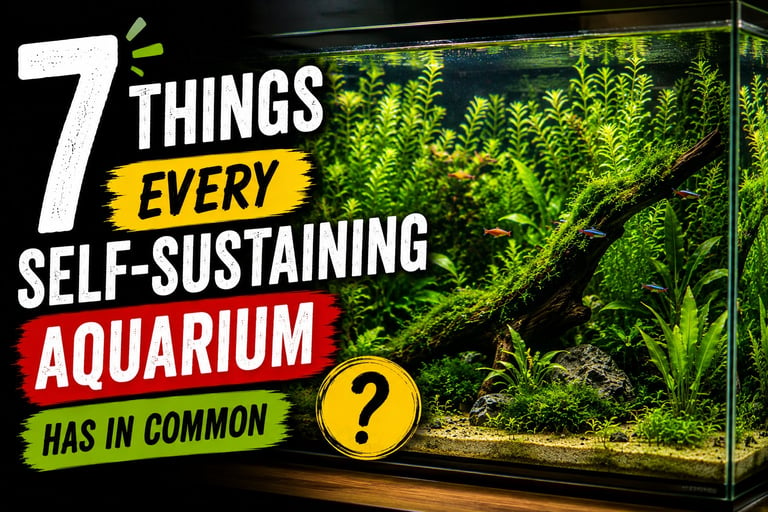
Discover the seven characteristics successful self-sustaining aquariums share and how to build a healthier ecosystem.