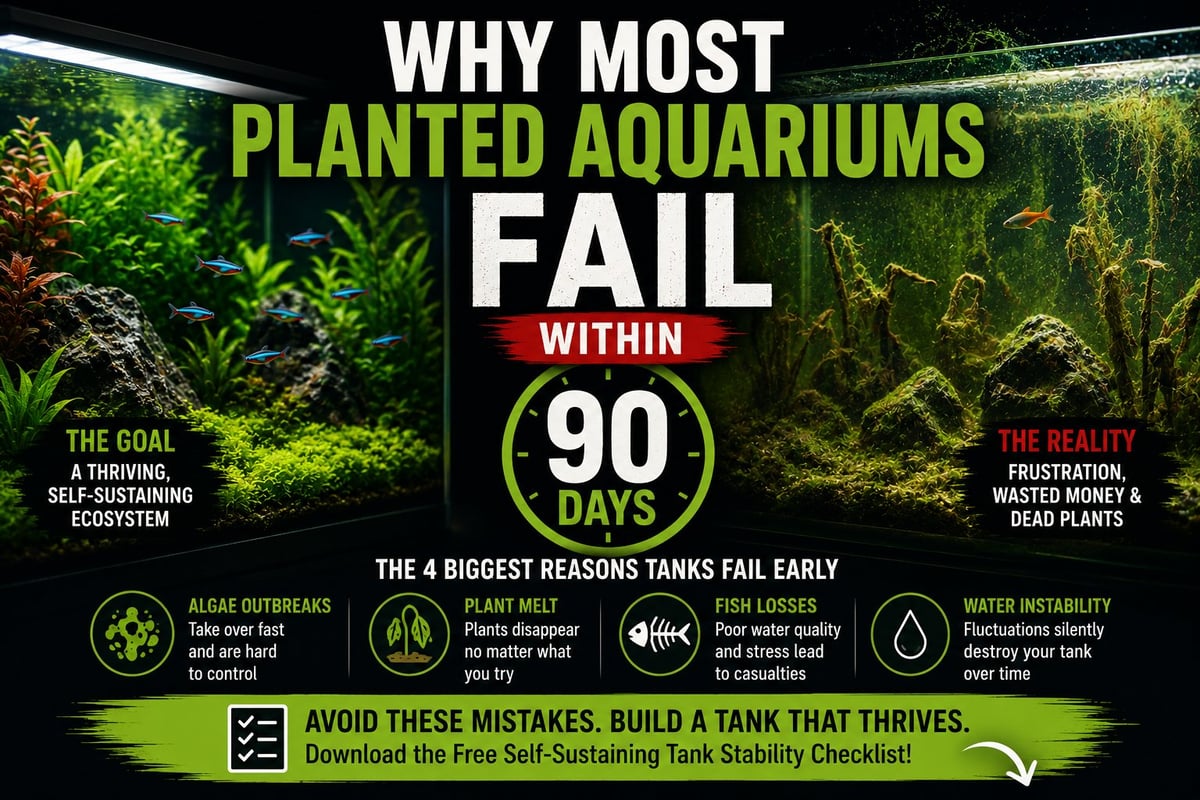
Why Most Planted Aquariums Fail Within 90 Days
Plant melt, algae outbreaks, fish deaths, and water instability — discover why most tanks crash in the first 90 days and how to avoid it.
Many aquariums look great during the first few weeks. But long-term aquarium success isn't measured in weeks — it's measured in years. Learn the five signs that indicate you're building a stable, healthy aquarium ecosystem.
Aquascape Oasis Team
Planted Tank Specialists
Stable aquariums often share common characteristics that help them remain healthy, balanced, and easier to maintain over the long term.
Want to build a stable aquarium that lasts for years? Download our free checklist covering the key factors successful aquarists monitor.
Send Me the ChecklistA stable aquarium isn't necessarily perfect. In fact, many stable tanks have small imperfections. What separates them from struggling aquariums is consistency.
Stable aquariums often experience fewer surprises, fewer major swings, more predictable maintenance, healthier plant growth, and less livestock stress.
Rather than constantly reacting to problems, the ecosystem begins working with you. The healthiest aquariums often develop a certain feeling over time — they become predictable, balanced, and easier to maintain.
If your goal is a stable aquarium, there are several signs you're moving in the right direction. Let's look at five indicators that you're building a tank designed for long-term success.
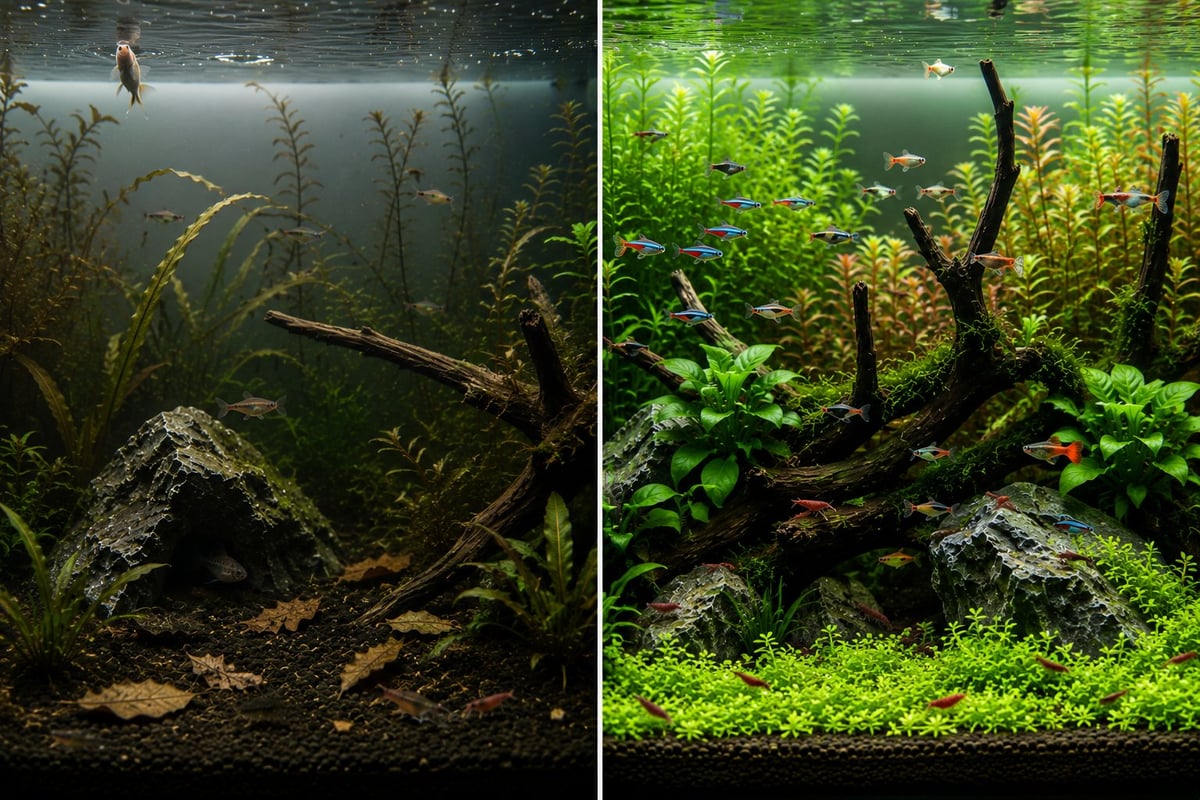
Healthy plant growth is often one of the best indicators of aquarium stability. Plants respond quickly to environmental changes. When conditions become unstable, plants frequently show warning signs first.
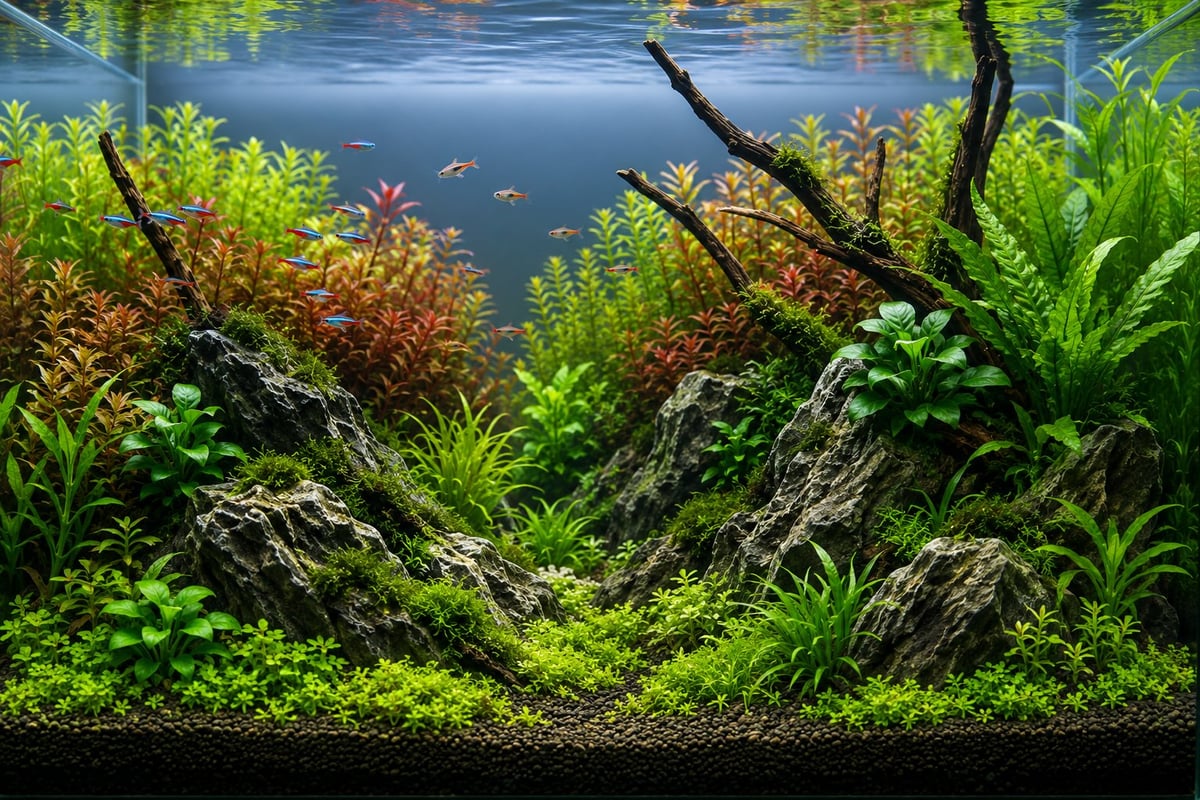
On the other hand, stable aquariums often display consistent new growth, healthy coloration, strong root development, and predictable growth patterns.
You don't need explosive growth. You simply need steady growth. Consistency is usually a better indicator than speed.
Key takeaway: Healthy aquarium plants that grow consistently — even slowly — are often a sign of a stable ecosystem. Dramatic growth spurts followed by stagnation typically indicate instability.
Many hobbyists expect aquarium maintenance to become harder as tanks age. Interestingly, stable aquariums often become easier to maintain.
Instead of constantly solving new problems, you may notice fewer algae outbreaks, fewer emergencies, less troubleshooting, and more predictable routines. The aquarium begins settling into a rhythm.
This is one of the strongest signs that biological systems are maturing. A low maintenance aquarium isn't one you ignore — it's one where maintenance becomes routine rather than crisis management.
Key takeaway: When your weekly aquarium maintenance routine starts feeling predictable rather than reactive, it's a strong sign your ecosystem is finding its balance.
Livestock behavior often reveals more than water tests. Healthy fish and shrimp in a stable fish tank typically display regular activity, consistent feeding behavior, natural exploration, and comfortable use of the entire aquarium.
When animals appear relaxed and predictable, it's often a sign the environment itself feels stable. Many successful aquarists pay close attention to behavior because livestock frequently notice environmental changes before we do.
Key takeaway: Fish that hide constantly, gasp at the surface, or display erratic swimming patterns may be signaling instability — even if your water parameters appear normal.
One surprising characteristic of stable aquariums is that owners usually interfere less. Beginners often feel compelled to rearrange plants, change equipment, modify routines, and constantly experiment.
As tanks mature, many hobbyists discover they need fewer interventions. The aquarium begins requiring guidance instead of constant correction. This shift is often a major sign that long term aquarium success is developing.
Key takeaway: A mature, stable aquarium ecosystem doesn't need constant tinkering. If you find yourself making fewer emergency adjustments each month, your tank is likely on the right track.
No aquarium is perfect. Even mature tanks occasionally experience challenges. The difference is that stable aquariums often recover more easily.
Instead of major issues, you may notice minor algae patches, small adjustments, and temporary fluctuations. The ecosystem becomes more resilient. Problems that once felt overwhelming become easier to manage.
This resilience is often one of the clearest indicators of a tank built to last. A self sustaining aquarium doesn't mean zero problems — it means the ecosystem can handle small disruptions without cascading into crisis.
Key takeaway: Resilience — not perfection — is the hallmark of a truly stable aquarium. When small problems stay small, your ecosystem is working as it should.
These five signs don't happen by accident.
Get the free checklist that helps you build a stable aquarium from the start.
Download Free Stability ChecklistMany aquarium owners focus on short-term appearance. They ask: does the tank look good today? Are the plants colorful? Is the water clear?
While these things matter, long-term aquarium success is usually built on deeper foundations. A beautiful tank can still be unstable. A stable tank can become beautiful for years. The goal should always be long-term ecosystem health.
Many beginners spend countless hours chasing perfect numbers. The problem is that perfection constantly moves. Stable aquariums are often successful because conditions remain predictable rather than perfect.
Healthy ecosystems tend to reward consistency. Fish, shrimp, and plants generally adapt better to stable environments than environments that are constantly changing. Aquarium balance isn't about hitting exact parameters — it's about keeping them steady.
As aquariums mature, many long-lasting tanks begin sharing similar characteristics: healthy plant growth, consistent livestock behavior, reduced maintenance demands, fewer recurring problems, and greater ecosystem resilience.
These signs often matter more than any individual piece of equipment. A healthy aquarium isn't defined by its gear — it's defined by how well its ecosystem functions over time.
One of the biggest mindset shifts in aquarium keeping is moving from short-term fixes to long-term stability. Instead of asking "How do I solve today's problem?" successful hobbyists often ask "How do I build a healthier ecosystem?"
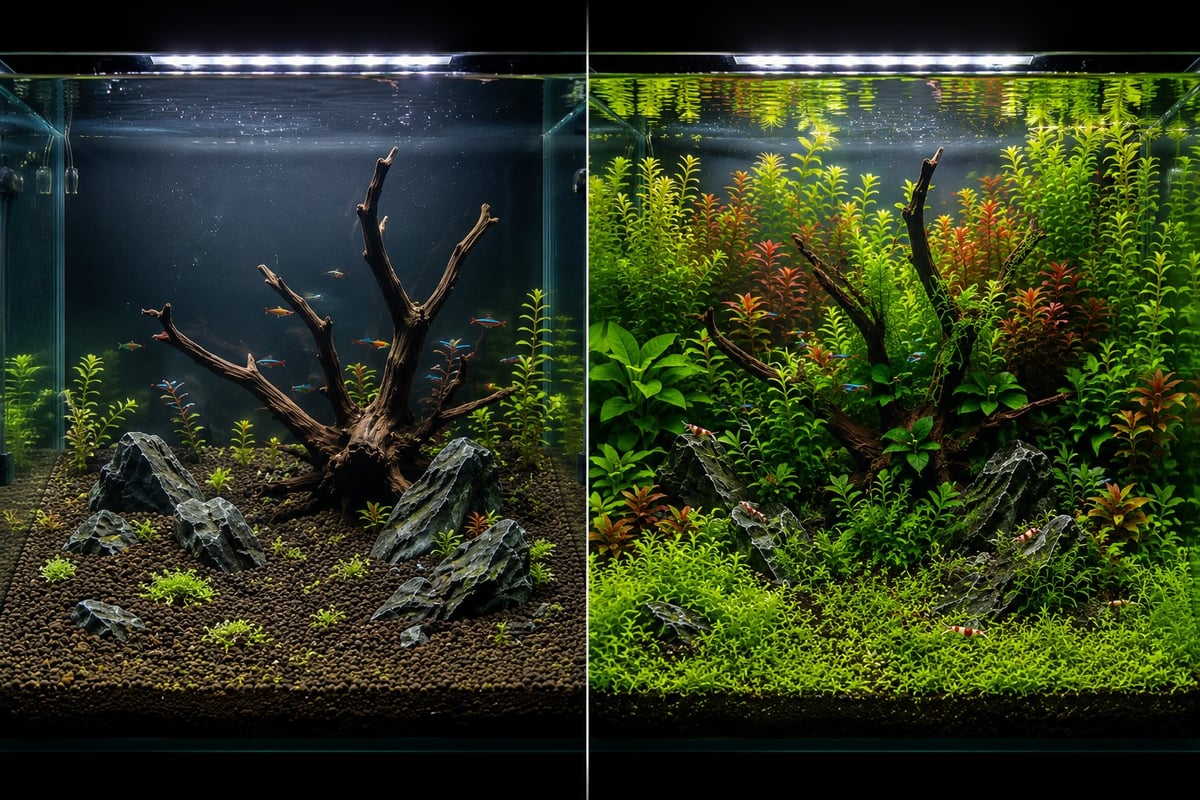
That shift frequently leads to tanks that become easier to maintain with every passing year. Stable aquariums are built slowly — through patience, consistency, healthy plant growth, biological maturity, and stable routines.
Over time, these factors create ecosystems that continue thriving year after year. There's no shortcut to a self sustaining aquarium, but the reward is a tank that brings joy rather than constant work.
Stop chasing short-term fixes. Start building for the long term.
Download our free checklist and learn the key factors that help aquariums thrive for years.
Grab Your Free ChecklistCommon questions about building a stable aquarium that lasts for years
Learn more about building a healthy, stable aquarium ecosystem that thrives for years
Plant melt, algae outbreaks, fish deaths, and water instability — discover why most tanks crash in the first 90 days and how to avoid it.
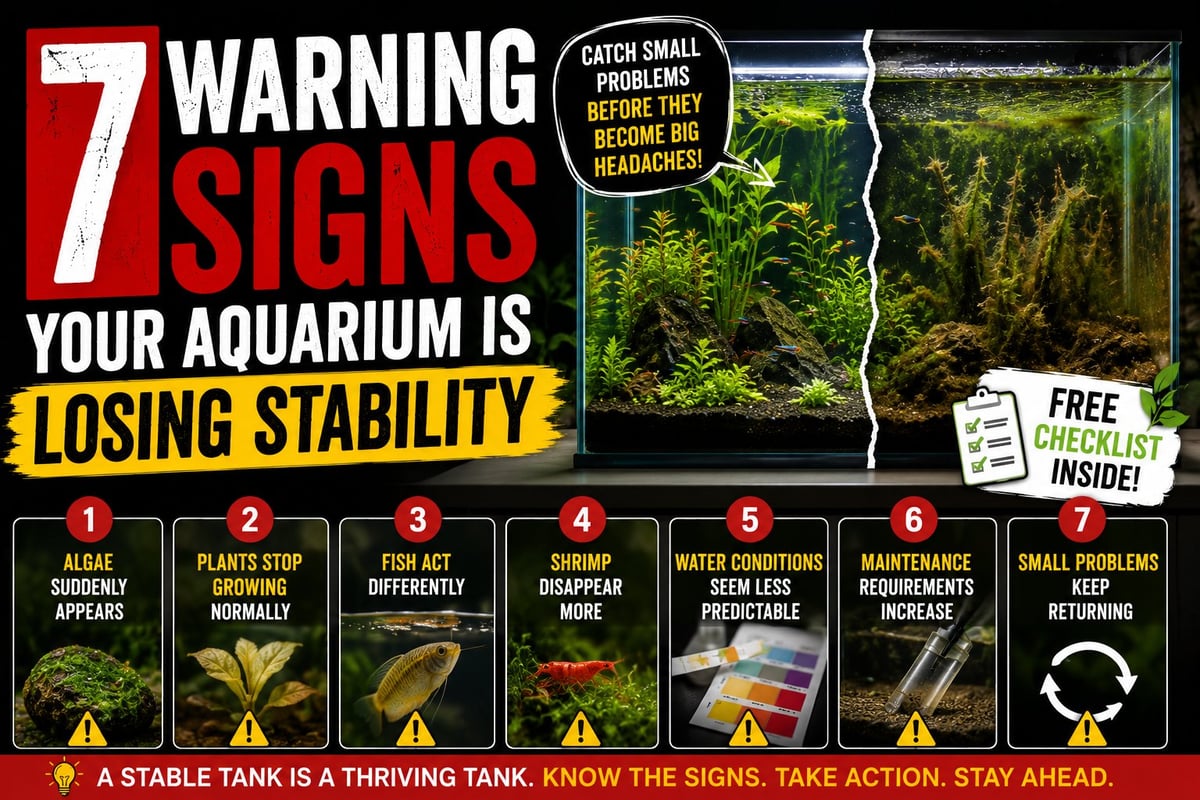
Learn the most common warning signs that your aquarium is losing stability and what to do before small issues become big problems.
Want to build a stable aquarium that lasts for years? Learn the key factors successful aquarists monitor when creating healthy, resilient ecosystems.
Spot common stability problems before they lead to algae outbreaks or plant melt
Create a predictable environment where fish and shrimp can thrive
Build a resilient ecosystem that becomes easier to maintain over time
No spam. Unsubscribe anytime. Simple, actionable stability checklist.