10 Ways to Create More Natural Balance in Your Aquarium | Aquascape Oasis
Balanced Aquarium

10 Ways to Create More Natural Balance in Your Aquarium

Learn 10 practical ways to create a balanced aquarium with healthier plants, stable conditions, and a more resilient ecosystem that requires less maintenance over time.

Aquascape Oasis Team

Planted Tank Specialists

10 min read

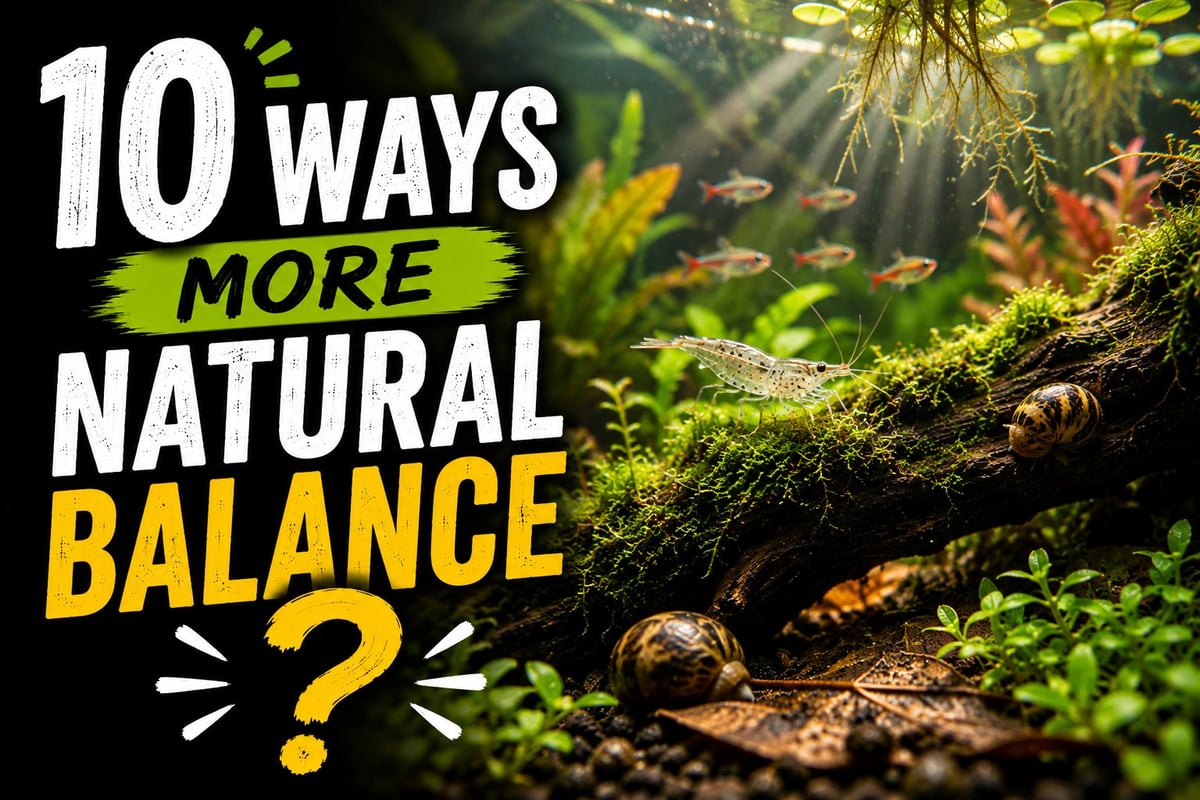
A naturally balanced aquarium ecosystem featuring moss, driftwood, shrimp, snails, and healthy plant growth working together.

Want to build a healthier, more balanced aquarium? Download our free checklist covering the key factors successful aquarists monitor when creating stable ecosystems.

Send Me the Checklist

What Is a Balanced Aquarium?

Many aquarium owners spend their time chasing problems.

Algae appears, so they buy another product. Plants struggle, so they change their routine. Fish seem stressed, so they start adjusting everything at once.

Unfortunately, constantly reacting to symptoms can make it difficult for an aquarium to ever feel truly stable.

A balanced aquarium is different.

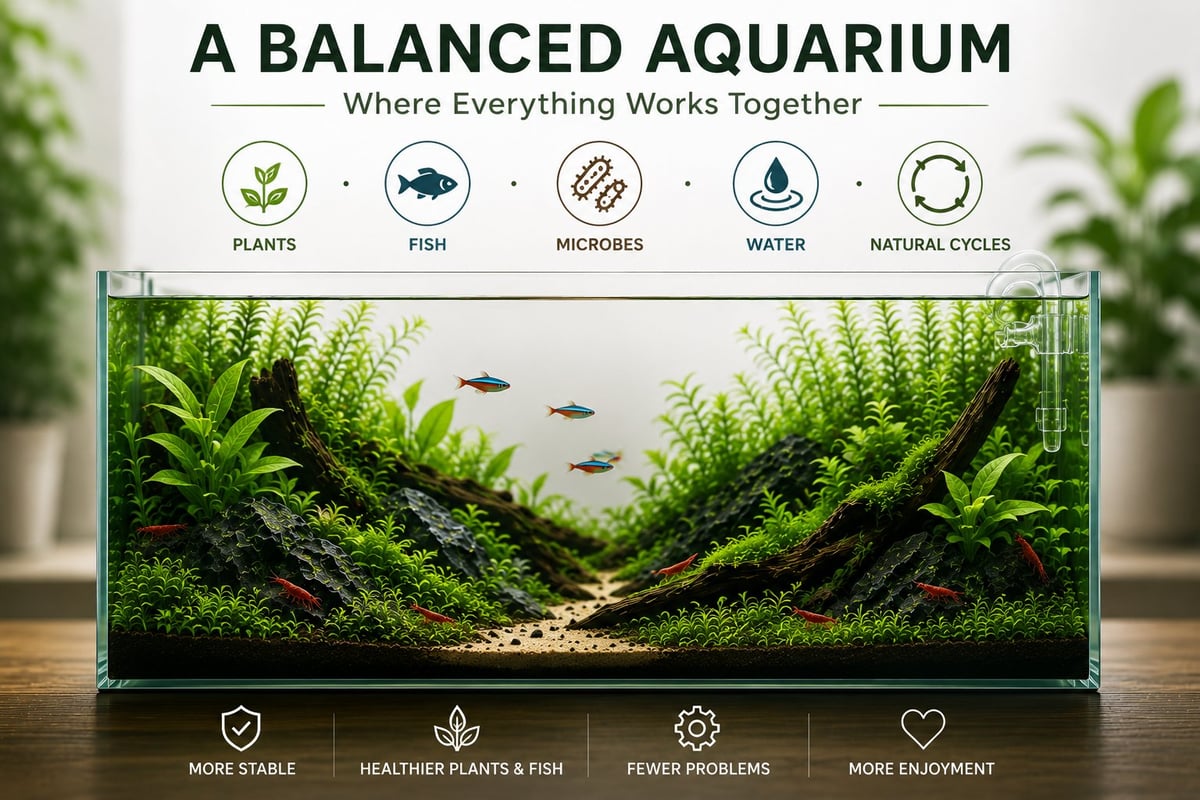
Infographic showing a balanced planted aquarium with healthy aquatic plants, a few realistic schooling fish, cherry shrimp on the substrate and hardscape, and simple icons representing plants, fish, microbes, water, and natural cycles working together in a stable ecosystem.

A balanced aquarium is an ecosystem where plants, fish, microorganisms, water chemistry, and natural processes begin supporting one another, leading to greater stability and fewer problems.

It doesn't mean the tank is perfect. It means the ecosystem has developed enough stability that plants, fish, microorganisms, and natural processes begin working together.

While no aquarium is completely maintenance-free, creating more natural balance often leads to healthier livestock, fewer problems, and a more enjoyable aquarium experience.

A balanced aquarium is an ecosystem where the biological processes within the tank begin supporting one another. The goal isn't perfection. The goal is stability.

Let's look at ten ways to create more natural balance in your aquarium.

1

Add More Healthy Plants

Healthy plants are often one of the biggest contributors to natural balance.

Plants do much more than make an aquarium look attractive. They also help create habitat, biological diversity, long-term stability, and more resilient ecosystems.

Many struggling aquariums simply don't contain enough plant mass.

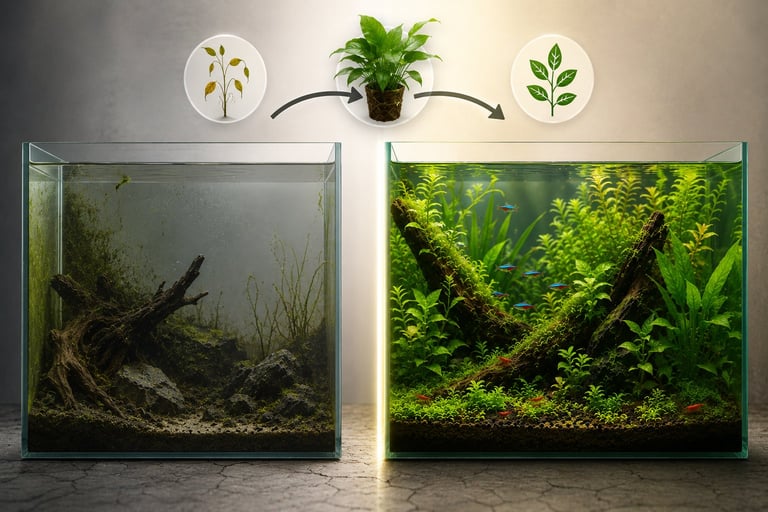
Comparison of two freshwater aquariums, one sparsely planted and struggling and the other densely planted with lush aquatic vegetation, healthy fish, and cherry shrimp, illustrating how increased plant mass contributes to a healthier and more stable aquarium ecosystem.

Healthy plants do much more than improve appearance. Greater plant mass often increases habitat complexity, biological diversity, and long-term ecosystem stability.

Key takeaway: More healthy plants often mean fewer problems and more stability.

2

Prioritize Stability Over Constant Changes

Many aquarium problems are created by excessive intervention.

Examples include constantly moving plants, rearranging hardscape, frequently changing routines, and repeatedly adjusting the aquarium.

Healthy ecosystems often perform best when conditions remain predictable. Consistency usually beats constant corrections.

Key takeaway: Resist the urge to constantly tweak. Stability comes from consistency.

3

Allow the Aquarium to Mature

Biological maturity cannot be rushed.

Over time, aquariums naturally develop beneficial microorganisms, biofilm, greater biological diversity, and more stable processes.

Many of the healthiest aquariums are simply older, mature systems that have been allowed to establish themselves.

Key takeaway: Patience allows your aquarium to develop the biological complexity it needs for balance.

4

Create More Plant Cover

Plants provide much more than decoration.

They create shelter, security, exploration areas, and natural environments.

Fish and shrimp often behave differently in heavily planted aquariums. More cover frequently creates more natural behavior.

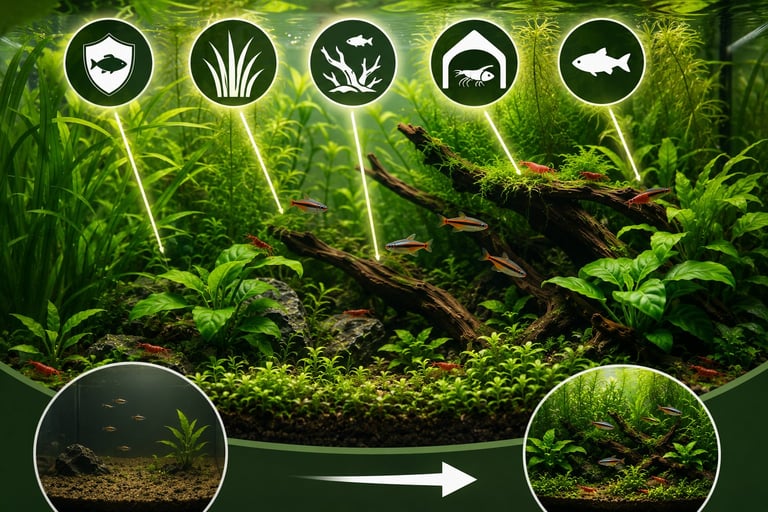
Aquarium setup guide showing planted tank with decorative wood, various aquatic plant species icons, and fish compatibility indicators for aquascaping.

Dense plant cover creates natural shelter, security, and exploration areas for fish and shrimp. Heavily planted aquariums often encourage more relaxed and natural livestock behavior.

Key takeaway: Dense plant cover reduces stress and promotes natural livestock behavior.

5

Stop Chasing Perfect Numbers

Many beginners spend enormous amounts of energy chasing perfect parameters.

The reality is that stable parameters are often more valuable than perfect ones.

Healthy ecosystems generally prefer predictability, consistency, and long-term stability — rather than constantly fluctuating conditions.

Key takeaway: Stability matters more than perfection. Stop chasing numbers and focus on consistency.

6

Build Around Ecosystems, Not Equipment

Equipment matters. However, equipment alone rarely creates balance.

Many successful aquariums focus on healthy plants, biological maturity, stability, and natural processes — instead of relying solely on gadgets and upgrades.

Key takeaway: Great equipment supports an ecosystem — it doesn't replace one.

7

Avoid Over-Cleaning

Many hobbyists accidentally disrupt their ecosystems by cleaning too aggressively.

Examples include scrubbing everything, deep-cleaning too often, disturbing natural growth, and removing every trace of algae or biofilm.

Healthy aquariums often contain biological processes that are invisible to us. Sometimes less intervention leads to more balance.

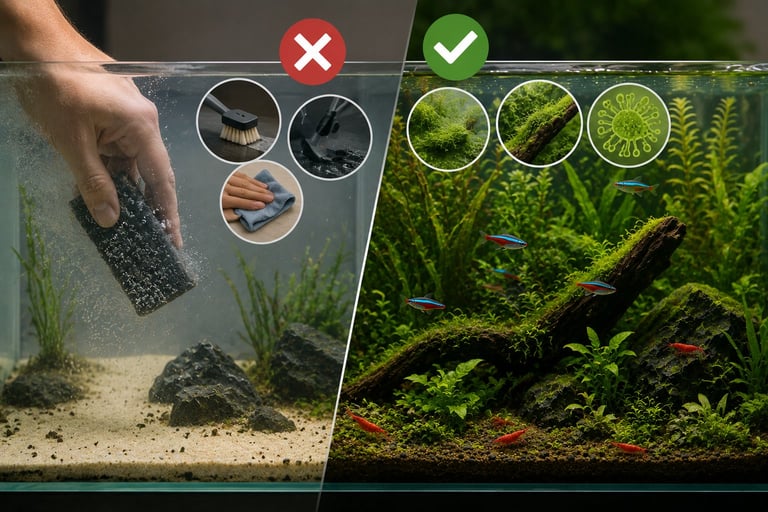
Split illustration showing an over-cleaned, sterile aquarium being aggressively scrubbed beside a thriving planted aquarium with natural biofilm, moss-covered driftwood, realistic fish, and cherry shrimp, demonstrating the importance of preserving beneficial biological processes.

Not everything that looks dirty is harmful. Healthy aquariums often contain biofilm, microorganisms, and natural growth that support long-term stability and ecosystem balance.

Key takeaway: Not everything that looks "dirty" is harmful. Some of it is essential to a healthy ecosystem.

8

Pay Attention to Livestock Behavior

Fish and shrimp often tell us more about our aquariums than test kits.

Signs of a healthy ecosystem may include regular activity, natural feeding behavior, exploration, and reduced stress behaviors.

Livestock frequently notice environmental changes before we do.

Key takeaway: Observe your livestock daily — their behavior is a window into your aquarium's health.

9

Think Long Term

Many aquarium problems occur because hobbyists focus entirely on today's issues.

Balanced aquariums are usually built slowly. Successful aquarists often think in terms of months, seasons, and years — rather than days.

Patience often becomes one of the most valuable tools in aquarium keeping.

Key takeaway: Think in months and years, not days. Long-term thinking creates long-term success.

10

Treat the Aquarium Like an Ecosystem

Perhaps the biggest mindset shift is realizing that aquariums are ecosystems, not simply containers of water.

Plants. Fish. Shrimp. Microorganisms. Beneficial bacteria. All interact with one another.

The healthiest aquariums often develop when hobbyists stop trying to control every detail and begin supporting the ecosystem as a whole.

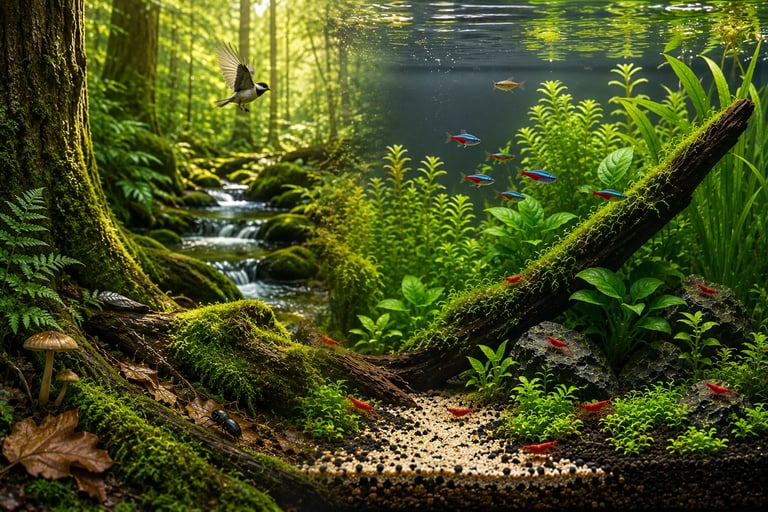
Cinematic image blending a lush forest ecosystem with a planted freshwater aquarium, featuring moss-covered logs, a stream, realistic fish, cherry shrimp, aquatic plants, and natural hardscape to illustrate that an aquarium functions as a living ecosystem.

A healthy planted aquarium behaves much like a natural ecosystem. Plants, fish, shrimp, microorganisms, and biological processes all interact and support one another, creating long-term balance and stability.

Key takeaway: Your aquarium is a living ecosystem. Support it as a whole, not piece by piece.

The Mistake Many Hobbyists Make

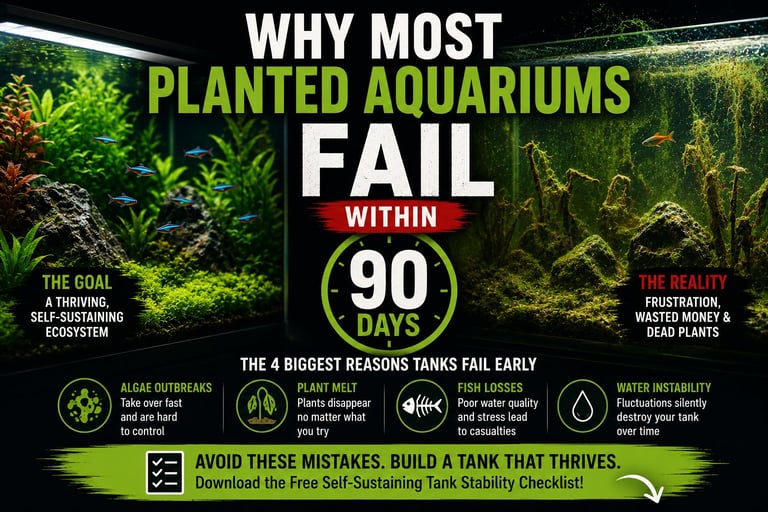
Many aquarium owners focus on fixing symptoms: algae, plant melt, fish stress, cloudy water.

Meanwhile, the underlying issue is often imbalance.

When ecosystems become healthier, many symptoms become easier to manage.

Balanced Aquariums Are Built Slowly

There is rarely a single product that creates balance.

Instead, natural balance develops through stability, healthy plants, biological maturity, consistency, and patience.

Over time, these factors often create aquariums that become easier to maintain and more enjoyable to own.

Download the Free Self-Sustaining Tank Stability Checklist

Want to build a healthier, more balanced aquarium? Download our Free Self-Sustaining Tank Stability Checklist and learn the key factors successful aquarists monitor when creating stable ecosystems.

The checklist helps you identify common stability issues before they lead to algae outbreaks, plant melt, fish stress, or excessive maintenance. Get your free checklist today and start building a healthier, more balanced aquarium.

Frequently Asked Questions

Common questions about creating a balanced aquarium ecosystem

Ready to Build a More Balanced Aquarium?

Download our free checklist and learn the key factors successful aquarists monitor when creating stable, low-maintenance ecosystems.

Healthier Plants

Learn how plant density and diversity support ecosystem stability

More Stability

Identify stability issues before they lead to algae or livestock stress

Less Maintenance

Create an ecosystem that becomes easier to maintain over time

Get Your Free Checklist Now

No spam. Unsubscribe anytime.