
Warning Signs
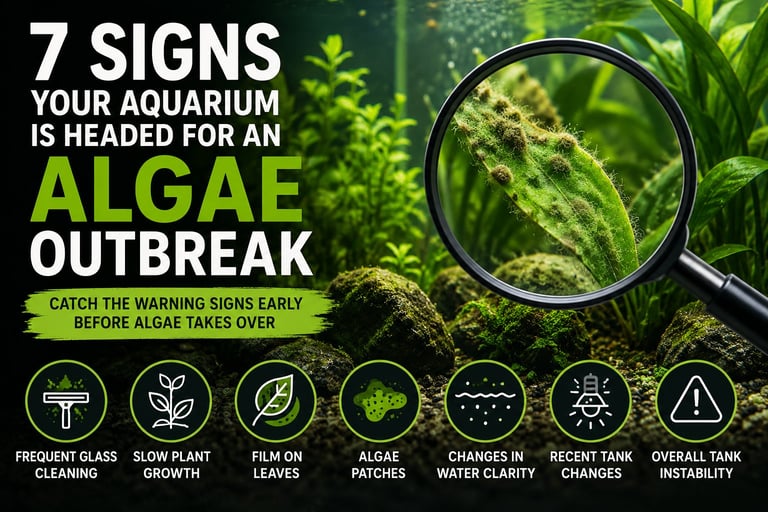
7 Signs Your Aquarium Is Headed for an Algae Outbreak
An algae outbreak rarely happens overnight. Learn to spot the 7 early warning signs weeks before algae takes over.
A healthy aquarium doesn't usually crash overnight. Learn to spot the early warning signs days or weeks before a major problem develops — and keep your aquarium balanced and healthy.
Aquascape Oasis Team
Aquarium Stability Specialists
Small warning signs often appear before major aquarium problems such as algae outbreaks, plant decline, and fish stress.
Most aquarium problems start with small warning signs that appear days or even weeks before a major issue develops.
Unfortunately, many hobbyists don't recognize those signals until they're dealing with algae outbreaks, plant melt, fish stress, or unexplained livestock losses. Learn to catch these early with our guide on the 7 signs your aquarium is headed for an algae outbreak and 10 mistakes that make aquariums harder to maintain.
This is why aquarium stability is one of the most important concepts in the hobby.
Stable aquariums are generally easier to maintain, healthier for fish and shrimp, and more resistant to common problems.
If you know what to watch for, your aquarium will often tell you when something is starting to go wrong. The key is learning to recognize those signals early — before small issues become major problems.
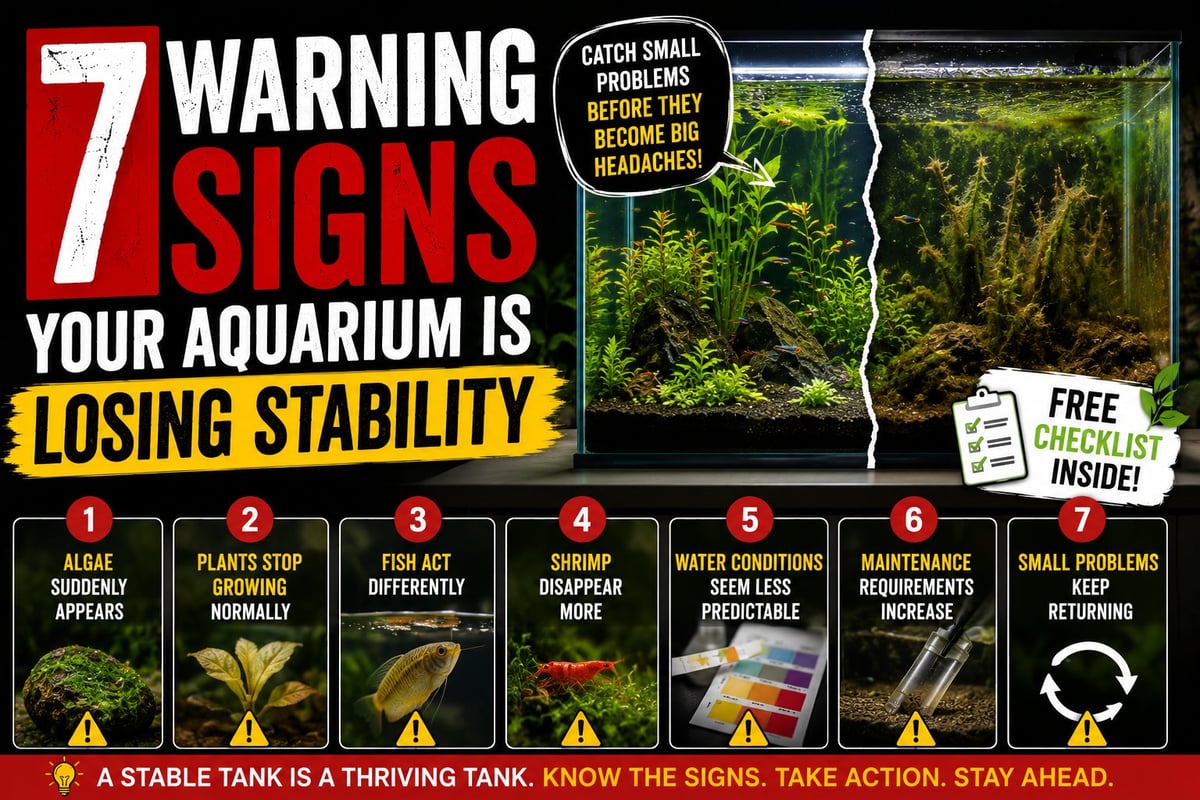
Here are seven warning signs your aquarium may be losing stability.
One of the earliest warning signs of instability is unexpected algae growth. A small amount of algae is normal in most aquariums. However, sudden increases often indicate that something within the ecosystem has shifted.
You may notice:
Key insight: Algae is frequently a symptom rather than the root problem. When conditions become less balanced, algae often responds quickly — long before other visible signs appear.
Healthy aquarium plants can provide valuable clues about overall ecosystem health. When stability begins to decline, plants are often among the first organisms to respond.
Potential warning signs include:
Slower growth — plants that previously grew quickly suddenly stall
Pale coloration — leaves losing their rich color
Damaged leaves — holes, tears, or transparency developing
Stunted development — new growth appearing smaller or deformed
Increased leaf loss — more leaves dropping than normal
What you need to know: Plants generally prefer predictable conditions. When those conditions become inconsistent, growth often suffers — and the changes can be subtle at first.
Fish behavior can reveal problems long before water tests do. Fish often respond quickly to environmental changes, making them valuable indicators of overall aquarium stability.
Pay attention to changes such as:
Reduced activity — fish that were once active become lethargic
Hiding more frequently — fish spending more time in hiding spots
Unusual swimming behavior — erratic movements or gasping at the surface
Loss of appetite — ignoring food they previously ate eagerly
Increased stress responses — clamped fins, rapid gill movement
Critical reality: Fish rarely show distress without reason. If your fish are behaving differently, it's worth investigating water parameters and overall tank conditions before the situation worsens.
Shrimp spend much of their time grazing and exploring. When shrimp suddenly become difficult to find, it can sometimes indicate increased stress.
You may notice:
Shrimp retreating to cover more often
Less movement around the tank
Lower numbers spotted during observation
Reduced foraging activity
While shrimp naturally hide from time to time, significant changes in behavior may signal that something within the environment has shifted. Shrimp are particularly sensitive to changes in water parameters and can serve as an early warning system.
"Shrimp are often called the canaries of the aquarium. They react to instability faster than most fish — if your shrimp are hiding, pay attention."
Don't wait for your aquarium to tell you something is wrong.
Get the free checklist that helps you spot stability problems before they become disasters.
Download Free Stability ChecklistStable aquariums often feel consistent. Unstable aquariums often feel unpredictable. Predictability is one of the defining characteristics of a healthy ecosystem.
You may notice:
Key insight: When conditions begin changing unexpectedly, stability may be declining. A stable aquarium should not require constant adjustments to maintain baseline parameters.
One of the most overlooked warning signs is a sudden increase in maintenance demands. Many aquarium owners notice that a tank which was previously easy to manage suddenly requires more attention.
Examples include:
More cleaning — glass needs wiping more frequently
More algae removal — manual removal becoming a constant task
More adjustments — constantly tweaking lighting, CO2, or nutrients
More troubleshooting — spending more time fixing than enjoying
What you need to know: A stable aquarium generally becomes easier to maintain over time, not harder. When maintenance starts increasing dramatically, it's often worth investigating why.
Perhaps the biggest warning sign of all is when problems never fully disappear. You solve one issue. A few days later it returns. You make another adjustment. The problem comes back again.
This cycle often indicates that an underlying stability issue remains unresolved.
Recurring problems are frequently symptoms of a larger ecosystem imbalance rather than isolated events. Treating each symptom individually without addressing the root cause leads to an endless cycle of troubleshooting.
"You can't troubleshoot your way out of a fundamentally unstable ecosystem. Stability is built from day one — not added later."
Build stability from day one.
Our free checklist walks you through the key stability factors most beginners miss.
Get the Free Stability ChecklistMany hobbyists spend years chasing perfect numbers. Perfect water parameters. Perfect algae control. Perfect maintenance schedules.
The healthiest aquariums are rarely perfect. They're stable.
Stable ecosystems can tolerate minor fluctuations and recover more easily from challenges. This resilience is what makes long-term success possible.
The best aquarium owners don't wait for disasters. They learn to recognize warning signs early. A small algae outbreak. A change in plant growth. A shift in fish behavior.
These signals often provide an opportunity to address problems before they become much larger.
Healthy aquariums communicate constantly — through fish behavior, plant growth, shrimp activity, and maintenance needs. All of these provide information about the state of the ecosystem. The more attention you pay, the easier it becomes to identify stability issues before they cause major problems.
Stop chasing symptoms. Start following a proven plan.
Download our free checklist and stop the cycle of frustration before it begins.
Grab Your Free ChecklistCommon questions about maintaining a stable aquarium ecosystem
Dive deeper into aquarium stability and ecosystem health with these related guides
An algae outbreak rarely happens overnight. Learn to spot the 7 early warning signs weeks before algae takes over.
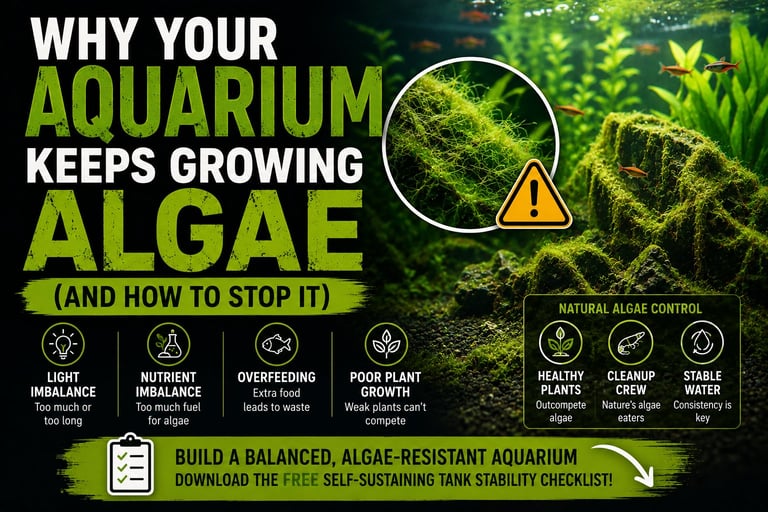
Discover why algae keeps returning no matter how often you clean — and learn natural ways to restore balance.
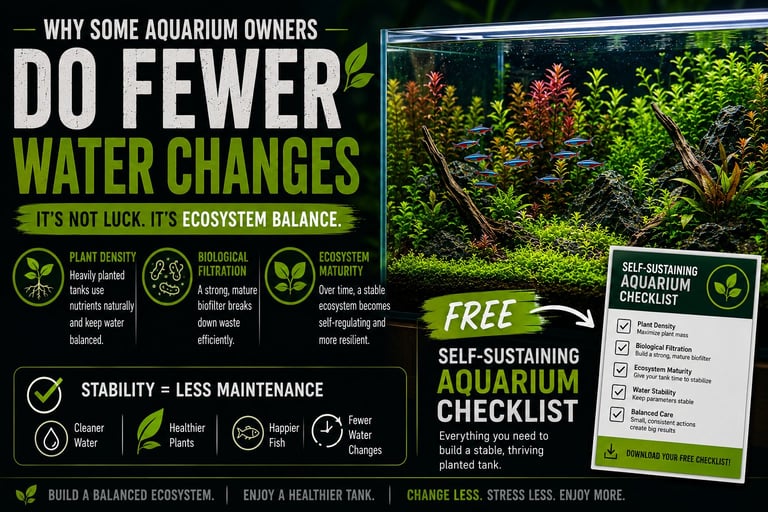
Discover how plant density, biological filtration, and ecosystem maturity work together for a low-maintenance tank.
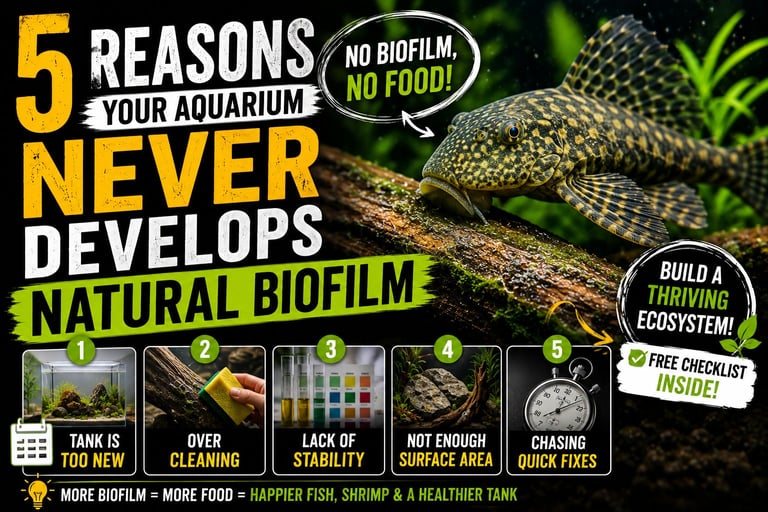
Discover why natural biofilm isn't forming in your tank and how it contributes to a healthy aquarium ecosystem.
Want to learn the key indicators successful aquarium owners monitor to maintain long-term stability? Download our free checklist and discover the foundational principles behind healthy, low-maintenance aquariums.
Identify stability issues before they cause major problems
Prevent algae outbreaks, plant melt, and fish stress
Build a healthier, more resilient aquarium ecosystem
No spam, unsubscribe anytime.