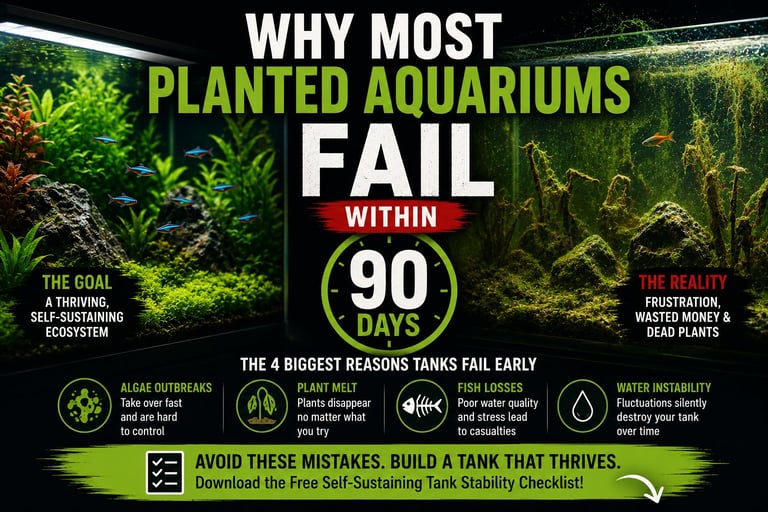
Why Most Planted Aquariums Fail Within 90 Days
Plant melt, algae outbreaks, fish deaths, and water instability β discover why most tanks crash in the first 90 days and how ecosystem maturity makes all the difference.
Wondering why your aquarium never develops biofilm? Learn the most common reasons biofilm struggles to establish and why it plays a key role in a healthy ecosystem.
Aquascape Oasis Team
Aquarium Ecosystem Specialists
Biofilm is one of the most overlooked foundations of a healthy aquarium. Download our free checklist covering the key stability factors that support biofilm development β so your ecosystem thrives naturally.
Send Me the ChecklistBefore discussing the causes, it's helpful to understand what biofilm actually is.
Biofilm is a thin layer of microorganisms that develops on surfaces throughout the aquarium. It can form on:
While many hobbyists never notice it, shrimp and other organisms spend much of their day grazing on these microscopic food sources.
Healthy biofilm often becomes an important part of a mature aquarium ecosystem. It's not something to scrub away β it's a sign that your tank is developing the biological complexity that supports long-term stability.
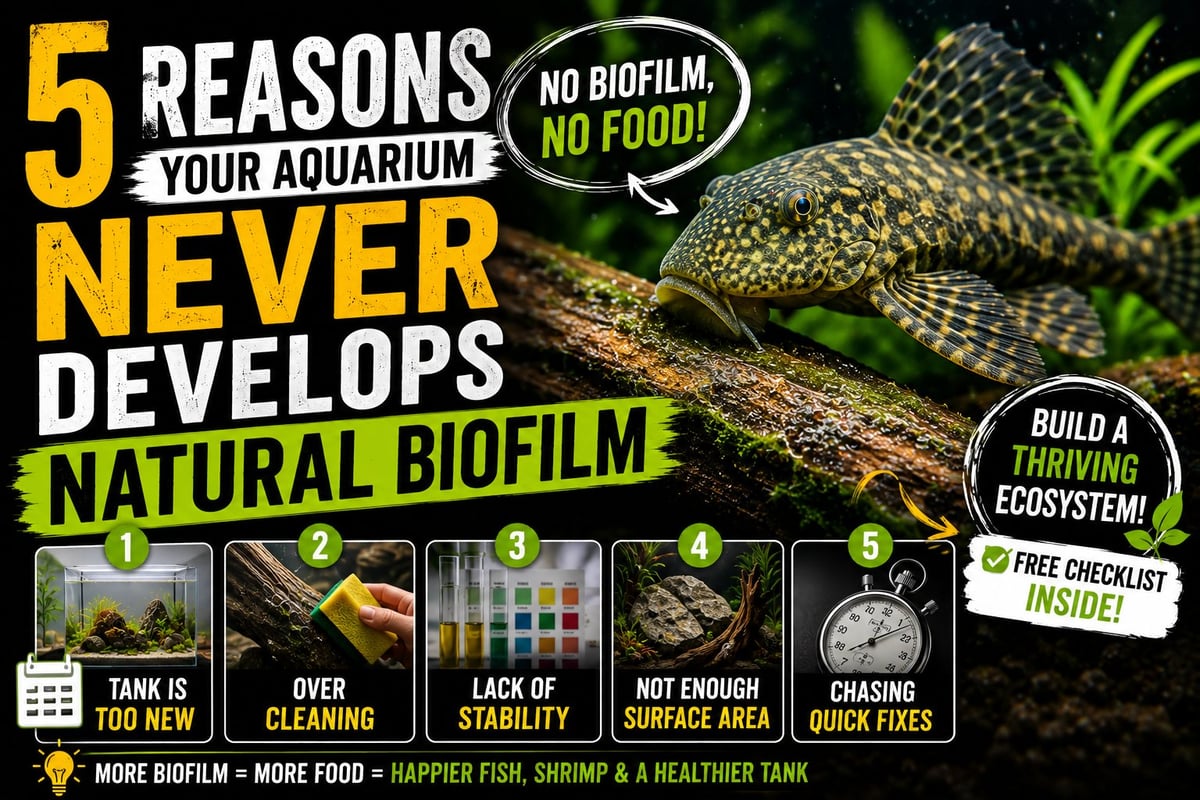
Now let's look at five common reasons aquariums fail to develop healthy biofilm β and what you can do differently.
One of the most common reasons biofilm struggles to establish is simple: the aquarium hasn't had enough time.
Biofilm develops gradually as biological processes become established. New aquariums are still building:
Beneficial bacteria populations β the foundation of the nitrogen cycle
Microbial diversity β countless species of microorganisms
Biological stability β predictable parameters and nutrient cycles
Natural food chains β from microorganisms up to shrimp and fish
Many hobbyists expect a new aquarium to function like a mature aquarium immediately. In reality, ecosystems require time to develop.
Key insight: This is one reason patience often becomes one of the most valuable skills in the hobby. Biofilm can't be rushed β it develops on nature's timeline, not ours.
Many aquarium owners unknowingly remove biofilm faster than it can develop. Common examples include:
Excessive scrubbing β cleaning every surface spotless
Constant glass cleaning β removing biofilm before it establishes
Frequent hardscape cleaning β scrubbing driftwood and rocks
Aggressive maintenance routines β resetting biological surfaces
While cleanliness is important, biofilm is part of the living ecosystem. When surfaces are constantly reset, microorganisms have fewer opportunities to establish themselves.
What to consider: Many successful shrimp keepers focus on maintaining balance rather than sterilizing every surface. A healthy aquarium isn't sterile β it's alive.
Don't let impatience or over-cleaning hold your ecosystem back.
Get the free checklist that helps you build the stability biofilm needs to thrive.
Download Free Stability ChecklistBiofilm thrives in stable environments. Unfortunately, many aquariums experience frequent changes:
Constant parameter adjustments β chasing perfect numbers
Repeated tank modifications β moving hardscape and plants
Frequent environmental shifts β temperature and chemistry swings
Ongoing instability β never letting the tank settle
Microorganisms generally perform best when conditions remain predictable. The more stable the aquarium becomes, the easier it is for biological communities to establish themselves.
Critical reality: Every time you make a significant change to the tank, microorganisms must readjust. Frequent adjustments can prevent biofilm from ever getting a foothold.
Biofilm needs surfaces on which to grow. Aquariums with abundant natural hardscape often provide significantly more opportunities for biofilm development.
Natural porous surface ideal for biofilm
Additional colonization areas
Dense surface area for microorganisms
Living surfaces that support biofilm
A heavily planted aquarium typically offers far more biological real estate than a sparsely decorated tank. More surfaces often support greater microbial diversity.
"Think of surface area as the foundation of your microscopic ecosystem. The more diverse surfaces you provide, the more opportunities biofilm has to establish and thrive."
Build the stability biofilm needs.
Our free checklist walks you through the key factors that support a mature, biologically rich aquarium.
Get the Free Stability ChecklistMany hobbyists want instant success. When biofilm doesn't appear quickly, they begin changing things. They may:
Add new products β searching for a bottled solution
Change routines β disrupting established patterns
Modify the aquarium β rescaping and rearranging
Search for shortcuts β trying to speed up natural processes
Ironically, constant adjustments often slow the very biological processes they're trying to accelerate. Biofilm is usually a sign of ecosystem maturity. Maturity takes time.
Key insight: The healthiest aquariums are rarely built through constant intervention. Instead, they develop through consistent conditions over time. When the aquarium matures naturally, biofilm often follows.
Biofilm often goes unnoticed until someone begins keeping shrimp. Then suddenly it becomes one of the most valuable resources in the aquarium.
Biofilm can contribute to:
Continuous food source for shrimp and snails
Rich community of beneficial organisms
Natural nutrient cycling and balance
Essential grazing for healthy colonies
Many thriving shrimp colonies spend much of their day consuming microscopic materials growing on aquarium surfaces. This is one reason mature aquariums frequently outperform newly established systems.
Many beginners focus entirely on visible aspects of the aquarium. They focus on fish, plants, equipment, and water tests. Meanwhile, much of what makes an aquarium successful happens on a microscopic level.
Healthy ecosystems are supported by countless biological processes that remain invisible to the naked eye. Biofilm is one of those processes.
The healthiest aquariums are rarely built through constant intervention. Instead, they develop through consistent conditions over time.
These factors create an environment where biofilm can naturally develop and support the broader ecosystem.
Build an ecosystem first. Biofilm will follow.
Rather than chasing biofilm directly, focus on creating conditions that support long-term biological stability.
Grab Your Free ChecklistCommon questions about aquarium biofilm and how to support it naturally
Learn more about building a stable, mature aquarium ecosystem that supports healthy biofilm development
Plant melt, algae outbreaks, fish deaths, and water instability β discover why most tanks crash in the first 90 days and how ecosystem maturity makes all the difference.
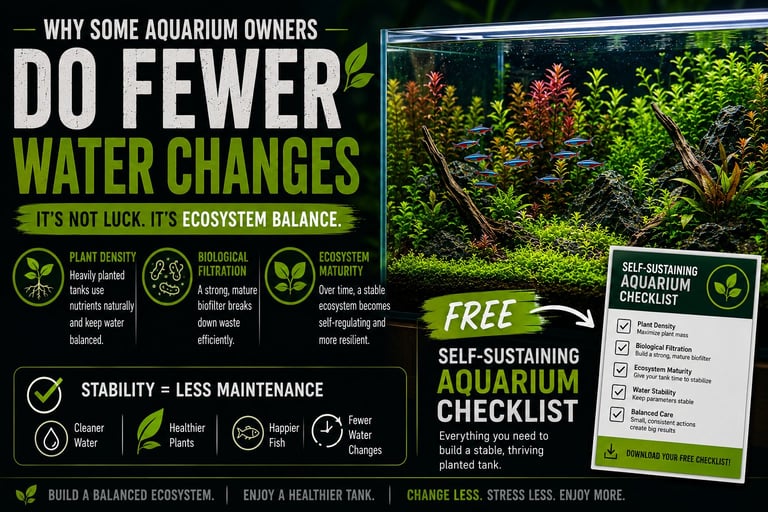
Discover how plant density, biological filtration, and ecosystem maturity work together β creating the stability biofilm and microorganisms need to flourish.
Want to build a healthier aquarium that naturally supports biofilm development? Learn the key factors successful aquarists monitor when creating stable ecosystems.
Spot problems before they lead to shrimp stress or stalled biological development
Stop chasing symptoms and understand the big picture of ecosystem health
Create the stable conditions where biofilm and beneficial microorganisms thrive
No spam. Unsubscribe anytime. Simple, actionable stability checklist.