9 Ways Hobbyists Accidentally Disrupt Their Aquarium Ecosystem
Discover the subtle ways you might be undermining your tank's stability and learn how to build a more resilient aquatic ecosystem.
Discover the seven characteristics successful self-sustaining aquariums share and learn how to build a healthier, more stable, low-maintenance aquarium ecosystem.
Aquascape Oasis Team
Self-Sustaining Tank Specialists
Successful self-sustaining aquariums often share common characteristics that promote long-term stability and healthier ecosystems.
Build a healthier, more stable aquarium ecosystem. Download our free checklist covering the key factors successful aquarists monitor.
Send Me the ChecklistMany aquarium hobbyists dream of a tank that practically runs itself. Fewer problems. Less maintenance. More stability. Healthier fish and plants.
While no aquarium is truly maintenance-free, some tanks become remarkably stable over time. These are often called self sustaining aquariums.
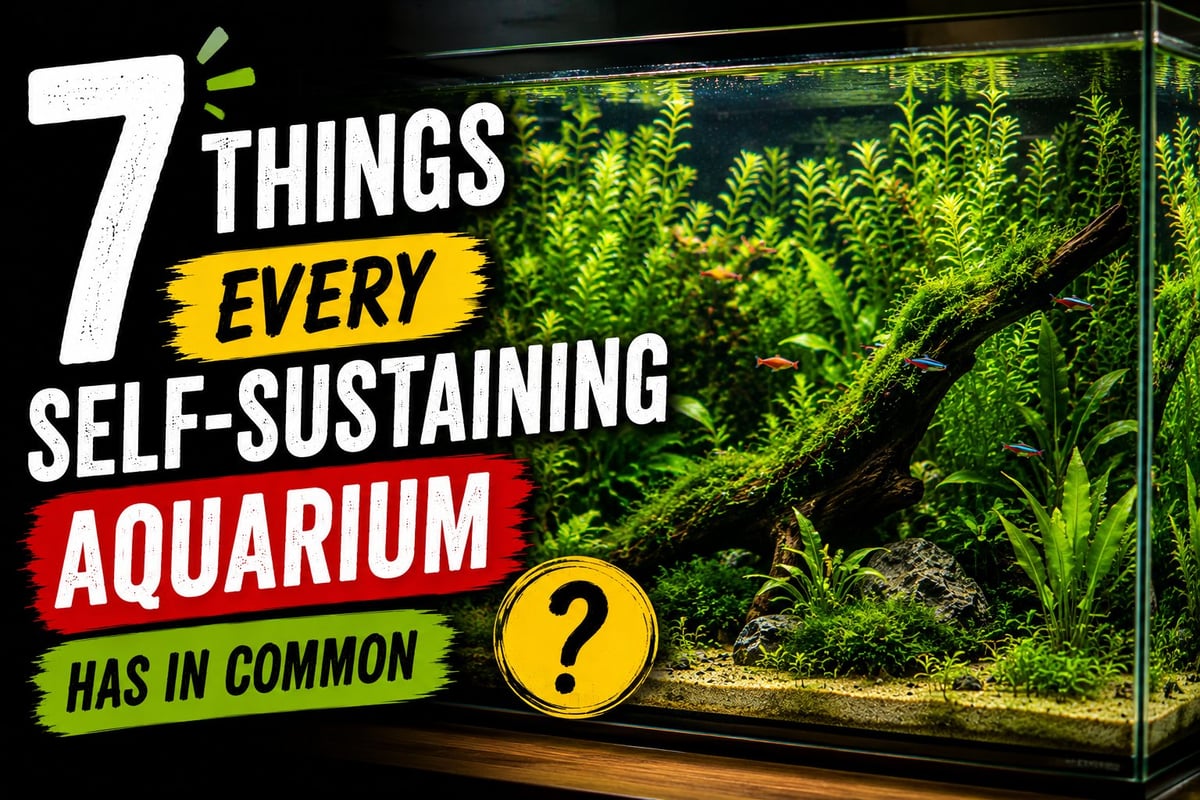
Interestingly, successful self-sustaining aquariums usually share several common characteristics regardless of tank size, livestock, or aquascape style. Let's look at seven things they almost always have in common.
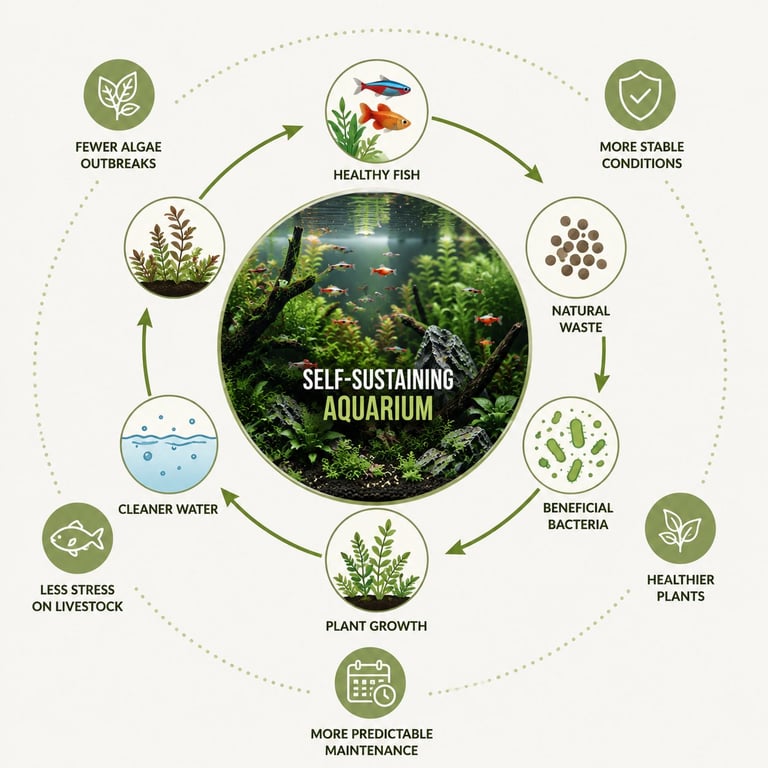
A self-sustaining aquarium isn't an aquarium that never needs attention. Instead, it's an aquarium ecosystem that has developed enough biological balance and stability that it requires significantly less intervention than a typical tank.
Healthy self-sustaining aquariums often experience:
The goal is to work with nature rather than constantly fighting against it.
One of the most consistent traits among successful self-sustaining aquariums is abundant plant growth. Plants do far more than improve appearance. Healthy plants contribute to ecosystem stability, habitat creation, biological balance, and long-term resilience.
Many struggling aquariums simply lack enough plant mass to support the ecosystem effectively. Plant density is often one of the biggest differences between stable tanks and unstable ones.
Key takeaway: Plants aren't optional extras β they're the engine of your self-sustaining aquarium. The more healthy plant mass you have, the more stable your ecosystem becomes.
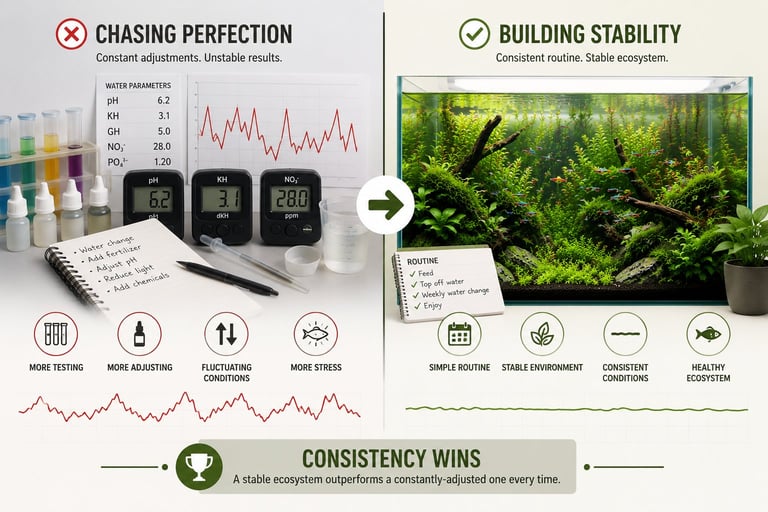
Many beginners spend their time chasing perfect numbers. Successful aquarists often focus on consistency instead. Stable conditions frequently outperform constantly changing conditions.
Self-sustaining aquariums are usually built around predictable routines, consistent environments, and long-term balance β rather than constant adjustments and corrections.
Key takeaway: Stop chasing the "perfect" parameter. Aim for consistency β a stable ecosystem outperforms a constantly-adjusted one every time.
One of the biggest mistakes hobbyists make is expecting immediate results. Healthy ecosystems take time to develop. As aquariums mature, they often develop greater biological diversity, more established processes, and improved resilience.
Many self-sustaining aquariums are the result of patience rather than shortcuts.
Key takeaway: A mature aquarium isn't built in weeks β it develops over months. Give your ecosystem the time it needs to find its rhythm.
Successful aquariums usually offer more than open water. Fish and invertebrates benefit from plant cover, structure, exploration areas, and security. Natural environments often support more relaxed behavior and healthier livestock.
A comfortable aquarium is often a healthier aquarium.
Key takeaway: Your livestock need more than clean water β they need a home. Dense planting and natural structures create an environment where fish and shrimp truly thrive.
Get our Free Self-Sustaining Tank Stability Checklist and learn exactly which factors successful aquarists monitor to create stable, low-maintenance ecosystems.
Get Your Free ChecklistMany aquarium problems begin with excessive intervention. When hobbyists constantly rearrange the tank, change routines, make adjustments, and chase solutions β the ecosystem may struggle to stabilize.
Self-sustaining aquariums often succeed because the environment remains relatively consistent over time.
Key takeaway: Sometimes the best thing you can do for your aquarium is⦠nothing. Let the ecosystem do its work without constant interference.
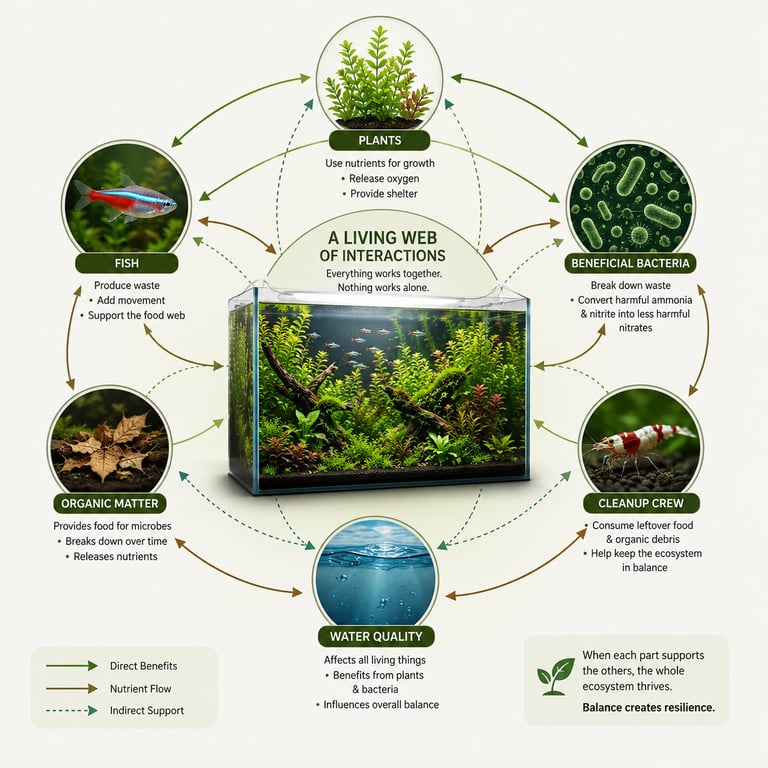
Healthy aquariums contain countless biological interactions happening behind the scenes. Plants, microorganisms, beneficial bacteria, and livestock all contribute to the larger ecosystem.
The healthiest aquariums often feel balanced because these systems are working together rather than competing with one another.
Key takeaway: Your aquarium is a living web of interactions β not a collection of separate parts. When all the pieces work together, the whole ecosystem becomes stronger.
One of the most recognizable signs of a self-sustaining aquarium is that maintenance becomes simpler. This doesn't happen because the aquarium stops needing care β it happens because the ecosystem becomes more stable.
Many hobbyists notice fewer surprises, fewer recurring problems, more predictable conditions, and less troubleshooting. The aquarium begins helping maintain itself rather than constantly demanding intervention.
Key takeaway: A self-sustaining aquarium gets easier over time. The first few months require patience, but the payoff is a tank that largely maintains itself.
Many aquarium owners believe self-sustaining aquariums are created by purchasing the right equipment. While equipment certainly matters, equipment alone rarely creates stability.
Most successful self-sustaining aquariums are built around healthy plants, biological maturity, stability, and patience. These foundations often have a larger impact than expensive upgrades.
Key takeaway: You can't buy your way to a self-sustaining aquarium. It's built through consistency, not cash.
Many tanks remain stuck in a cycle of algae outbreaks, plant problems, constant maintenance, and ongoing adjustments. Often this happens because the aquarium never develops enough stability to mature properly β the ecosystem is continuously being reset before balance can establish itself.
Key takeaway: If your tank feels like it's constantly starting over, the ecosystem may be getting disrupted before it has a chance to settle. Break the cycle by letting things be.
One of the biggest mindset shifts in aquarium keeping is moving from managing equipment to managing ecosystems. Instead of asking "What product should I buy?", successful hobbyists often ask "How can I make the ecosystem healthier?"
That simple shift frequently produces better long-term results.
Key takeaway: Shift your mindset from "aquarium manager" to "ecosystem builder." The results will speak for themselves.
There is no single product that creates a self-sustaining aquarium. No secret gadget. No shortcut.
The healthiest aquariums are usually built gradually through stability, consistency, healthy plant growth, and ecosystem maturity. Over time, these factors combine to create tanks that are easier to maintain and more enjoyable to own.
Key takeaway: The tanks you admire most weren't purchased β they were cultivated. Your patience and consistency will pay off.
Want to build a healthier self-sustaining aquarium? Download our Free Self-Sustaining Tank Stability Checklist and learn the key factors successful aquarists monitor when creating stable ecosystems. The checklist helps you identify common stability issues before they lead to algae outbreaks, plant melt, fish stress, or excessive maintenance.
Get Your Free Checklist NowCommon questions about self-sustaining aquariums, ecosystem stability, and building a low-maintenance tank.
Continue learning about self-sustaining aquariums, ecosystem balance, and building a low-maintenance planted tank.
Discover the subtle ways you might be undermining your tank's stability and learn how to build a more resilient aquatic ecosystem.
Learn three common signs your planted aquarium may not have enough plants and discover how plant density can improve stability.
A self-sustaining aquarium isn't a product you buy β it's an ecosystem you build. Download our Free Self-Sustaining Tank Stability Checklist and learn the exact factors that create stable, low-maintenance aquariums.
The ecosystem does the work
Fewer surprises and swings
Thriving plants and livestock