Low Maintenance Aquarium
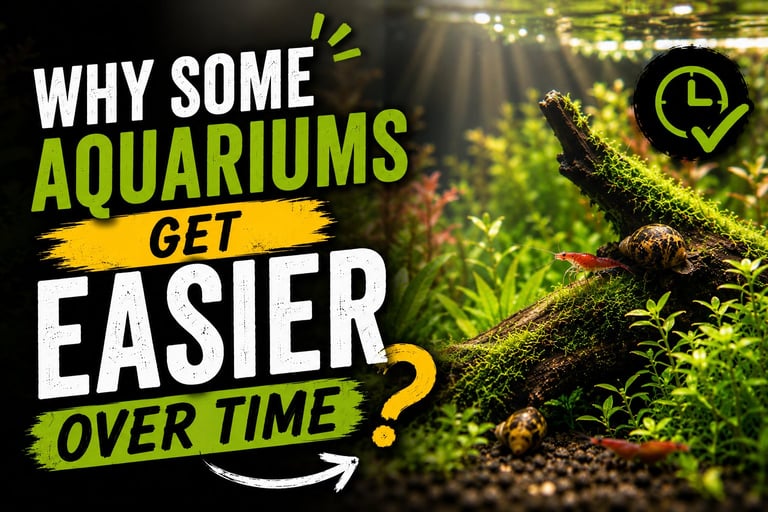
Why Some Aquariums Get Easier to Maintain Over Time
Discover why some aquariums become easier to care for through stability and biological maturity.
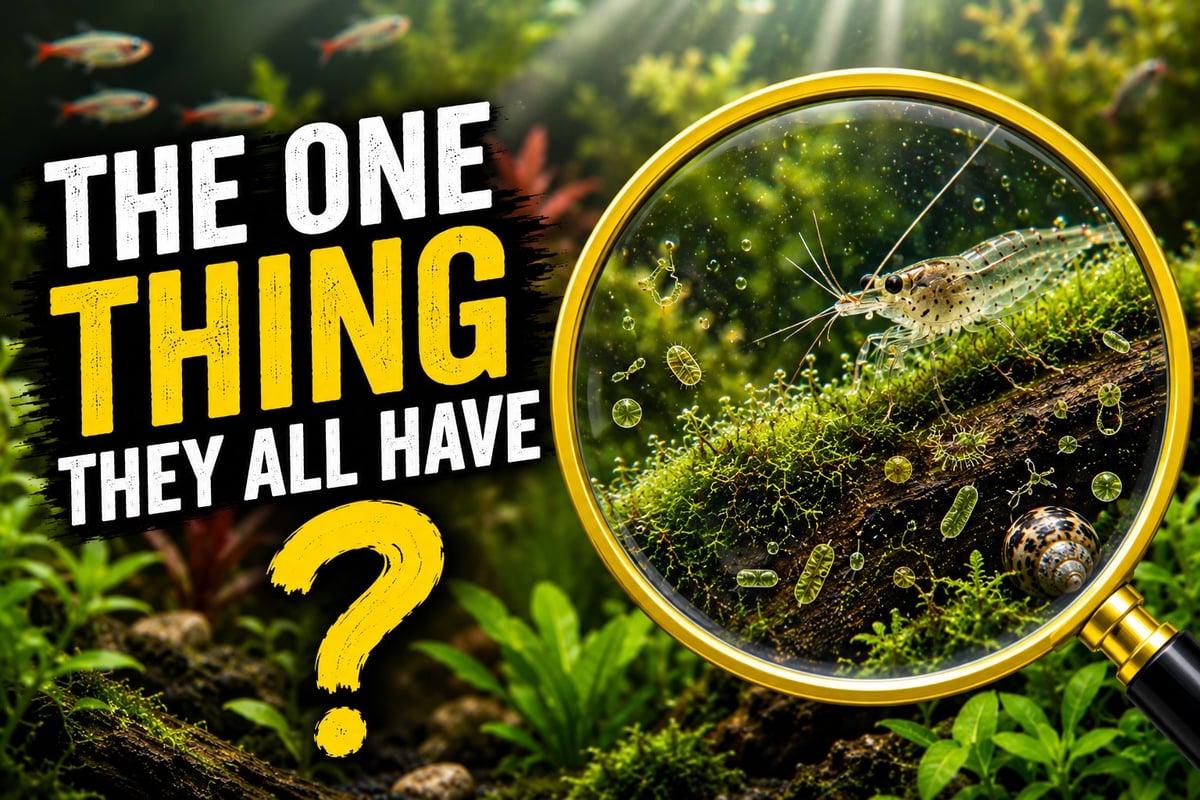
Many aquarium owners assume self-sustaining aquariums are created by buying expensive equipment. Yet if you look at successful long-term aquariums, you'll notice something surprising — they usually share one characteristic that often gets overlooked.
Aquascape Oasis Team
Planted Tank Specialists
A mature self-sustaining aquarium setup often contains hidden biological processes, including biofilm and diverse microorganisms, that contribute to long-term stability.
Want to build a healthier self-sustaining aquarium setup? Download our free checklist covering the key factors successful aquarists monitor when creating stable ecosystems.
Send Me the ChecklistA self-sustaining aquarium setup isn't an aquarium that never needs maintenance.
Instead, it's an ecosystem that has become stable enough that many natural processes begin supporting one another.
These aquariums often experience — for a broader picture, see 7 things every self-sustaining aquarium has in common and the ultimate self-sustaining aquarium guide:
The goal isn't perfection. The goal is balance.
The biggest difference between struggling aquariums and thriving self-sustaining aquariums is often biological maturity. Over time, healthy aquariums develop greater biological diversity, established microbial communities, biofilm, natural food sources, and more resilient ecosystems. These processes are mostly invisible — yet they frequently determine whether an aquarium constantly struggles or gradually becomes easier to maintain.
Want to track your tank's biological maturity? Our free checklist helps you monitor the key signs →
Many beginners focus entirely on what they can see: equipment, water clarity, decorations, and plant species. However, much of what creates long-term stability happens beneath the surface.
As aquariums mature, countless biological interactions begin occurring every day. Plants, beneficial bacteria, microorganisms, biofilm, fish, and invertebrates — together, these systems create an ecosystem that becomes increasingly stable.
Experienced aquarists frequently describe mature tanks as feeling settled, predictable, balanced, and easier to manage. This feeling often comes from biological maturity.
Instead of constantly reacting to problems, the ecosystem begins regulating itself more effectively. The tank becomes more resilient. Small issues become smaller. Maintenance becomes more predictable.
Stable conditions often outperform perfect conditions. Many successful aquariums do not have perfect numbers — what they do have is consistency, predictability, biological maturity, and long-term balance.
Many aquariums never develop true stability because they are continuously disrupted. Examples include constantly rearranging hardscape, frequently changing routines, chasing perfect numbers, repeatedly making adjustments, and overreacting to small issues.
These actions can make it difficult for biological systems to mature. The ecosystem keeps getting reset before it has a chance to establish itself.
The hardest part is often doing less. Our checklist helps you focus on what actually matters →
Most successful self-sustaining aquarium setups also contain healthy plant growth. Plants contribute to ecosystem stability, biological diversity, natural habitat, and long-term resilience.
Many thriving aquariums are heavily planted because plants become active participants within the ecosystem. They don't simply decorate the aquarium — they help support it.
One of the most underestimated aspects of mature aquariums is biofilm. Biofilm often becomes part of the natural food web within the aquarium and supports countless microscopic processes that contribute to biological stability.
Many shrimp keepers, for example, notice that mature aquariums frequently outperform newer setups. One reason is that mature ecosystems often contain richer biological communities.
One of the biggest lessons experienced hobbyists learn is this: stable conditions often outperform perfect conditions. Many successful aquariums do not have perfect numbers. What they do have is consistency, predictability, biological maturity, and long-term balance.
Healthy ecosystems generally respond better to stable environments than constantly changing ones.
Many aquarium owners spend their time asking: "What product should I buy?"
A better question might be: "How can I support the ecosystem?" Because long-term success often comes from patience, stability, healthy plants, and biological maturity — rather than constant upgrades and interventions.
Learn the key habits that support a maturing ecosystem with our free checklist →
A self-sustaining aquarium setup often begins showing subtle signs of maturity:
These signs usually develop gradually. But over time, they often indicate that the ecosystem is moving toward long-term stability.
There is no single product that creates a self-sustaining aquarium setup. No magic filter. No secret additive. No shortcut.
The healthiest aquariums are usually built through stability, patience, healthy plant growth, biological maturity, and consistent routines. Eventually, the ecosystem itself begins doing more of the work — and that's the one thing many successful self-sustaining aquariums have that others don't.
Ready to let your ecosystem do more of the work? Get the free stability checklist →
Want to build a healthier self-sustaining aquarium setup? Download our free checklist and learn the key factors successful aquarists monitor when creating stable ecosystems. The checklist helps you identify common stability issues before they lead to algae outbreaks, plant melt, fish stress, or excessive maintenance.
Spot Early Warning Signs
Identify instability before it becomes a crisis
Step-by-Step Checklist
Simple actions that support ecosystem health
Long-Term Stability
Build a tank that gets easier over time
Join thousands of aquarists building healthier tanks
Common questions about building a self-sustaining aquarium setup
Explore more guides on building stable, low-maintenance aquarium ecosystems
Discover why some aquariums become easier to care for through stability and biological maturity.
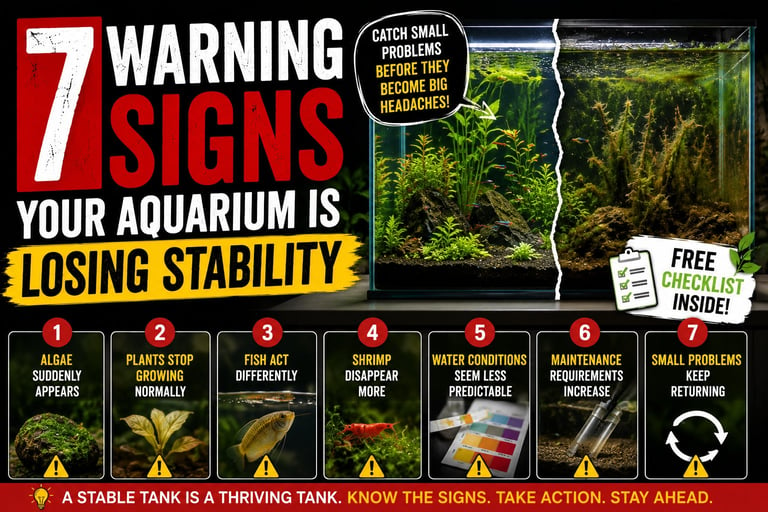
Learn the most common warning signs that your aquarium ecosystem is becoming unstable.