3 Mistakes That Stress Cherry Shrimp
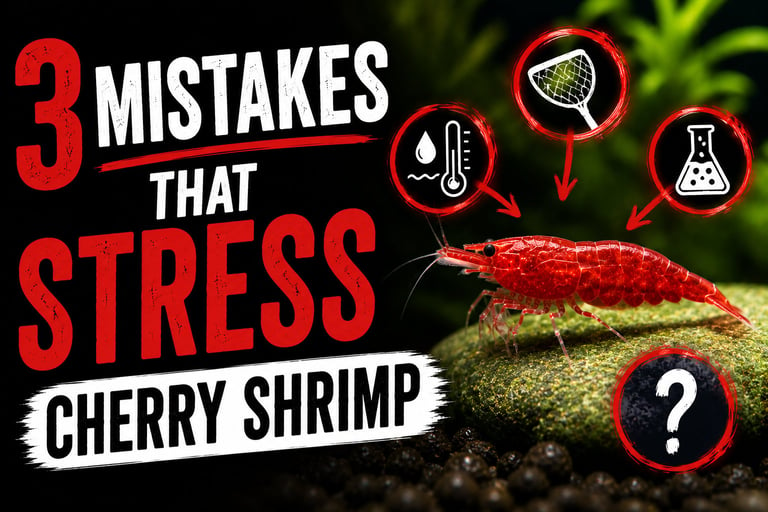
Learn three common mistakes that can cause cherry shrimp stress, including instability, constant changes, and overly sterile aquarium environments.
One of the biggest surprises for new shrimp keepers is discovering that cherry shrimp spend most of their day eating things you can't even see. Here's what they're actually eating in a mature tank.
Aquascape Oasis Team
Shrimp Keeping Specialists
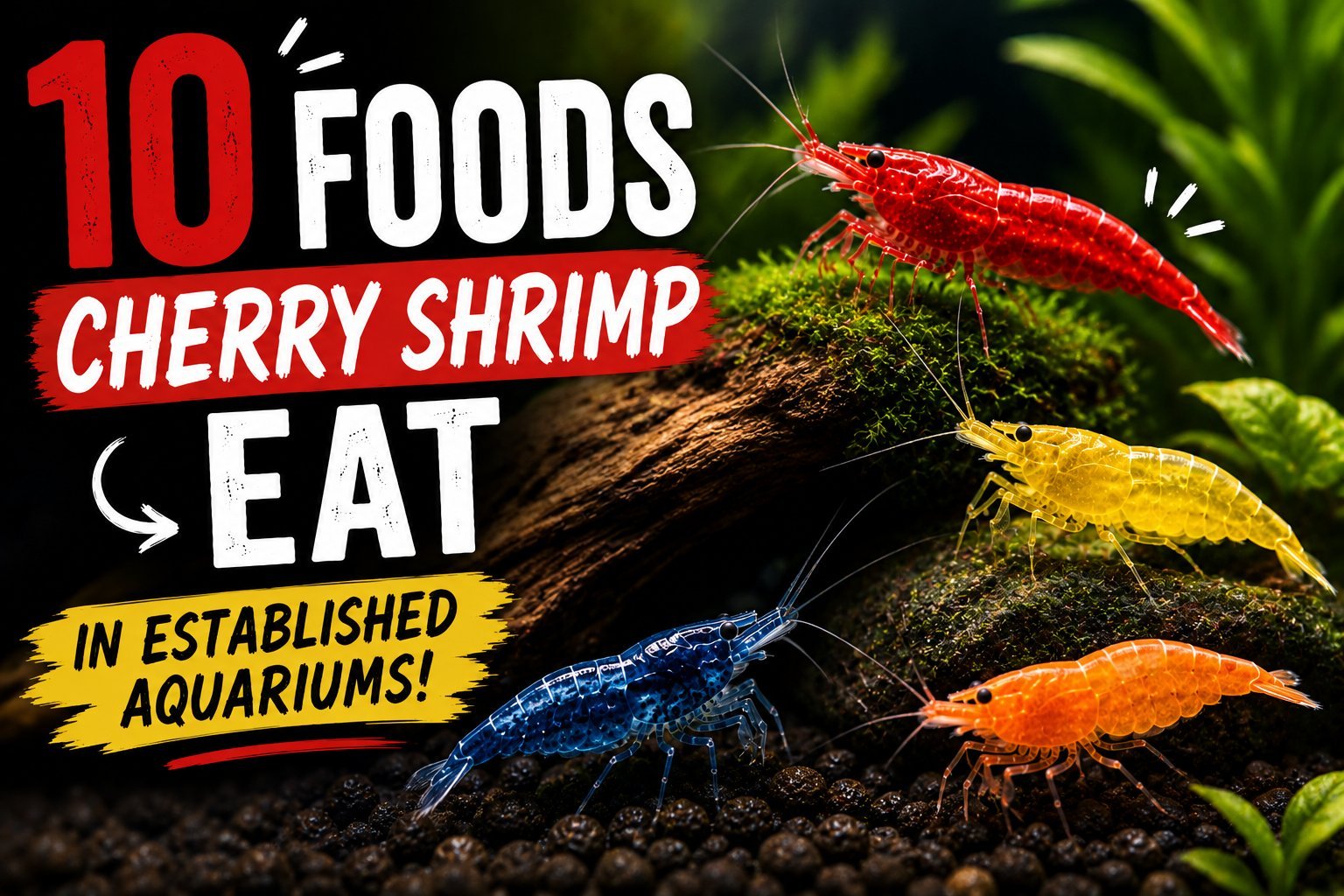
Different varieties of Neocaridina shrimp exploring a mature planted aquarium filled with natural grazing surfaces.
Want to build a healthier aquarium that naturally supports thriving shrimp colonies? Download our free checklist covering the key stability factors successful shrimp keepers monitor.
Send Me the ChecklistBefore looking at specific foods, it's important to understand why mature aquariums often support healthier shrimp colonies.
Many beginners assume shrimp survive primarily on shrimp pellets or supplemental foods. While commercial foods can be helpful, healthy shrimp colonies often rely heavily on natural food sources found throughout the aquarium.
As aquariums age, they develop biofilm, microorganisms, natural grazing surfaces, and greater biological diversity. These natural food sources become available throughout the aquarium and help support shrimp activity and colony growth.
This is one reason many experienced shrimp keepers prefer mature tanks over newly established setups. If you've ever wondered what do cherry shrimp eat, the answer is much broader than most hobbyists realize.
In established aquariums, shrimp are constantly grazing on a variety of microscopic and organic materials. Here are ten foods cherry shrimp commonly eat in mature aquarium ecosystems.
Biofilm is often considered one of the most valuable cherry shrimp food sources. It develops naturally on driftwood, rocks, plant leaves, aquarium glass, and decorations.
Shrimp spend countless hours grazing on these microscopic layers. Many successful shrimp colonies rely heavily on biofilm as part of their daily diet. A well-established tank often has visible biofilm that supports an entire colony.
Key insight: Biofilm is not just one thing — it's a complex community of bacteria, algae, fungi, and microorganisms all living together in a thin layer that shrimp graze on continuously.
While hobbyists often dislike algae, shrimp frequently benefit from certain types of algae growth. Thin algae films that develop on surfaces can provide additional grazing opportunities as part of a balanced cherry shrimp diet.
This is one reason you'll often see shrimp picking at rocks, wood, and aquarium walls. Not all algae is consumed equally, but many forms become part of a shrimp's natural feeding routine.
Did you know? Shrimp are selective grazers. They prefer soft, thin algae films over tougher types like black beard algae or green spot algae, which are harder to consume.
Healthy aquariums contain countless microscopic organisms. Many are invisible to the naked eye, yet they form a crucial part of the shrimp food web.
These tiny organisms — including infusoria, rotifers, copepods, and other microfauna — often become part of the food web that supports shrimp colonies. As ecosystems mature, microbial diversity tends to increase, creating additional grazing opportunities throughout the aquarium.
Interesting fact: Established tanks with deep substrate layers, botanicals, and live plants tend to support far more diverse microfauna populations — which means more natural shrimp food sources.
Cherry shrimp frequently consume soft, decomposing plant matter. You'll often notice shrimp gathering around aging leaves, plant debris, and organic material — a key part of natural cherry shrimp feeding behavior.
Rather than eating healthy plants, shrimp are usually helping process material that is already breaking down. This makes them an excellent cleanup crew in planted tanks, as they help recycle nutrients back into the ecosystem.
What to watch for: Shrimp gathering on a dying leaf doesn't mean your plant is failing — it means they're doing their job as nature's recyclers.
Beneficial bacterial communities develop throughout healthy aquariums. While hobbyists often associate bacteria with filtration, many bacterial colonies also contribute to the natural shrimp grazing opportunities shrimp enjoy.
Established aquariums often contain far more bacterial life than most people realize. These bacterial colonies coat every surface — substrate, filter media, hardscape, and plant leaves — creating a continuous food source for grazing shrimp.
Pro tip: Avoid over-cleaning your tank. Scrubbing every surface can remove beneficial bacterial colonies that shrimp depend on for food. A little "seasoning" on surfaces is healthy.
Feeding shrimp is about the ecosystem — not just the food.
Get the free checklist that helps you create the stable conditions shrimp need to find food naturally.
Download Free Stability ChecklistShrimp are excellent scavengers. Any uneaten fish food that reaches the substrate often attracts shrimp quickly — part of what makes them such effective clean-up crew members.
However, this should generally be viewed as a bonus food source rather than a primary diet. Healthy shrimp colonies usually benefit from a variety of food sources, and relying solely on leftover fish food rarely provides the diverse cherry shrimp diet they need.
Important note: If shrimp are rushing to fish food immediately, it may signal that natural food sources in the tank are insufficient. A tank rich in biofilm and microorganisms will often see shrimp show less urgency at feeding time.
Detritus is frequently misunderstood. While excessive waste is undesirable, small amounts of organic material often support the ecosystem and contribute to what shrimp eat on a daily basis.
Shrimp regularly investigate organic particles, decomposing matter, and biological debris. Many of these materials contribute to the natural food web found in mature aquariums and support the constant grazing behavior shrimp are known for.
Balance is key: A thin layer of mulm and detritus in a mature tank is completely normal. It's only when organic waste accumulates excessively that water quality becomes a concern.
Plant leaves often develop microscopic growth that shrimp love to graze on. You'll frequently observe shrimp climbing through dense vegetation searching for food — this is a core part of shrimp grazing behavior.
Heavily planted aquariums often provide countless feeding opportunities. This is one reason planted shrimp tanks can be so productive — the plants themselves become a substrate for the microalgae and biofilm shrimp depend on.
Large surface area for biofilm growth
Traps detritus and supports microfauna
Roots collect biofilm and microorganisms
Ideal grazing platforms for shrimp
"In a heavily planted tank, the plants aren't just decoration — they're the foundation of the shrimp aquarium ecosystem and a primary feeding surface."
Established aquariums naturally accumulate small organic particles. Shrimp are constantly inspecting these materials for edible content as part of their natural shrimp feeding routine.
What appears insignificant to us may represent a valuable food source to a shrimp. This constant grazing behavior is one reason shrimp spend so much time exploring every surface of the aquarium — they're not just wandering, they're actively hunting for food.
Observation tip: Watch your shrimp closely. You'll notice they have tiny front claws (chelae) they use to pick at surfaces and bring food particles to their mouths — a behavior called "picking and grazing."
Of course, most shrimp keepers also provide supplemental cherry shrimp food. These may include shrimp pellets, wafers, specialty foods, and other commercial diets designed for Neocaridina food needs.
Supplemental feeding can be useful, but many thriving shrimp colonies depend just as heavily on the natural food sources found throughout mature aquariums. The best approach is to view commercial foods as supplements to — not replacements for — the natural shrimp tank food web.
Feeding guideline: In a well-established tank rich in biofilm and microfauna, shrimp may only need supplemental feeding 2-3 times per week rather than daily. Watch their behavior — shrimp that ignore pellets likely have plenty of natural food available.
Build the ecosystem first.
Our free checklist walks you through the key stability factors most shrimp keepers overlook.
Get the Free Stability ChecklistMany beginners assume shrimp only need prepared foods. As a result, they focus entirely on feeding schedules while overlooking the importance of the aquarium ecosystem itself.
The healthiest shrimp colonies often have access to natural grazing surfaces, biological diversity, mature ecosystems, and multiple food sources. Food doesn't only come from what we add to the aquarium — much of it develops naturally over time.
If you're asking "what do cherry shrimp eat", the answer isn't just a list of products. It's an understanding that a healthy, mature established shrimp tank produces much of its own food naturally.
One reason shrimp colonies frequently perform better in established tanks is the abundance of available food. A mature aquarium provides opportunities for shrimp to graze all day long.
This constant access to food often supports activity, colony growth, natural behavior, and long-term health. Many shrimp keepers discover that ecosystem maturity becomes just as important as feeding — sometimes even more so.
The best shrimp care approach combines patience for the tank to mature with thoughtful supplemental feeding when needed.
The best shrimp tanks aren't simply feeding stations. They're functioning ecosystems with healthy plants, natural biofilm, biological maturity, and stable conditions.
These factors help create an environment where shrimp can thrive and continuously find food throughout the aquarium. Rather than asking "what do shrimp eat" and reaching for a pellet container, ask what your aquarium is already providing — and what it still needs to develop.
Stop chasing symptoms. Start building a stable ecosystem.
Download our free checklist and learn the key stability factors successful shrimp keepers monitor.
Grab Your Free ChecklistCommon questions about what cherry shrimp eat and how to support their diet naturally
Learn more about cherry shrimp care, diet, and building a healthy aquarium ecosystem
Learn three common mistakes that can cause cherry shrimp stress, including instability, constant changes, and overly sterile aquarium environments.
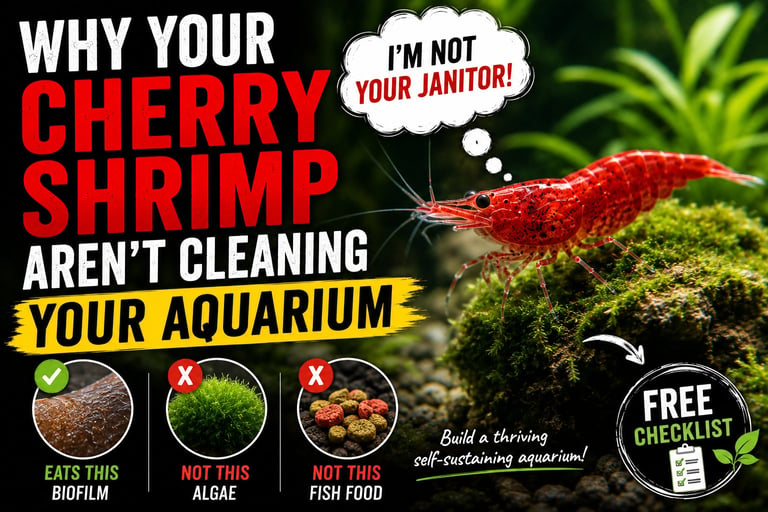
Learn what cherry shrimp actually eat, what they ignore, and why realistic expectations lead to healthier shrimp tanks.
Want to build a healthier aquarium that naturally supports thriving shrimp colonies? Learn the key factors successful aquarists monitor when creating stable ecosystems.
Create conditions where shrimp naturally thrive
Spot stability issues before they lead to stress
Know exactly what to monitor for long-term success
No spam. Unsubscribe anytime. Simple, actionable stability checklist.