Why Aquarium Plants Melt (And What It Usually Means)
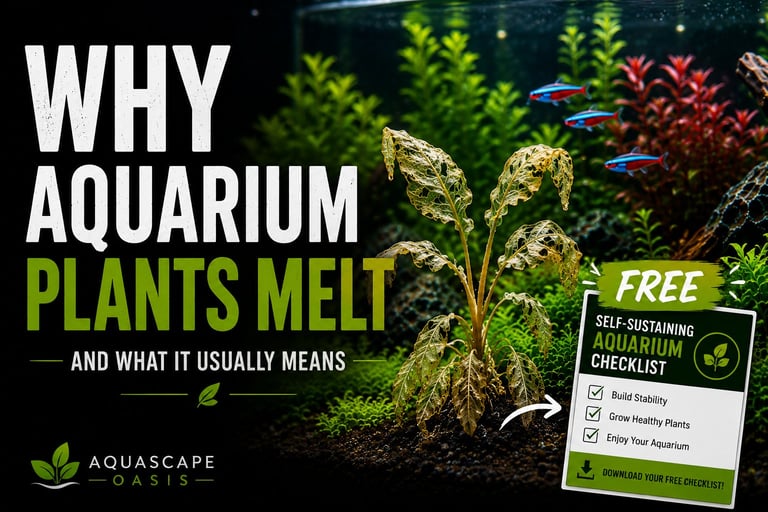
Few things are more frustrating than watching beautiful new plants turn yellow, transparent, or brown. Learn what's actually happening — and why it doesn't always mean you've failed.
Learn seven early warning signs of aquarium plant problems before plant melt occurs. Discover how to identify struggling plants and improve aquarium stability.
Aquascape Oasis Team
Planted Tank Specialists
Most plant problems aren't random — they follow patterns. Get our Free Self-Sustaining Tank Stability Checklist and learn the exact factors that separate thriving planted tanks from struggling ones.
Aquarium plant melt doesn't usually happen overnight. In many cases, plants give hobbyists warning signs weeks before serious decline occurs. The challenge is that these signs are often subtle. A plant may still be alive. It may even appear healthy from a distance. But beneath the surface, something within the aquarium ecosystem may be preventing the plant from thriving.
If you can identify these early aquarium plant problems, you may be able to correct course before plant melt becomes a major issue.
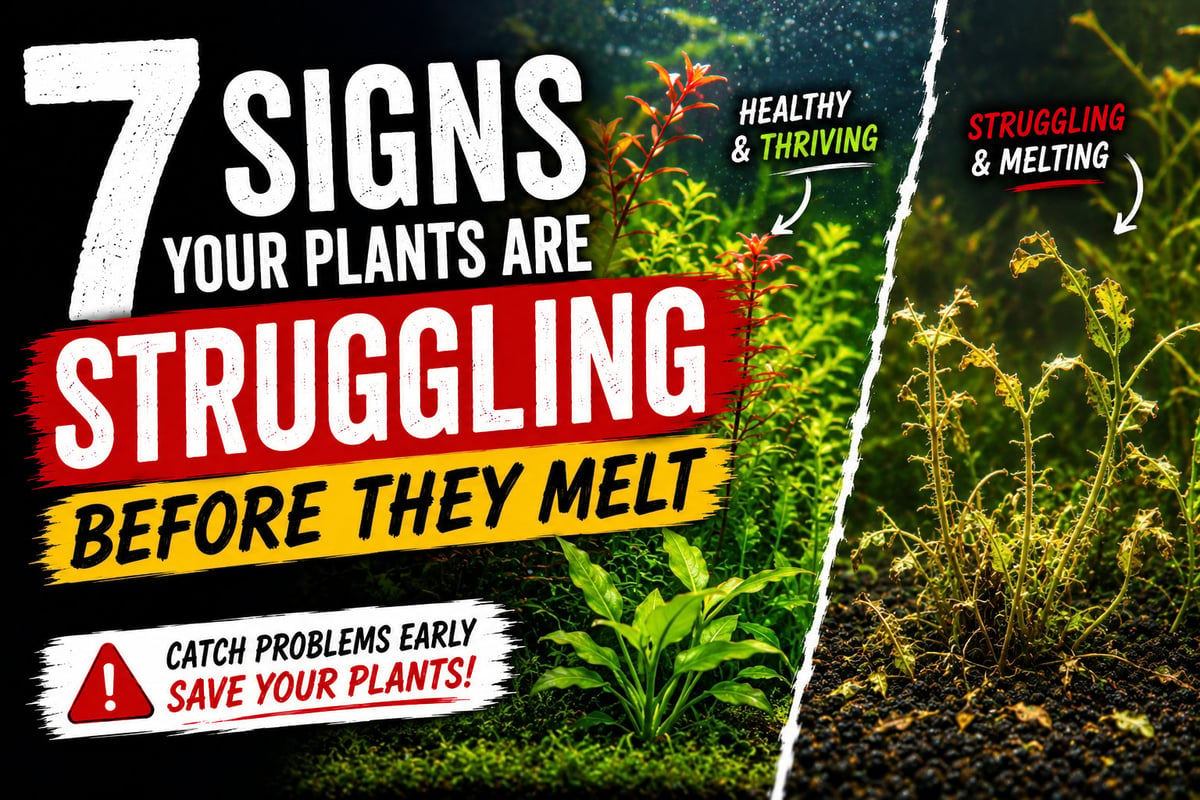
Let's look at seven warning signs your plants may be struggling.
Many hobbyists wake up one day and feel like their plants suddenly melted. In reality, the decline often began much earlier.
Plants continuously respond to water conditions, lighting, competition, stability, and overall ecosystem health. Because they cannot move, plants often become excellent indicators of changes happening within the aquarium.
Learning to recognize these signals can help you catch problems early.
Plant problems are frustrating — especially when you're doing everything "right." The Free Self-Sustaining Tank Stability Checklist helps you spot issues before they become disasters, so you can grow the lush, vibrant aquarium you've always wanted.
One of the earliest signs of aquarium plant problems is reduced new growth. Pay attention to leaf size, stem thickness, and overall vigor. New leaves often tell a more accurate story than older leaves.
When new growth begins appearing smaller or weaker than usual, the plant may be struggling to keep up with its environment.
Smaller new leaves are often the first signal that a plant is running low on the resources or conditions it needs to thrive. Don't ignore what new growth is telling you.
Healthy plants generally display some level of ongoing growth. When growth suddenly slows, it often indicates that something within the ecosystem has changed.
Ask yourself:
A sudden slowdown is often worth investigating before larger problems appear.
Growth rate is one of the most reliable indicators of plant health. Track it over time — a sudden drop almost always means something shifted.
Color changes frequently occur before major decline. Depending on the species, you may notice fading greens, dull coloration, or reduced vibrancy.
Plants often lose visual intensity when conditions become less favorable. Many hobbyists focus on algae while overlooking changes in plant coloration.
Faded color is a distress signal. Whether it's nutrient deficiency, lighting issues, or environmental stress, your plants are communicating through color.
Some leaf loss is completely normal. However, accelerated deterioration can signal underlying issues. Watch for premature leaf loss, increased yellowing, and faster breakdown of older growth.
These changes may indicate the plant is redirecting resources in response to stress.
When plants sacrifice older leaves faster than normal, they're making a trade-off. Find out what's forcing that decision before the plant runs out of reserves.
Algae isn't always the problem. Sometimes it's the symptom. When plants become less competitive, algae often gains opportunities to establish itself.
If algae suddenly begins appearing on leaves that were previously clean, it may indicate the plants are no longer performing as strongly as before. This is often one of the most overlooked aquarium plant problems.
Algae on leaves is often a symptom of weakened plants, not the root problem. Address the plant's health first, and the algae often follows.
Many stem plants naturally continue growing upward when conditions support healthy development. When vertical growth slows or stalls, it can indicate reduced plant performance.
Pay attention to:
Changes often occur gradually, making them easy to miss.
A plant that stops reaching upward is conserving energy. Something in the environment is no longer supporting active growth.
Sometimes the warning sign isn't the plant itself. It's the aquarium. Many struggling plants appear alongside increased algae, more maintenance, water quality fluctuations, and other ecosystem issues.
Because plants are connected to the larger environment, they often reflect broader changes occurring within the aquarium. This is why plant health and aquarium stability are so closely linked.
If your maintenance demands are increasing, your plants look worse, and the tank feels harder to manage — the plants aren't the problem. The ecosystem is.
When plants begin struggling, many aquarium owners focus exclusively on the plant. They may replace the plant, move the plant, add products, or make multiple adjustments. Unfortunately, this can overlook the real issue.
Many plant problems originate from changes occurring throughout the ecosystem rather than the plant itself. Treating symptoms without understanding the underlying cause often leads to repeated frustration.
One of the most valuable lessons in aquarium keeping is realizing that plants rarely exist in isolation. Their success is influenced by stability, consistency, biological maturity, and environmental balance. When the ecosystem thrives, plants frequently respond with stronger growth and greater resilience.
The earlier you recognize warning signs, the easier they are to address. Instead of waiting for plant melt, pay attention to growth speed, leaf quality, coloration, and overall plant behavior.
Small changes often reveal developing issues long before plants begin dying.
Many successful planted aquariums share one important characteristic: stability. Healthy plants often thrive in aquariums that provide consistent conditions, predictable routines, mature biological systems, and balanced ecosystems.
Rather than chasing quick fixes, focus on creating an environment where plants can succeed long term.
Want to build a healthier aquarium that supports thriving plant growth? Download our Free Self-Sustaining Tank Stability Checklist and learn the key factors successful aquarists monitor when creating stable ecosystems. The checklist helps you identify common stability issues before they lead to plant melt, algae outbreaks, fish stress, or stalled plant growth.
Get Your Free ChecklistQuick answers to the most common questions about aquarium plant health and preventing plant melt.
Plant melt refers to the rapid deterioration of aquarium plants, where leaves turn transparent, yellow, or brown and disintegrate. It often occurs when plants are introduced to new environments, when water parameters shift suddenly, or when the plant can no longer sustain itself due to nutrient deficiencies or instability. The key is catching the early warning signs before melt occurs.
Yellowing leaves can indicate several issues: nutrient deficiency (especially nitrogen or iron), insufficient lighting, poor water quality, or the plant redirecting resources away from older leaves. Pay attention to whether yellowing affects old leaves, new leaves, or the entire plant — the pattern often reveals the cause.
Yes, most aquarium plants can recover if problems are caught early. The key is identifying the underlying cause — whether it's lighting, nutrients, water quality, or ecosystem stability — rather than just treating visible symptoms. Plants are remarkably resilient when the environment supports their recovery.
Prevention starts with stability. Maintain consistent water parameters, provide appropriate lighting, avoid over-cleaning, and let your aquarium ecosystem mature naturally. Regular observation of your plants — their growth rate, color, and leaf condition — helps you catch problems early before they escalate into major issues like plant melt.
Continue learning about aquarium plant health, stability, and creating a thriving planted tank.
Few things are more frustrating than watching beautiful new plants turn yellow, transparent, or brown. Learn what's actually happening — and why it doesn't always mean you've failed.
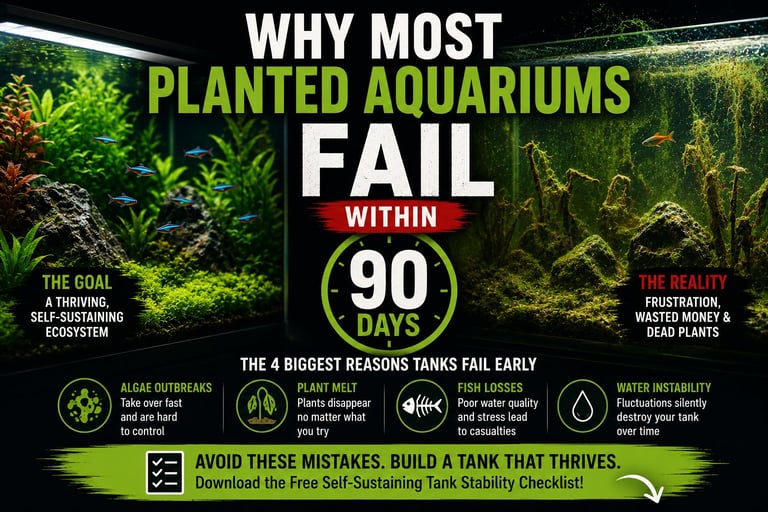
Plant melt, algae outbreaks, fish deaths, and water instability — discover why most tanks crash in the first 90 days and how to avoid it.
Download the Free Self-Sustaining Tank Stability Checklist and learn exactly what successful aquarists monitor to prevent plant melt, algae outbreaks, and fish stress before they start.
Simple checklist format anyone can use, regardless of experience level.
No strings attached. Just actionable insights for a healthier tank.
We respect your inbox. Only valuable content, and unsubscribe anytime.
Free instant download. No spam. Unsubscribe anytime.