Why Your Cherry Shrimp Population Isn't Growing
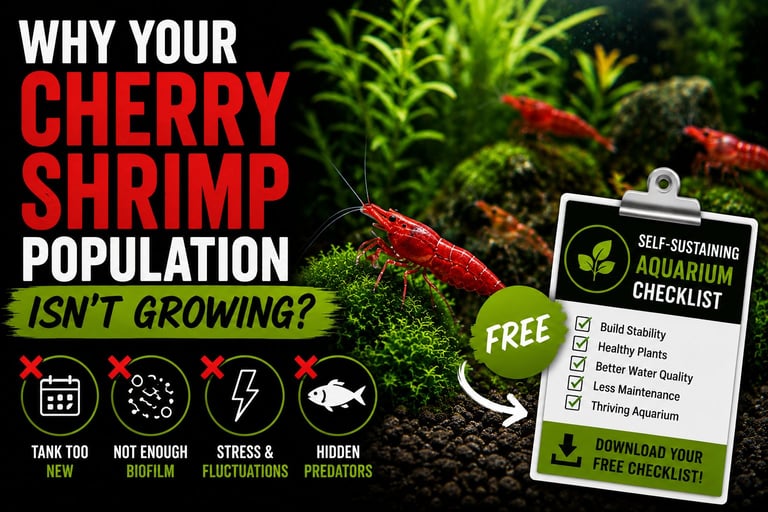
Your shrimp are alive, eating, and molting — but months later the colony is still the same size. Learn why survival and reproduction are not the same thing.
Few things are more frustrating than finding dead cherry shrimp in a tank that has been running successfully for months. Here's why it happens — and what most shrimp keepers overlook.
Aquascape Oasis Team
Shrimp Tank Specialists
Stable shrimp tanks often outperform perfect tanks because consistency reduces stress and supports long-term colony health.
Few things are more frustrating than walking up to a shrimp tank that has been running successfully for months and finding a dead cherry shrimp.
The tank looks healthy. The plants look great. Water tests appear normal. Yet shrimp continue disappearing.
If you've been wondering why your cherry shrimp are dying, you're not alone. Many shrimp keepers assume disease, poor genetics, or water quality must be responsible.
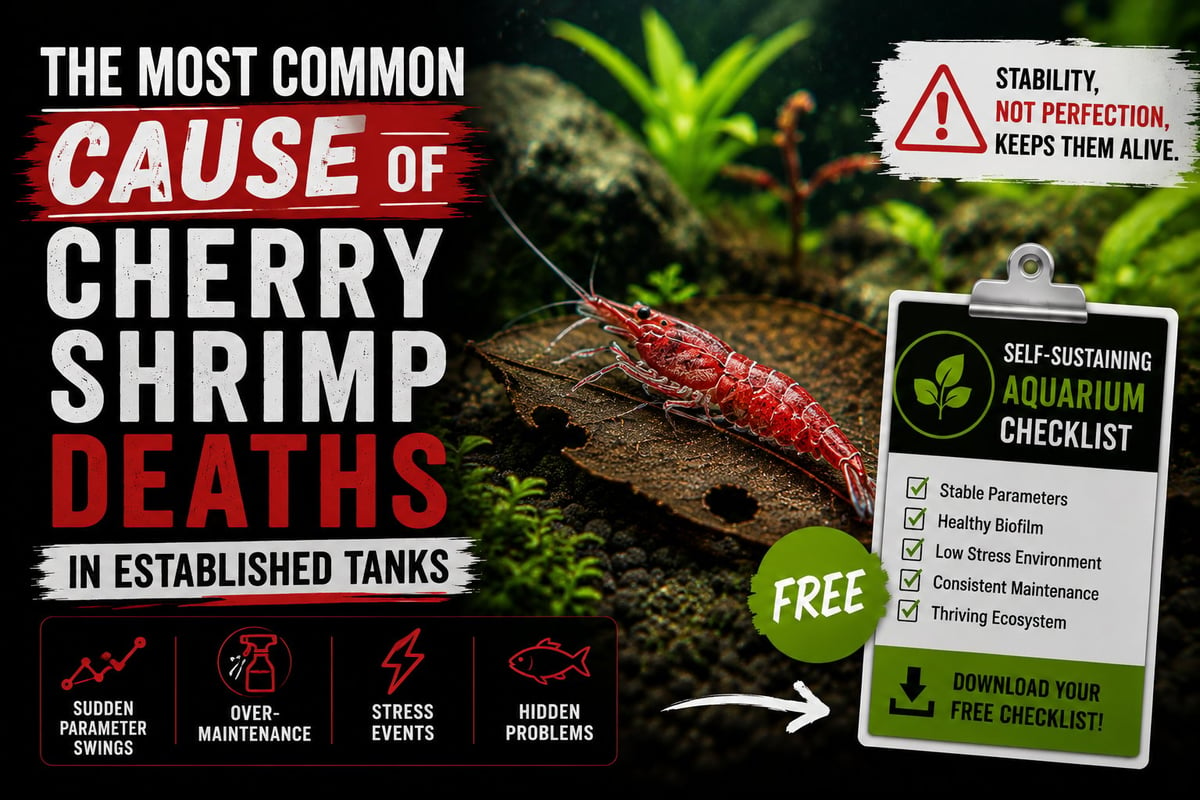
While those factors can contribute, one of the most common causes of shrimp deaths in established aquariums is something much less obvious: instability.
Cherry shrimp don't necessarily die because conditions are bad. They die because conditions changed. In an established tank, stability is often more important than perfection — and many shrimp keepers learn this the hard way.
Many hobbyists believe that once a tank reaches a certain age, it becomes immune to major problems. Unfortunately, that's not always true.
An established aquarium may have healthy plants, mature biological filtration, stable populations of beneficial bacteria, and clear water. But even mature systems can experience disruptions that create stress for shrimp.
And shrimp are often far more sensitive to these changes than fish.
Key insight: A tank's age doesn't guarantee its stability. What matters is whether conditions remain consistent, not how long the tank has been running.
Cherry shrimp generally tolerate a range of conditions. What they struggle with is rapid change.
Many shrimp deaths occur shortly after shifts in water chemistry, temperature, dissolved minerals, or environmental conditions. The challenge is that these changes aren't always obvious.
A tank can appear perfectly healthy while shrimp are quietly responding to instability behind the scenes. This is one reason experienced shrimp keepers often prioritize consistency over chasing ideal numbers.
What to watch for: Small pH shifts, temperature fluctuations between day and night, TDS creeping up between water changes, or mineral depletion over time — all of these can trigger shrimp deaths even when nothing looks wrong.
Many aquarium owners believe that more maintenance always equals a healthier tank. Ironically, excessive maintenance can sometimes create the very problems hobbyists are trying to prevent.
Large cleaning sessions, frequent adjustments, constant tinkering, and repeated changes to the environment — every intervention has the potential to alter the ecosystem.
While maintenance is important, shrimp generally thrive in predictable environments. Sometimes the healthiest thing for a mature shrimp tank is allowing it to remain stable.
Critical reality: The impulse to "do something" when you notice a problem can actually make things worse. Every change introduces another variable into an ecosystem that shrimp rely on being predictable.
One of the reasons shrimp deaths can be difficult to diagnose is that stress doesn't always create immediate consequences. A stressful event may occur days or even weeks before visible losses appear.
Potential stressors can include major tank changes, sudden environmental fluctuations, large maintenance sessions, and changes in routine.
By the time shrimp deaths occur, the original trigger may no longer be obvious. This often leads hobbyists to focus on the wrong cause entirely.
"The shrimp that died today may have been responding to something that happened last week. Connecting the dots is one of the hardest parts of shrimp keeping."
Stop guessing why your shrimp are dying.
Our free checklist helps you identify stability issues before they lead to shrimp deaths.
Get the Free Stability ChecklistMany aquarium fish can tolerate short periods of instability surprisingly well. Cherry shrimp are often less forgiving.
Because shrimp are small and sensitive, even relatively minor environmental changes can create stress. This doesn't mean shrimp are fragile. In fact, thriving colonies can become incredibly resilient. But they generally prefer environments that remain consistent over time.
Key difference: Fish can often swim away from uncomfortable conditions in the wild. Shrimp have a much smaller range and are far more affected by localized changes in their immediate environment.
If you've ever seen a shrimp keeper with hundreds or even thousands of cherry shrimp, you'll notice something interesting. Their tanks are often not perfect. A little algae may be present. The glass may not be spotless. The aquascape may not look freshly cleaned. What these tanks often have instead is stability.
Stable conditions allow shrimp colonies to reproduce consistently, molt successfully, experience less stress, and grow steadily over time. Many hobbyists spend years chasing perfect numbers while overlooking the value of consistency.
Perfection sounds appealing. But shrimp don't necessarily care whether every parameter is "perfect." They care whether conditions remain predictable.
A stable tank with slightly imperfect numbers often outperforms a constantly changing tank with ideal numbers. This is one of the most important concepts many successful shrimp keepers eventually discover.
The goal isn't perfection. The goal is stability.
Stop chasing perfect numbers. Start building stability.
Download our free checklist and create the stable conditions your shrimp need to thrive.
Grab Your Free ChecklistWhen shrimp begin dying, many hobbyists immediately start making changes. They adjust parameters, add products, change feeding routines, rearrange the tank, and increase maintenance.
Unfortunately, each change introduces another variable. This can create a cycle where instability leads to stress, which leads to more adjustments, which creates even more instability.
Breaking that cycle often starts with understanding the role stability plays in shrimp health.
Healthy shrimp colonies are usually built on more than good genetics. They're supported by mature ecosystems that remain consistent over time — beneficial bacteria, healthy plants, predictable conditions, and biological balance.
When these systems work together, shrimp are often able to thrive with far less intervention than many hobbyists expect.
Want to create a healthier aquarium that supports thriving cherry shrimp? Download our Free Self-Sustaining Tank Stability Checklist and learn the key factors successful aquarists monitor when building stable ecosystems.
The checklist helps you identify common stability issues before they lead to shrimp deaths, algae outbreaks, plant melt, or other aquarium problems.
Get Your Free Checklist TodayStart building a healthier, more stable shrimp tank.
Common questions about cherry shrimp deaths and tank stability
Learn more about shrimp care, tank stability, and creating a thriving aquatic ecosystem
Your shrimp are alive, eating, and molting — but months later the colony is still the same size. Learn why survival and reproduction are not the same thing.
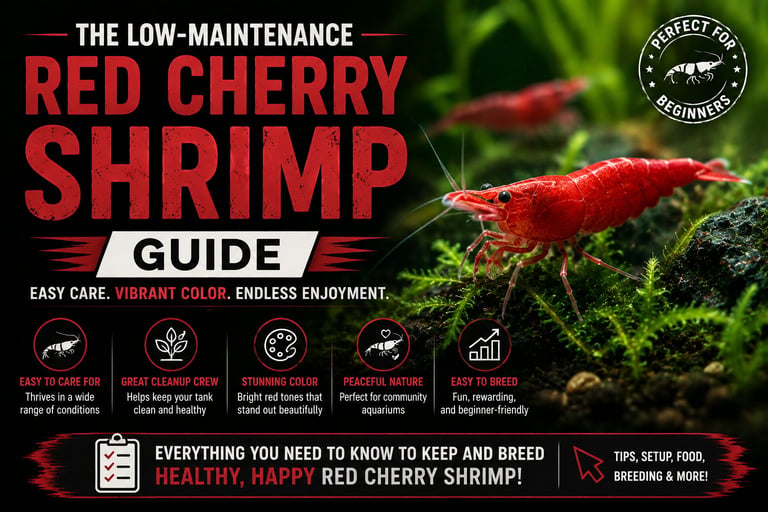
Everything you need to know about keeping healthy and thriving Red Cherry Shrimp, from water parameters to breeding tips.
The Free Self-Sustaining Tank Stability Checklist covers the key factors successful aquarists monitor — so you can identify stability issues before they lead to shrimp deaths, algae outbreaks, or other aquarium problems.
Easy to Follow
Simple, actionable steps
100% Free
No purchase required
Instant Access
Download immediately
No spam. Unsubscribe anytime. Your information is never shared.