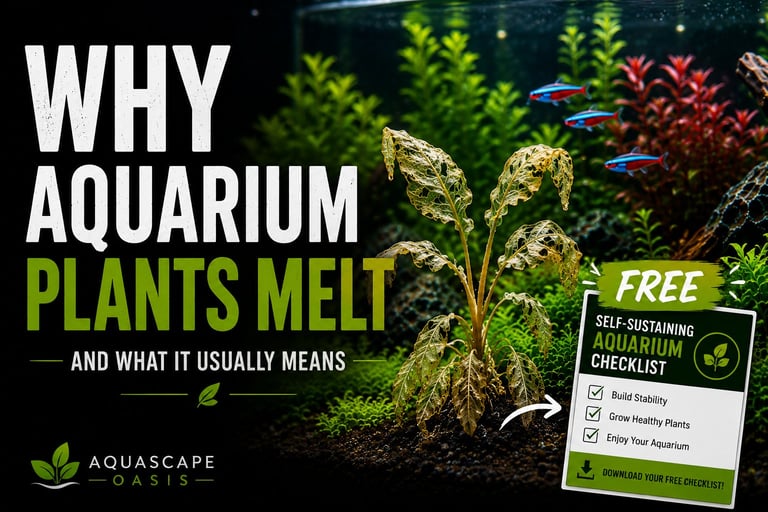
Why Aquarium Plants Melt (And What It Usually Means)
Few things are more frustrating than watching beautiful new plants turn yellow, transparent, or brown. Learn what's actually happening — and why it doesn't always mean you've failed.
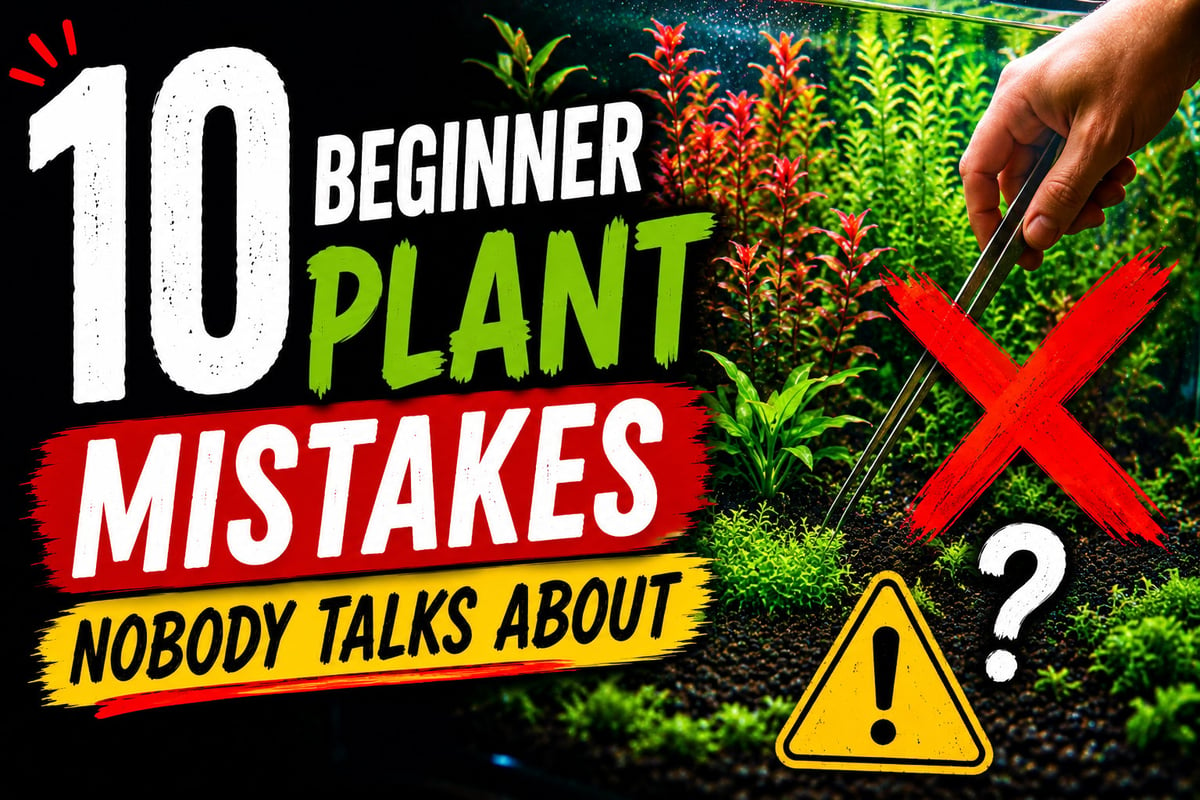
Learn 10 overlooked mistakes beginners make with aquarium plants and discover how to build a healthier, more stable planted aquarium from the start.
Aquascape Oasis Team
Planted Tank Specialists
Many beginner planted tank problems start with simple mistakes that can affect long-term plant growth and aquarium stability.
Avoid common beginner mistakes before they hurt your aquarium. Download our free checklist covering the key factors most new aquarists overlook.
Send Me the ChecklistMost beginner planted tank articles talk about lighting, fertilizers, and COâ‚‚. While those topics matter, many aquarium owners struggle because of mistakes that rarely get discussed.
These aren't necessarily dramatic mistakes. In fact, many seem harmless. But over time, they can contribute to poor plant growth, algae issues, frustration, and tanks that never seem to thrive.
If you're researching beginner aquarium plants, avoiding these common mistakes can help you create a healthier and more successful planted aquarium.
Many hobbyists assume planted aquariums are difficult because plants are complicated. The reality is often much simpler.
Most plant problems occur because the aquarium ecosystem never becomes stable enough for plants to establish themselves. Plants generally reward consistency. When conditions are constantly changing, plants often struggle.
Let's look at ten beginner mistakes that don't get enough attention.
Many beginners walk into a fish store and purchase plants based entirely on appearance. While beautiful plants are exciting, different species have different requirements.
This often creates unrealistic expectations and unnecessary frustration. A little planning before purchasing plants can save a lot of headaches later.
Key takeaway: Research plant requirements before buying. Understanding light needs, growth patterns, and care requirements helps set realistic expectations from day one.
One of the biggest mistakes beginners make is assuming plants should start growing immediately. In reality, many aquarium plants require time to adjust, establish roots, and adapt to new conditions.
Patience is often one of the most important tools in planted aquarium keeping.
Key takeaway: Give plants weeks — not days — to show signs of healthy growth. The most successful planted tanks are built with patience, not speed.
Many hobbyists repeatedly relocate plants because they're unhappy with the layout. Unfortunately, frequent repositioning can make it difficult for plants to establish themselves.
Every move requires plants to adapt again. Sometimes leaving plants alone is the fastest path to success.
Key takeaway: Plan your layout before planting, then resist the urge to constantly rearrange. Plants need stability to establish strong root systems.
Not all beginner aquarium plants behave identically. Some prefer different light levels, different growth patterns, and different locations within the aquarium.
A one-size-fits-all approach often leads to disappointing results. Understanding how different plants grow can make aquarium maintenance much easier.
Key takeaway: Group plants with similar needs together. Learn which plants grow tall, which spread, and which stay compact — then plan your aquascape accordingly.
Many beginners buy only a few plants and expect them to transform the aquarium. Sparse planting often creates challenges.
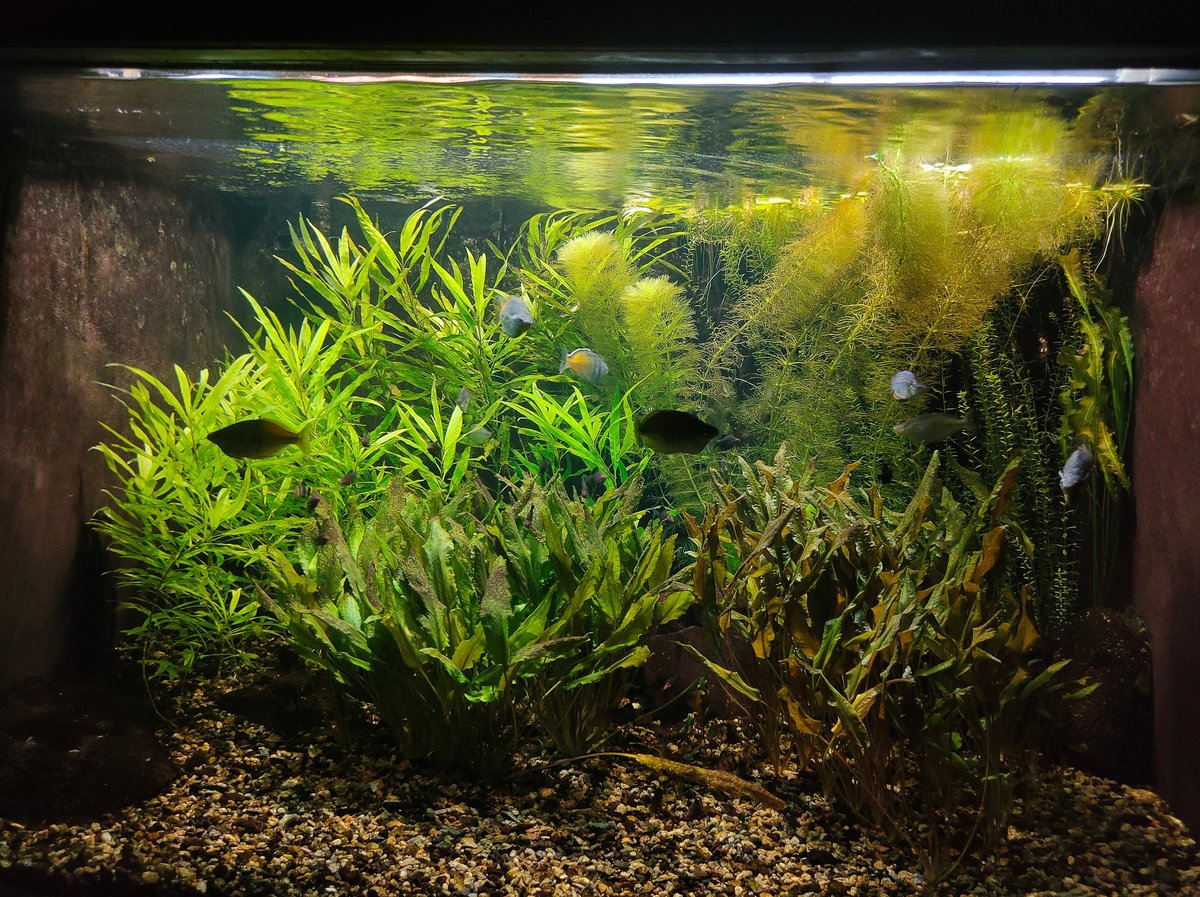
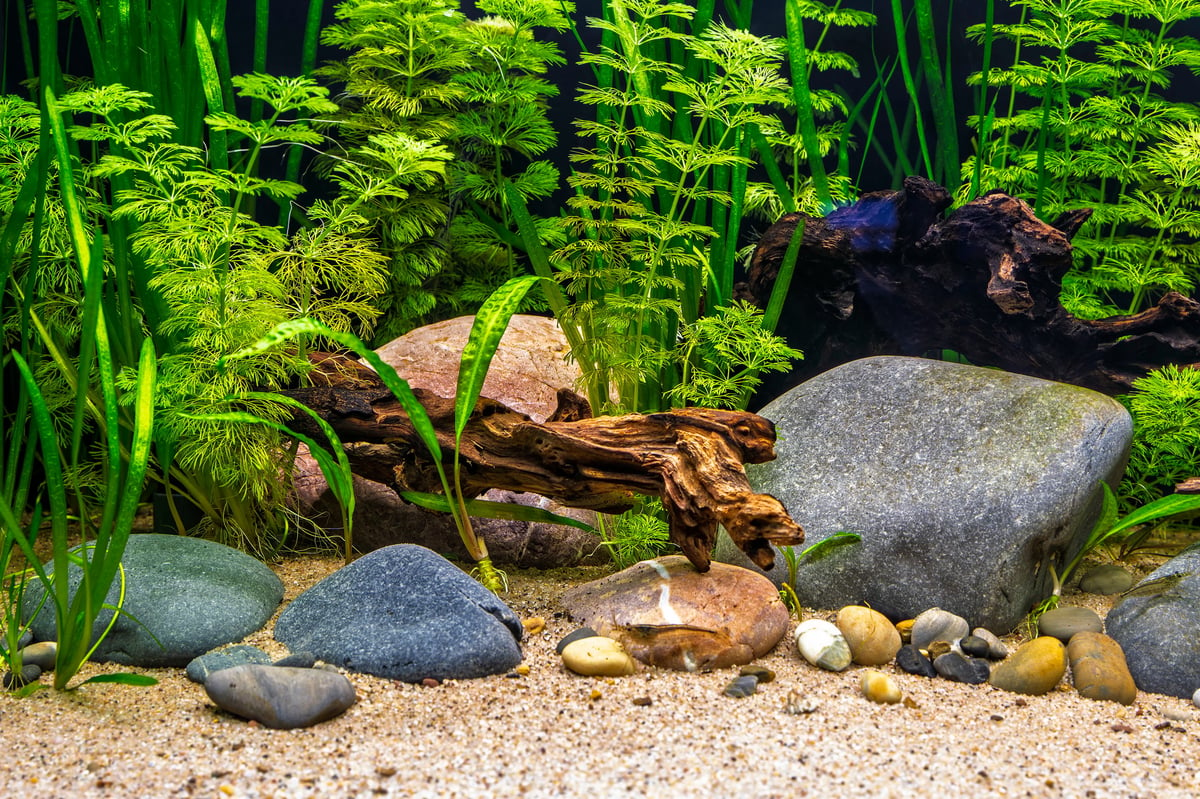
Heavily planted aquariums frequently establish balance faster and provide more stability than lightly planted systems. Plant density matters more than many hobbyists realize.
Key takeaway: Aim for at least 60-70% of the substrate to be planted from the start. Higher plant density helps outcompete algae and creates a more stable ecosystem faster.
Get our Free Self-Sustaining Tank Stability Checklist and learn the key factors successful aquarists monitor when setting up a new planted aquarium. Don't wait until problems appear — start with a plan.
Get Your Free ChecklistWhen plants struggle, beginners often start changing everything. They may adjust lighting, maintenance, products, and routines — all at once.
The problem is that multiple changes make it difficult to identify what's actually helping or hurting the aquarium.
Key takeaway: Make one change at a time and observe the results for at least a week before trying something else. This helps you understand what actually works.
Many hobbyists obsess over a single struggling plant. However, plant health is often tied to the overall ecosystem.
If multiple plants are struggling, the issue may not be the plants themselves. The aquarium environment may be sending a larger message.
Key takeaway: Look at the big picture. When several plants show issues, step back and evaluate the overall ecosystem rather than treating each plant individually.
Many beginners assume spotless aquariums are healthier aquariums. As a result, they may scrub excessively, disturb the substrate frequently, and remove natural growth.
Healthy planted aquariums often benefit from biological maturity and stability. Over-cleaning can sometimes disrupt these processes.
Key takeaway: Clean with purpose, not perfection. A biologically mature tank has beneficial microorganisms that shouldn't be scrubbed away.
Social media has created unrealistic expectations. Many beginners compare their new tank to aquascapes that took months or years to develop.
This often leads to frustration and unnecessary changes. Successful planted aquariums are usually built gradually.
Key takeaway: Your tank is on its own journey. Focus on progress, not perfection. Even the most beautiful aquascapes started with a single plant.
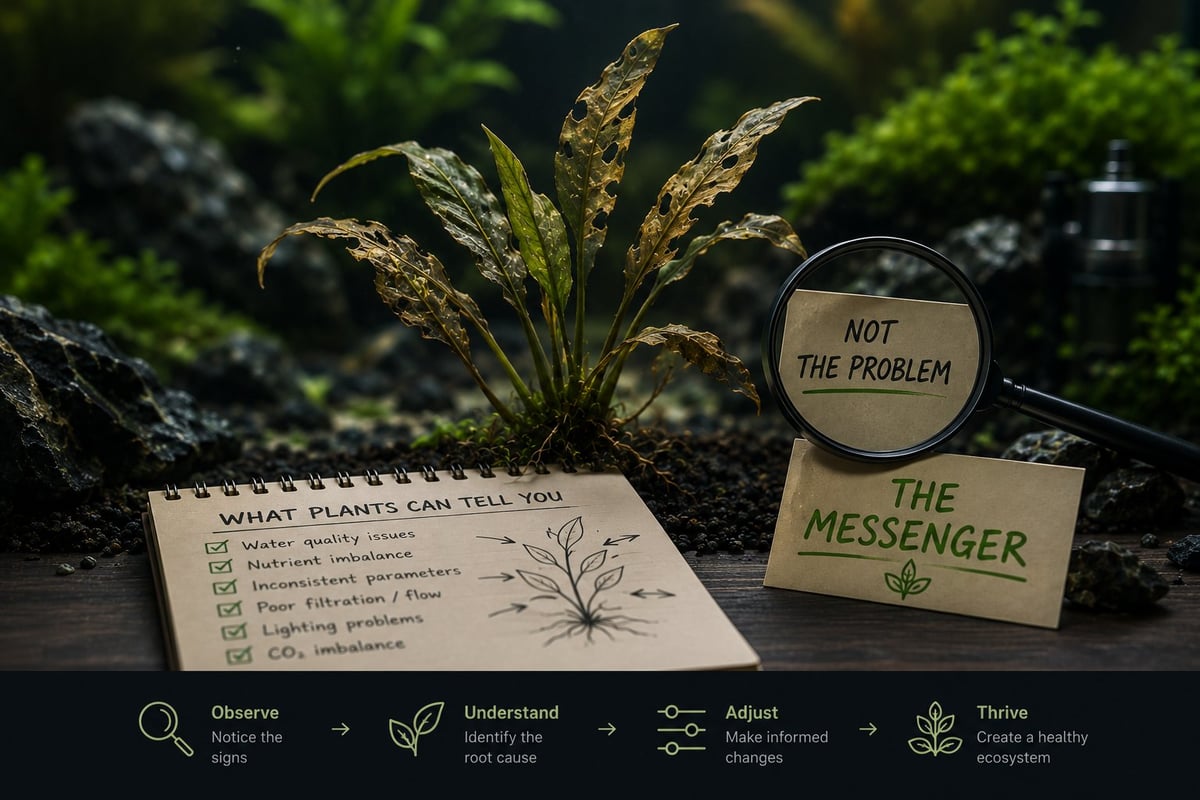
Perhaps the biggest mistake of all is blaming the plants. In many cases, plants are simply reacting to conditions within the aquarium.
When plants struggle, they are often providing valuable information about stability, balance, and ecosystem health. The plant is not always the problem — sometimes it's the messenger.
Key takeaway: Listen to your plants. They're telling you something about your tank's conditions. Treat the ecosystem, not just the symptoms.
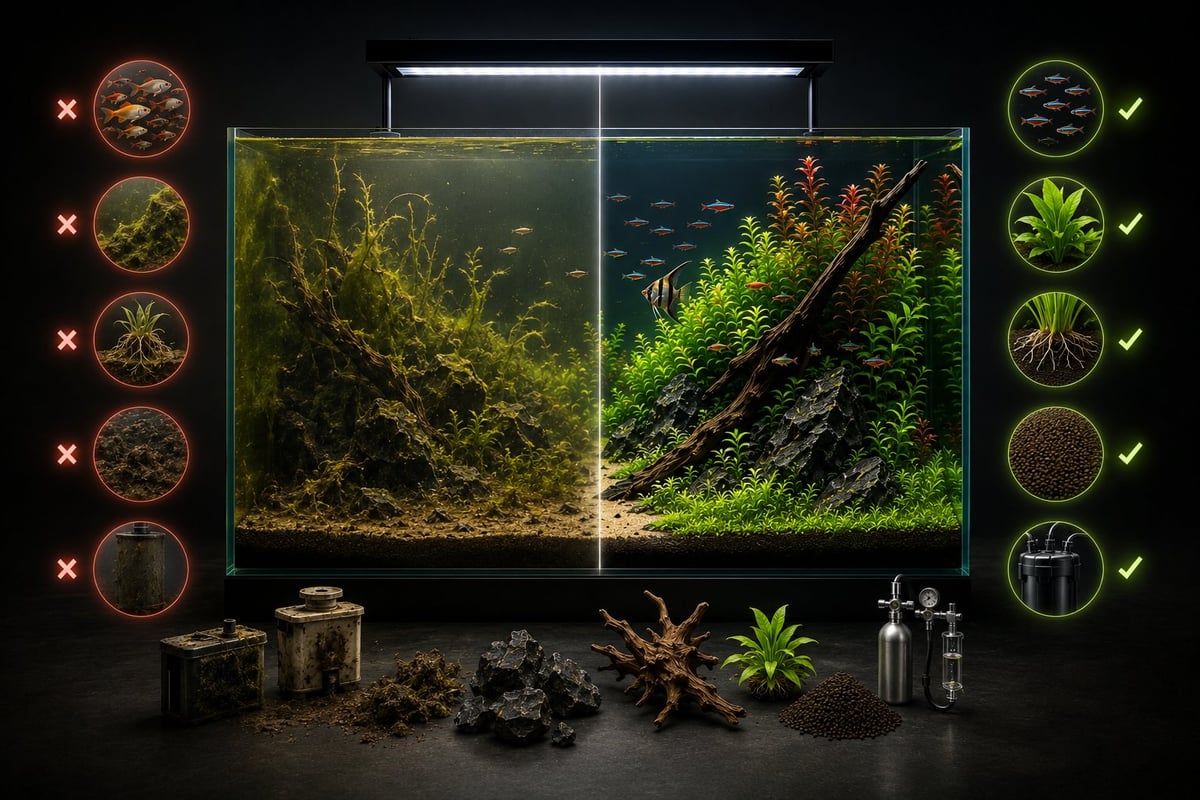
Most beginner plant failures don't occur because the hobbyist chose the wrong species. They occur because the ecosystem never reaches a point where plants can thrive consistently.
Healthy plants often depend on stable conditions, consistent routines, biological maturity, and patience. These factors are frequently more important than hobbyists realize.
The healthiest planted tanks are rarely the most complicated. They're usually the most stable.
Many aquarium owners spend their first year trying to fix symptoms. They focus on algae, melt, slow growth, and appearance. Meanwhile, the underlying issue is often instability.
Plants generally perform best when the aquarium becomes predictable.
The healthiest planted tanks are rarely the most complicated. They're usually the most stable. Healthy plants often follow healthy ecosystems.
When the aquarium becomes balanced, many plant problems become easier to manage. This is one reason experienced aquarists spend more time building stability than chasing shortcuts.
Want to avoid common beginner mistakes and build a healthier planted aquarium? Download our Free Self-Sustaining Tank Stability Checklist and learn the key factors successful aquarists monitor when creating stable ecosystems. The checklist helps you identify common stability issues before they lead to algae outbreaks, plant melt, fish stress, or stalled plant growth.
Get Your Free Checklist NowCommon questions about beginner aquarium plants and setting up your first planted tank.
Continue learning about planted aquariums, plant health, and building a thriving aquatic ecosystem.
Few things are more frustrating than watching beautiful new plants turn yellow, transparent, or brown. Learn what's actually happening — and why it doesn't always mean you've failed.
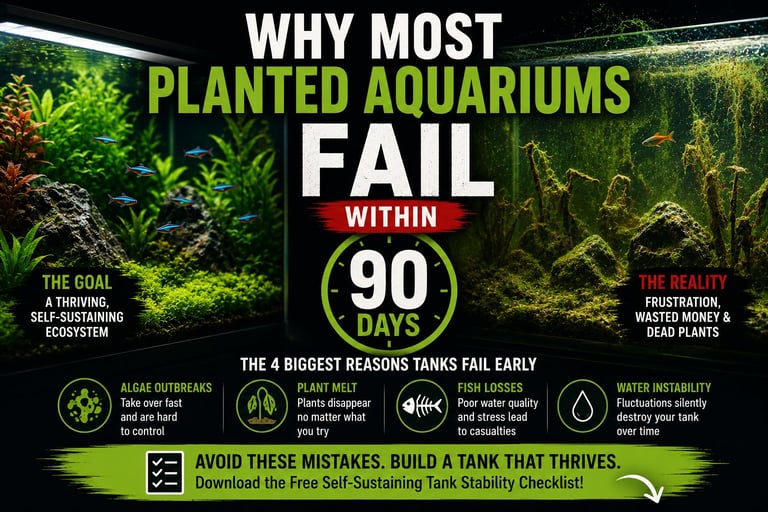
Plant melt, algae outbreaks, fish deaths, and water instability — discover why most tanks crash in the first 90 days and how to avoid it.
Most beginner plant mistakes can be avoided with the right knowledge. Download our Free Self-Sustaining Tank Stability Checklist and learn the key factors successful aquarists monitor when creating stable, thriving ecosystems.
Spot issues before they become problems
Build a stable ecosystem from day one
No spam, no catch — just the checklist