Adding fertilizer but your aquarium plants still aren't growing, melting, or turning yellow? Learn the real reasons plants struggle — and how to build a healthier planted tank that doesn't rely on products alone.
Aquascape Oasis Team
Planted Tank Specialists
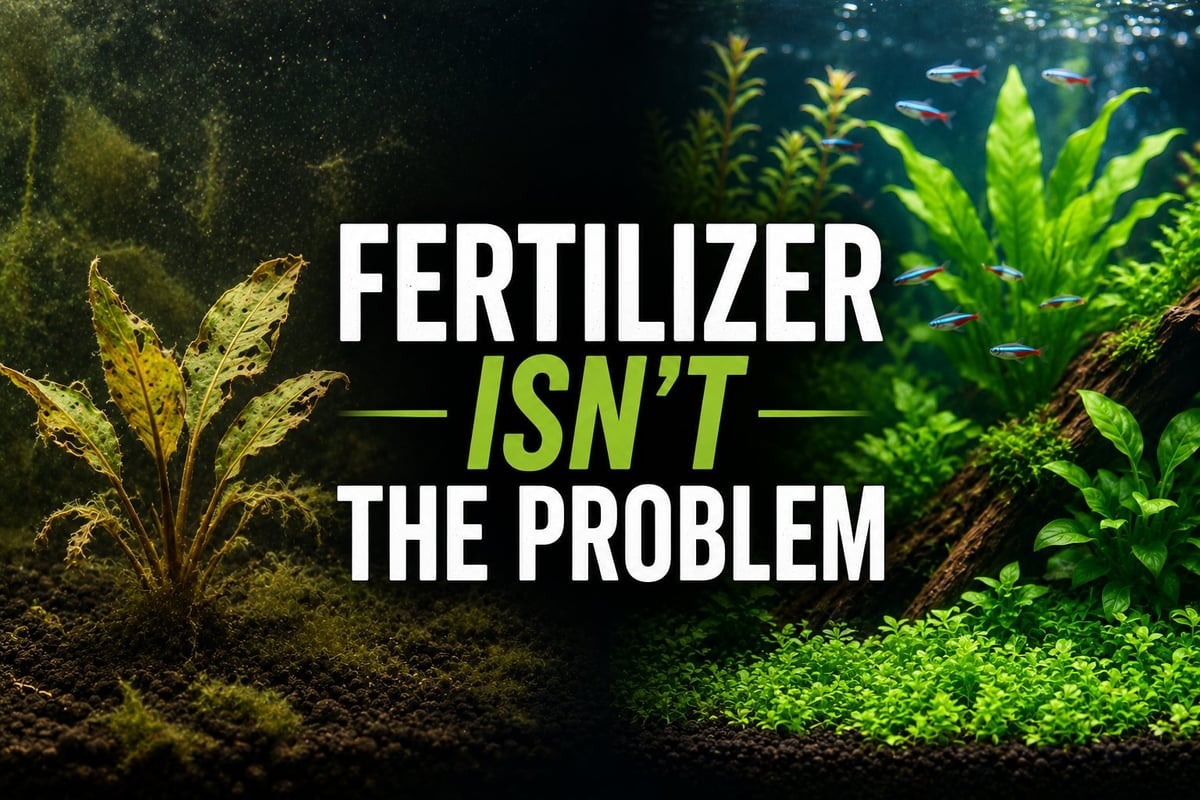
A dramatic comparison between struggling and thriving aquarium plants, emphasizing that long-term plant health depends on overall aquarium balance—not fertilizer alone.
Struggling with yellowing leaves, melting plants, or slow growth? Download our free checklist for a systematic approach to diagnosing plant problems.
Send Me the ChecklistIf your aquarium plants aren't growing well, fertilizer often seems like the obvious solution.
So you buy a bottle, follow the instructions, and wait.
A week later…
Nothing changes.
The leaves are still yellow. Plants are still melting. Growth is still slow.
At that point, many beginners assume they simply need more fertilizer.
In reality, fertilizer is only one piece of a much bigger puzzle. Healthy aquarium plants need light, nutrients, carbon, stable water, and time to grow. If one of those pieces is missing, fertilizer alone won't solve the problem.
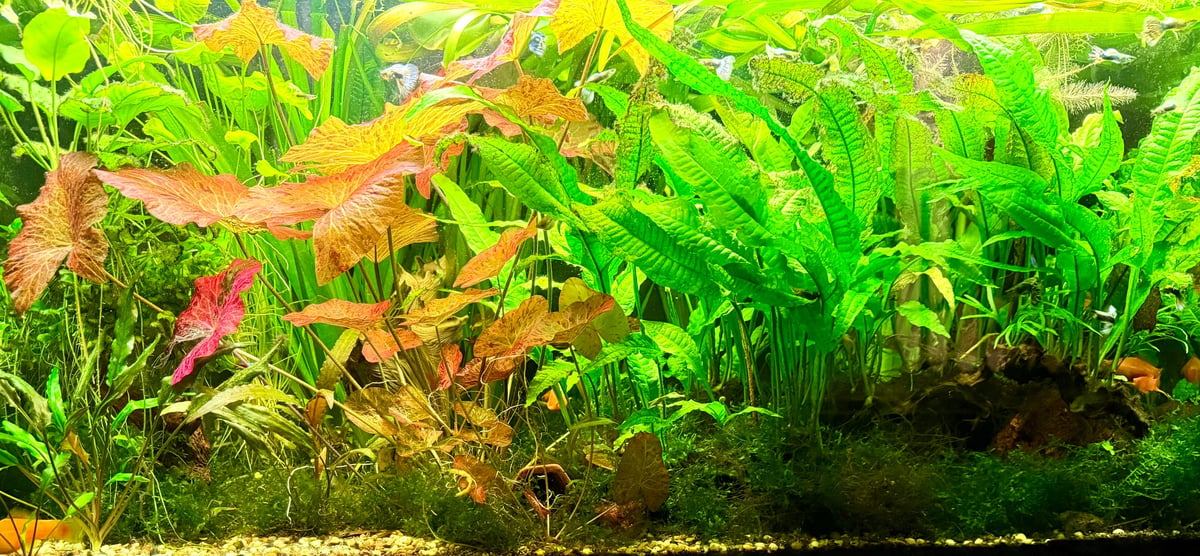
Let's look at some of the most common reasons fertilizer isn't fixing your aquarium plants.
This is probably the biggest misconception among new planted tank owners.
Plants don't grow because fertilizer is present. They grow because they can use the available nutrients through photosynthesis.
Without enough light, fertilizer has very little to work with.
If your aquarium light is too weak, too old, or only on for a few hours each day, your plants may struggle regardless of how much fertilizer you add.
Key Takeaway
A balanced lighting schedule is often far more important than increasing fertilizer.
🔍 Troubleshooting your tank? Our free checklist walks through lighting, nutrients, and plant selection step by step. Grab the free checklist →
Not all aquarium plants absorb nutrients the same way.
Root Feeders
These plants often benefit from root tabs.
Water Column Feeders
These plants primarily benefit from liquid fertilizer.
Using the wrong type of fertilizer doesn't necessarily hurt your plants, but it may not provide nutrients where they're most useful. For a deeper dive, see our guide on Root Tabs vs. Liquid Fertilizer.
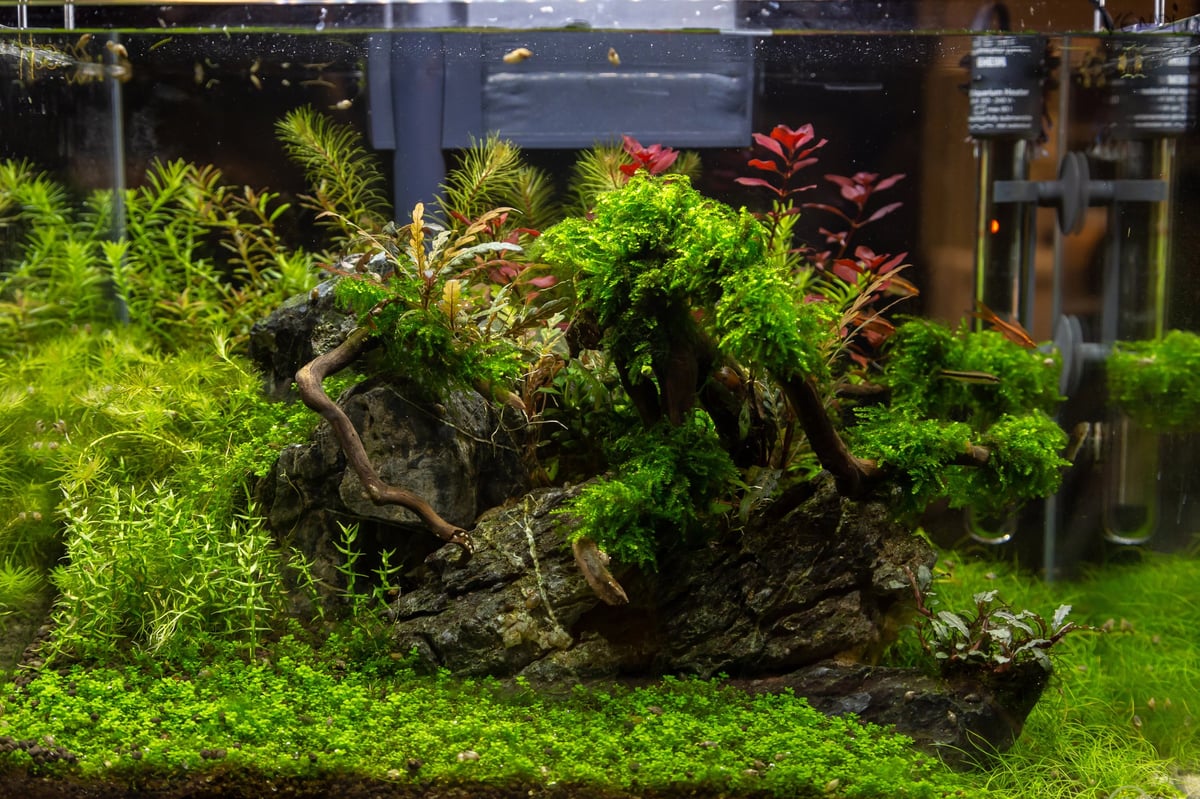
Many beginners expect immediate growth. New planted aquariums often go through an adjustment period.
Plants may melt old leaves, slow down temporarily, grow new roots first, or focus on adapting before producing new leaves.
Adding more fertilizer won't speed up this natural process. Patience is part of building a stable planted aquarium.
Key Takeaway
Patience is a requirement — not a suggestion — for a stable planted aquarium.
Sometimes your aquarium already has enough nutrients. Fish waste, leftover food, and decaying organic matter all contribute nutrients.
If fertilizer isn't helping, adding even more may not change anything. Healthy planted aquariums are about balance — not maximum nutrient levels.
🌿 Stop guessing. Learn the balance your tank actually needs. Download the free checklist →
Plants use three major resources: Light, Nutrients, and Carbon.
If one becomes limited, growth slows. Many low-tech aquariums rely entirely on naturally dissolved carbon — and that's perfectly fine. However, it's important to remember that fertilizer cannot replace carbon.
Key Takeaway
Fertilizer can't replace carbon. If your tank is low-tech, keep plant expectations realistic.
This surprises many beginners. They assume stronger lighting automatically grows healthier plants.
Instead, excessive lighting can create algae outbreaks, nutrient imbalances, plant stress, and maintenance headaches.
More light isn't always better. Balanced light is better.
A lightly planted aquarium often struggles more than a heavily planted one. Dense plant growth helps use available nutrients, compete with algae, stabilize the aquarium, and create healthier biological balance.
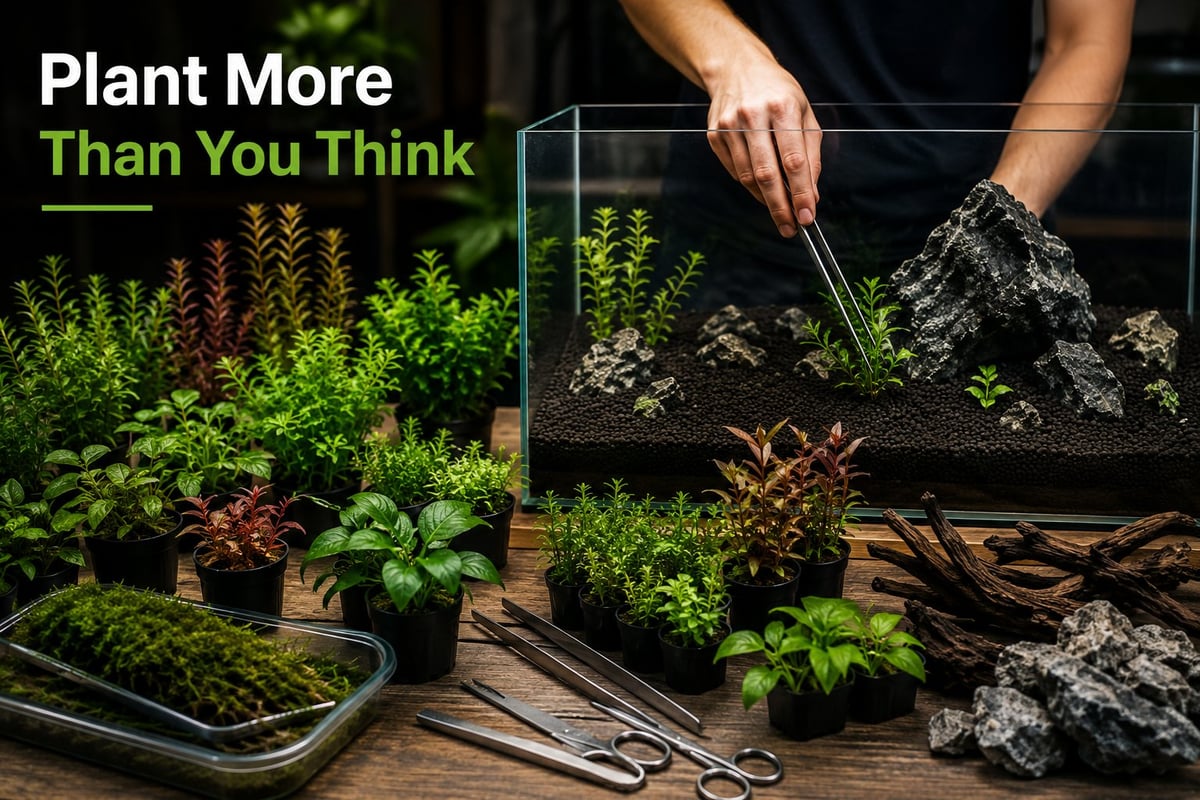
If your aquarium contains only two or three plants, fertilizer alone won't create a thriving planted ecosystem. See our article on signs your aquarium has too few plants.
🌱 Build a healthier planted tank. Our checklist covers lighting, plant selection, and fertilizer basics. Get it free →
Plants appreciate stability. Constantly chasing numbers often creates more problems than it solves.
Frequent swings in temperature, pH, water hardness, fertilizer dosing, or lighting schedule can slow plant growth. A consistent routine usually produces better long-term results.
Key Takeaway
Stability is more important than chasing perfect numbers.
If a plant's roots aren't healthy, fertilizer won't solve the underlying issue. Roots need oxygen, space, stable substrate, and time to establish.
When roots are healthy, plants can absorb nutrients much more effectively.
One of the biggest misconceptions is expecting results within a few days. Healthy aquarium plants grow gradually.
It may take several weeks before you notice new leaves, better color, faster growth, and stronger root systems.
Stay consistent rather than changing products every week.
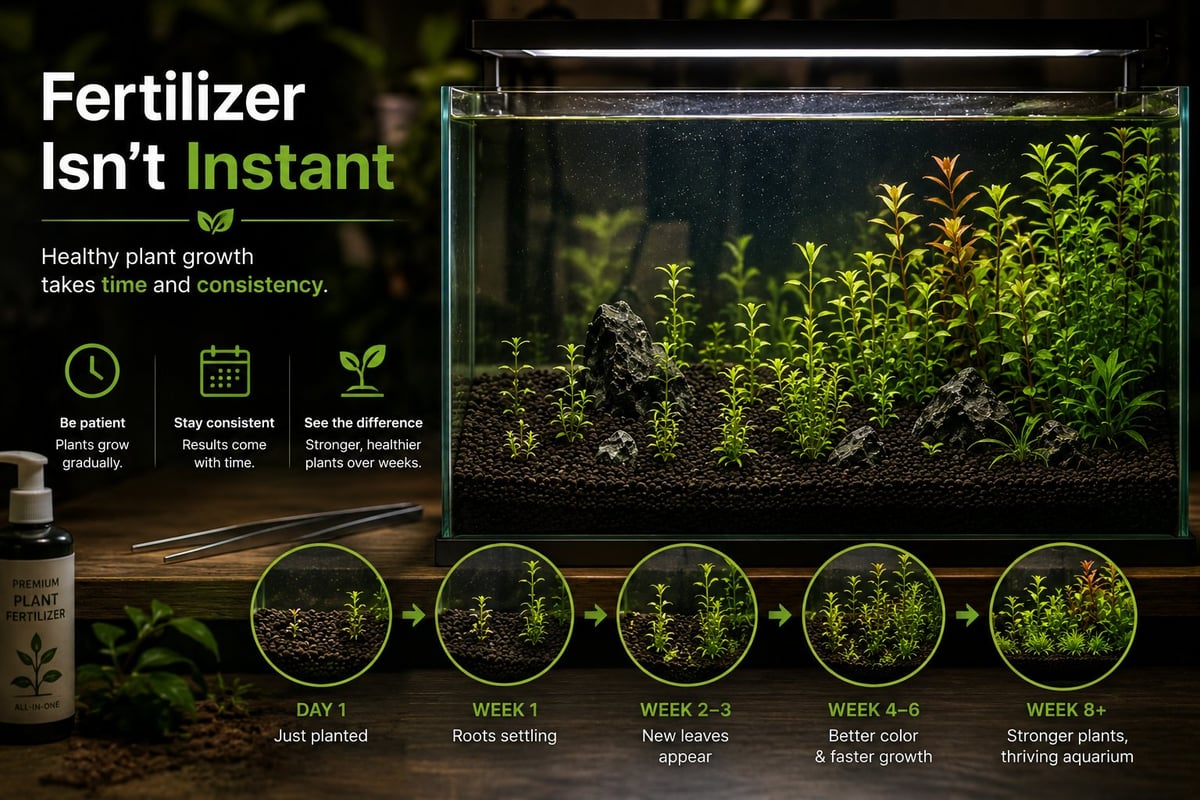
More bottles don't necessarily mean healthier plants. Start with one quality fertilizer and learn how your aquarium responds before adding anything else.
Different plants have different needs. Understanding whether your plants are root feeders or water-column feeders is more valuable than buying multiple fertilizers.
Healthy aquariums are rarely perfect. They're simply stable. Consistency usually beats perfection.
Plants grow on their own timeline. Give them the opportunity to establish before assuming something is wrong.
Struggling with multiple plant issues at once?
Download the free troubleshooting checklist →Healthy planted aquariums are built on several factors working together:
When these pieces come together, fertilizer becomes much more effective.
Fertilizer is an important tool — but it isn't a magic fix. Healthy aquarium plants depend on a balanced environment where light, nutrients, carbon, and stability work together.
Instead of asking "What fertilizer should I buy next?" try asking "What might my aquarium be missing?"
That small shift in thinking often leads to healthier plants and a much easier aquarium to maintain.
Want to stop guessing and start building a healthier tank?
Get the Free ChecklistGet answers to common questions about aquarium fertilizer and plant growth.
Continue learning about planted aquarium care and plant health.
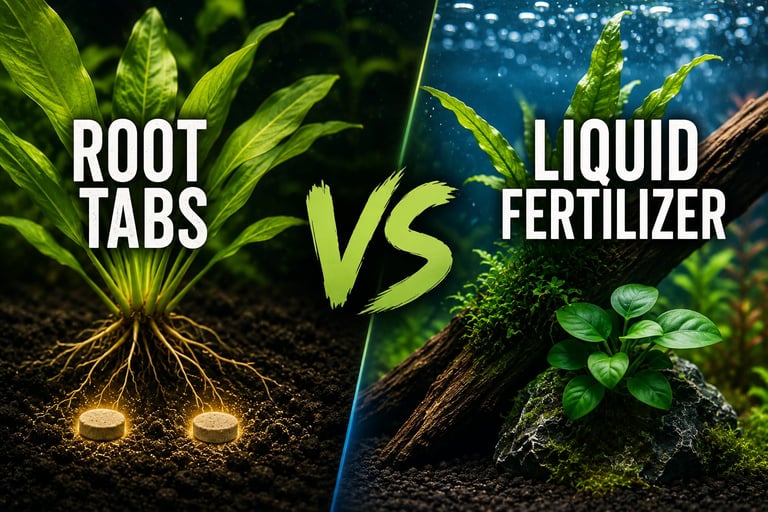
Not sure whether to use root tabs or liquid? Learn which plants need each type.
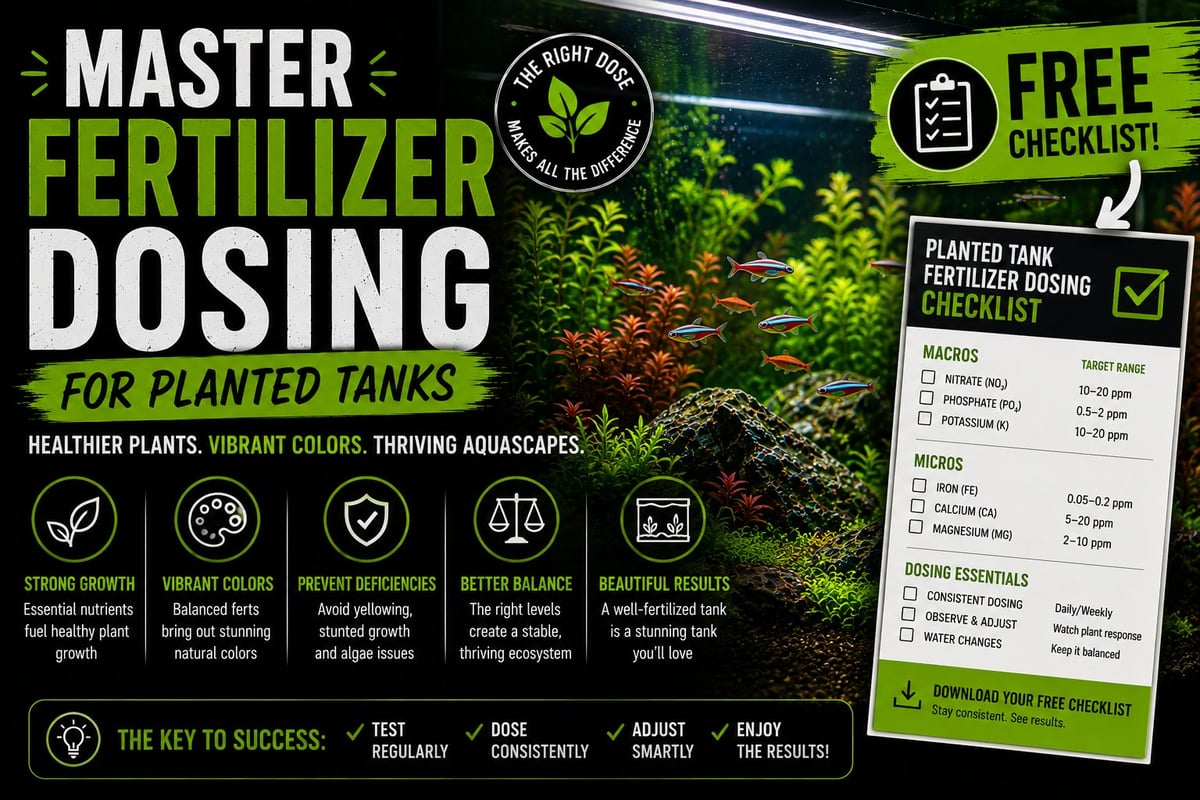
Master macro & micronutrient ratios and dosing schedules for thriving plants.
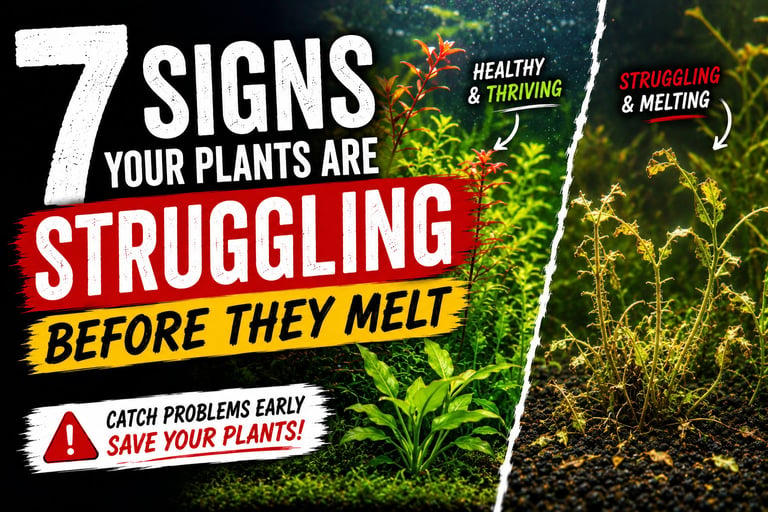
Spot early warning signs weeks before serious plant decline occurs.
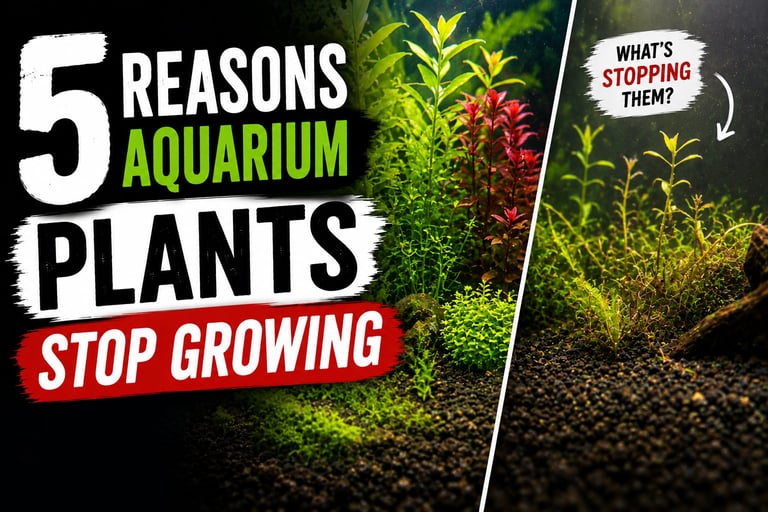
Common causes of stalled growth and how to get your plants thriving again.
Want healthier aquarium plants without constantly buying new products? Download the FREE checklist and learn the simple principles that help planted aquariums become naturally stable over time.
The biggest beginner mistakes that slow plant growth — and how to avoid them.
How to create a healthier balance that reduces algae and improves plant health.
Practical steps toward building a low-maintenance planted aquarium that thrives.
Free • Instant Access • Beginner Friendly