Shrimp Care
Why New Cherry Shrimp Disappear After You Add Them
Did your new cherry shrimp vanish right after adding them to the tank? Learn why shrimp hide, molt, and acclimate — and why this is usually normal.
You finally saw dozens of tiny baby shrimp — then a week later they were gone. Before you panic, learn the most common reasons baby cherry shrimp seem to vanish and where they're actually hiding.
Aquascape Oasis Team
Shrimp Tank Specialists
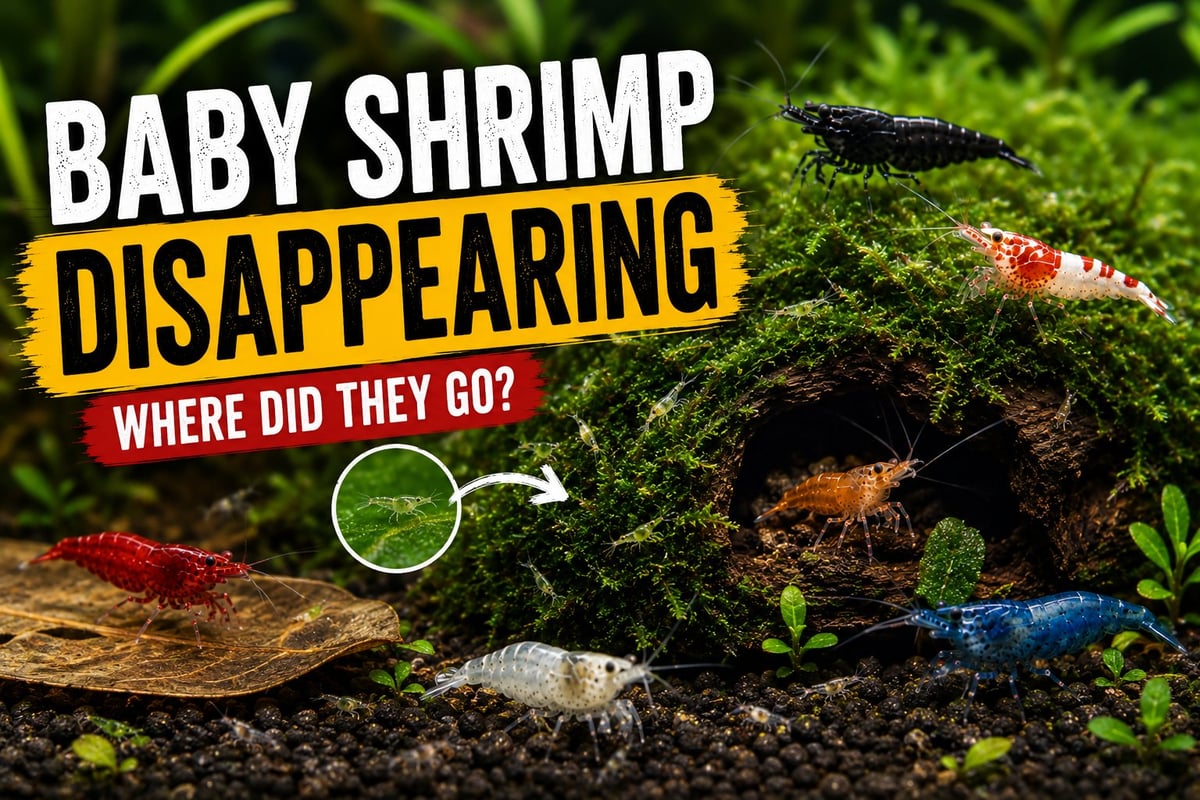
Tiny baby shrimp hiding among moss and driftwood while adult Black Rose, Red Rili, Snowball, Blue Dream, and Cherry Neocaridina shrimp graze in a mature planted aquarium.
Want to build a shrimp tank where babies survive and thrive? Download our free checklist covering the key factors successful shrimp breeders monitor.
Send Me the ChecklistSurprisingly, yes.
Baby cherry shrimp are incredibly tiny. When they're first born, they're only a few millimeters long. They're nearly transparent, excellent at hiding, easy to overlook, and masters of camouflage. Related: why new cherry shrimp disappear after you add them and why cherry shrimp hide after a water change.
Many shrimp keepers think their entire batch of babies disappeared, only to suddenly discover dozens of juveniles several weeks later. Baby shrimp are often far better at hiding than we realize.
Key takeaway: Baby shrimp disappearing is one of the most common concerns in the hobby — and it rarely means disaster.
This is by far the most common reason. Baby shrimp absolutely love cover. They often spend their days hiding in Java moss, Christmas moss, dense stem plants, floating plant roots, leaf litter, and sponge filters. These areas provide food, protection, and security.
Many hobbyists eventually trim their moss and suddenly discover: "I have way more babies than I thought!"
Why moss is a baby shrimp magnet: It provides cover from larger animals, rich biofilm, tiny microorganisms, and natural grazing surfaces. It's basically a baby shrimp playground.
Dense planting helps babies thrive. Get the free checklist to learn what makes a shrimp tank baby-friendly →
This one surprises a lot of beginners. You expect baby shrimp to look like tiny versions of the adults. But many babies are pale, transparent, and lightly colored. A tiny transparent shrimp on green moss can be nearly impossible to spot — especially in heavily planted aquariums, dark substrates, and dense hardscape.
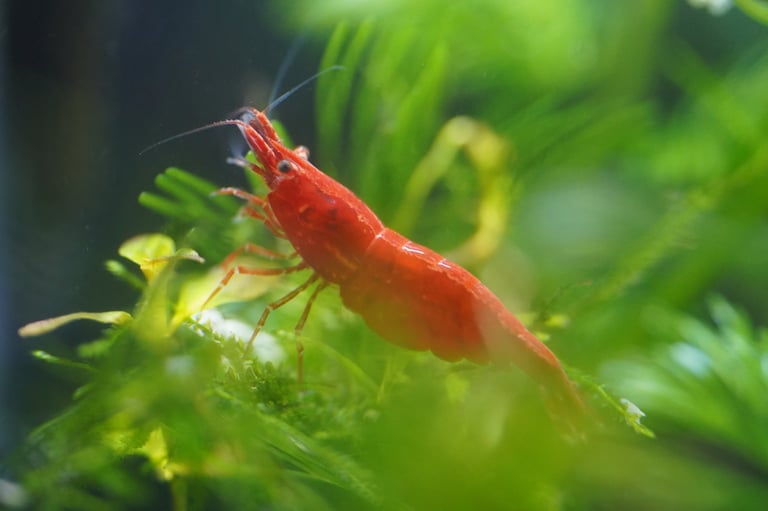
Baby cherry shrimp are masters of camouflage — nearly transparent and only a few millimeters long, they can vanish into plants and moss.
The babies often haven't disappeared. You've simply lost track of them.
Key insight: This is incredibly common. Don't assume the worst just because you can't spot them.
Baby shrimp eat differently than adults. Newborn shrimp are tiny and spend much of their time grazing. They rely heavily on biofilm, microorganisms, algae films, and natural food sources.
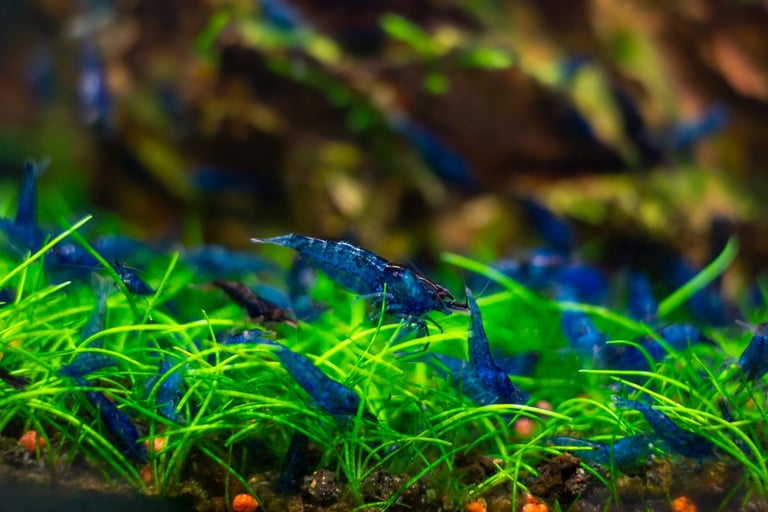
Adult and baby cherry shrimp spend much of their day grazing on biofilm, algae films, and microorganisms that grow on surfaces throughout the aquarium.
This is one reason mature aquariums often perform better. Older ecosystems usually have richer biological communities. Many experienced shrimp keepers notice that baby survival improves as tanks mature — the aquarium itself starts providing food.
This fits perfectly with the idea of building a self-sustaining aquarium. The ecosystem begins doing more of the work.
Key insight: If your tank is still developing biofilm, babies may struggle to find enough food. But as the ecosystem matures, this often improves naturally. See also: why your aquarium never grows enough biofilm for shrimp and 10 foods cherry shrimp eat in established aquariums.
New aquariums often struggle with consistency. They may have less biofilm, less biological diversity, fewer microorganisms, and less stability. Adult shrimp are usually more resilient. Baby shrimp can be much more sensitive.
This is one reason experienced shrimp keepers often recommend patience. A mature ecosystem can make a huge difference.
Signs this may be the issue: Many shrimp tanks improve dramatically with age. Don't be discouraged — this phase is temporary.
This is one of the hardest lessons for new shrimp keepers. Many fish that ignore adult shrimp will still eat babies. This can include fish that are commonly sold as shrimp-safe.
Remember: a newborn shrimp is tiny. Really tiny. To many fish, baby shrimp can simply look like food. This doesn't automatically mean all babies are being eaten. But it can make it seem like they disappear.
Signs this may be happening: Dense plant growth and moss can sometimes improve hiding opportunities for babies.
This is probably one of the biggest reasons people panic. You see 20 babies on Monday. Then only 2 babies on Friday. The assumption becomes: "They all died."
But baby shrimp don't behave like adults. Their priorities are different. They often spend their time hiding, grazing, staying out of sight, and exploring protected areas. Then a month later… suddenly your tank seems full of juvenile shrimp.
This happens constantly in the shrimp hobby.
Baby shrimp are experts at being invisible when they want to be. The fact that you can't see them right now doesn't mean they're gone.
One thing many shrimp keepers notice is that older tanks often seem to raise baby shrimp more successfully. Mature aquariums usually have rich biofilm, greater biological diversity, more microorganisms, more stable conditions, and better grazing opportunities.
Everything starts supporting everything else. The aquarium begins acting like an ecosystem. This is one reason self-sustaining shrimp tanks can become easier over time — the ecosystem itself starts helping raise the babies. Read more: why some shrimp tanks get easier to maintain every month and 7 things every self-sustaining aquarium has in common.
Pro tip: Patience is your greatest tool. A tank that's been running for 6-12 months will almost always raise babies more successfully than one that's only a few months old.
Maturity matters. Learn how to build a mature, self-sustaining ecosystem →
These are often good signs. Patience is extremely important with baby shrimp.
The moment babies disappear, many hobbyists immediately start deep-cleaning the tank, moving decorations, pulling apart moss, rearranging plants, and chasing solutions. Ironically, these actions can disturb the very places baby shrimp use for protection.
Instead, ask yourself: Is the tank heavily planted? Do I have moss? Is the aquarium mature? Do I occasionally see babies? Are adults healthy?
Most of the time, the answer is reassuring.
Key insight: Most of the time, patience is the best solution. The urge to "do something" often creates more problems than it solves.
Many successful shrimp breeders focus on stability, mature ecosystems, healthy plant growth, rich biofilm, and plenty of hiding places. The goal isn't to force baby shrimp to survive. The goal is to build an ecosystem where survival becomes easier naturally.
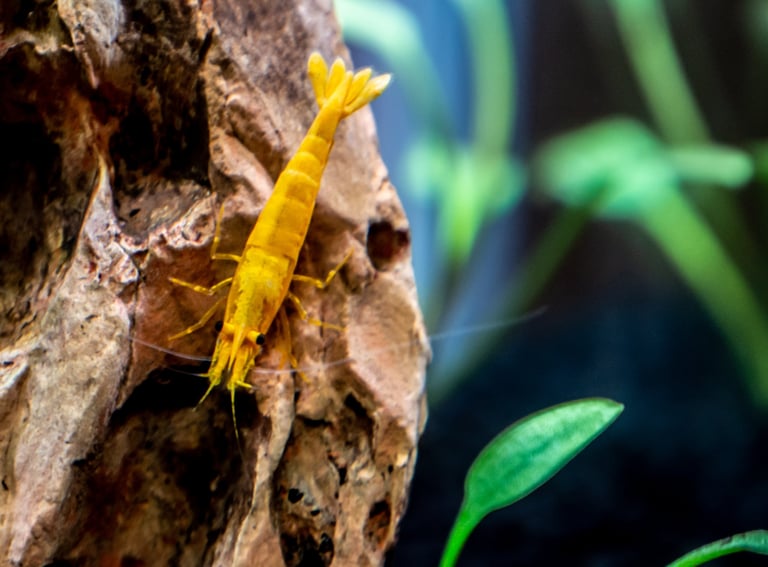
A well-established planted tank provides endless grazing surfaces — exactly what baby shrimp need to thrive without being targeted for feeding.
This is one reason shrimp-only planted tanks can become so productive. The aquarium itself becomes part of the solution.
Pro tip: Focus on creating a stable, mature environment with plenty of moss and hiding places. The babies will take care of the rest.
Self-sustaining aquariums usually have several things in common: dense plant growth, rich biofilm, natural food sources, stable environments, and biological maturity. Over time, these systems often become easier to maintain, more productive, more resilient, and better for baby shrimp.
This doesn't happen overnight. But many shrimp keepers eventually reach a point where they suddenly realize: "I have way more shrimp than I thought." And usually, that's because the babies were there all along.
Think of it this way: a mature planted tank with moss, biofilm, and stability is like a nursery that runs itself. The babies have food, shelter, and safety — everything they need to thrive.
If your baby cherry shrimp seem to vanish, try not to assume the worst. In many cases, they're simply hiding, grazing, camouflaged, too small to notice, or living inside dense plants and moss. Baby shrimp are experts at disappearing.
It's one of the reasons keeping shrimp can feel so mysterious. And it's also why many hobbyists suddenly discover dozens of juveniles weeks later. The goal isn't to find every baby every day. The goal is to build an aquarium that naturally supports them.
Because when an ecosystem becomes mature and stable, baby shrimp often become surprisingly good at raising themselves.
The best shrimp keepers aren't the ones who find every baby — they're the ones who build ecosystems where babies thrive without being watched.
Want to build a shrimp tank with richer biofilm, healthier colonies, and better baby shrimp survival? Download our Free Self-Sustaining Tank Stability Checklist and learn the key factors successful aquarists monitor when creating stable ecosystems. The checklist helps you identify common stability issues before they lead to shrimp stress, poor colony growth, disappearing babies, or recurring aquarium problems.
Get Your Free ChecklistNo spam. Just a helpful guide for shrimp keepers.
Continue learning with these shrimp keeping guides
Did your new cherry shrimp vanish right after adding them to the tank? Learn why shrimp hide, molt, and acclimate — and why this is usually normal.
Did your shrimp vanish after maintenance? Learn why shrimp often hide after water changes, when it's normal, and how stable ecosystems reduce stress.
Learn why patience, tank maturity, and stability matter more than anything else for long-term shrimp colony growth.
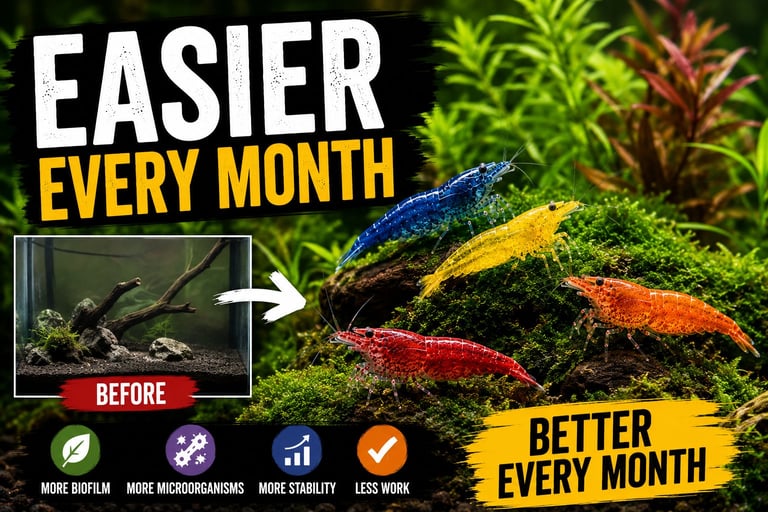
Discover why mature shrimp tanks often become easier to care for — biofilm, natural food sources, and stability do more of the work over time.