
Shrimp Stress
3 Mistakes That Stress Cherry Shrimp
Learn three common mistakes that can cause cherry shrimp stress, including instability, constant changes, and overly sterile environments.
Read Article
You finish a water change, step back to admire your aquarium, and suddenly realize — where did all my shrimp go? Learn why cherry shrimp often hide after maintenance, when it's normal, and how stable ecosystems can reduce shrimp stress.
Aquascape Oasis Team
Shrimp & Planted Tank Specialists
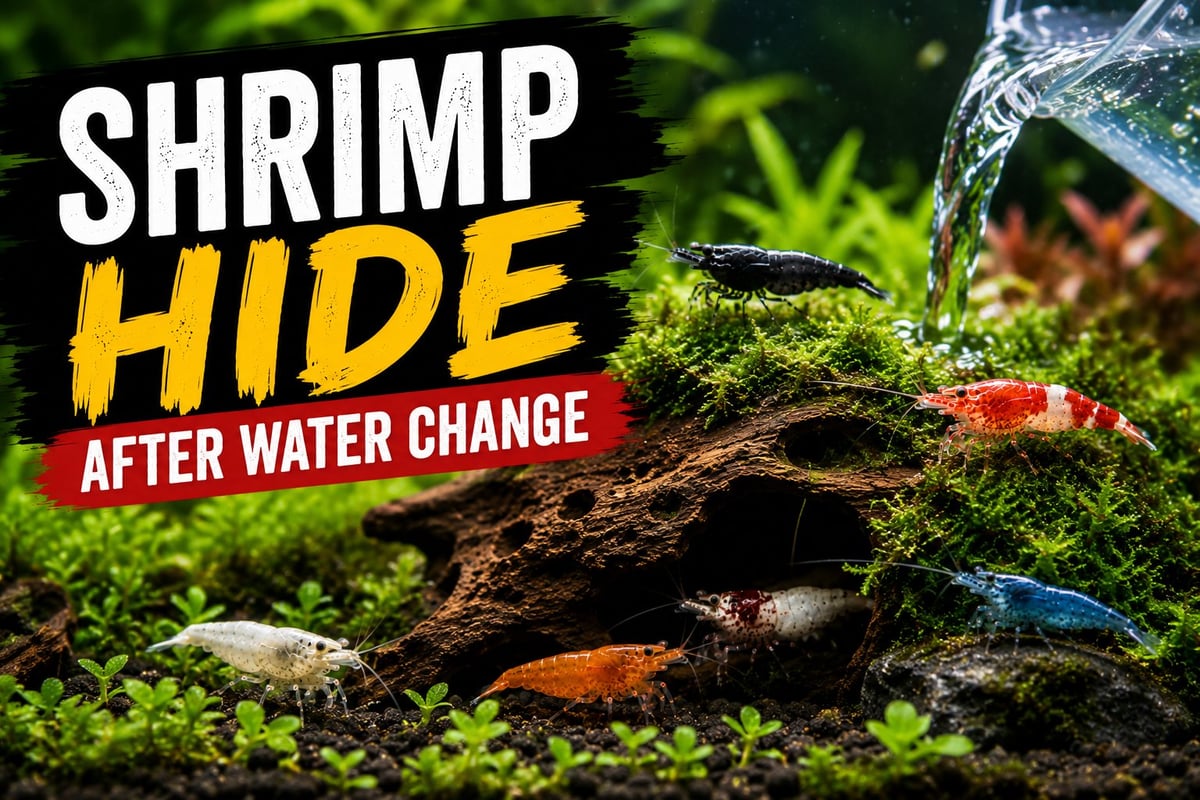
Multiple Neocaridina shrimp varieties, including Black Rose, Red Rili, Snowball, Orange Sunkist, and Blue Dream shrimp, hiding among plants and driftwood following an aquarium water change.
You finish a water change, step back to admire your aquarium, and suddenly realize: Where did all my shrimp go? The shrimp that were just grazing on the glass are nowhere to be found. The ones hanging out in the moss have disappeared. Even your favorite bright red shrimp is missing.
Your first thought is probably: "Did I kill my shrimp?"
Take a deep breath. This is actually one of the most common concerns among cherry shrimp keepers. If your cherry shrimp are hiding after a water change, it doesn't automatically mean something is wrong. In many cases, shrimp simply react to changes in their environment and need a little time to settle back down. Related: why new cherry shrimp disappear after you add them and why baby cherry shrimp seem to vanish.
Let's talk about why this happens and when you should actually be concerned.
Yes. In fact, many shrimp owners notice their shrimp become more shy, less active, hidden in plants, hidden in moss, and difficult to find after performing a water change.
Cherry shrimp love stability. Even beneficial changes can temporarily alter their behavior.
Think about it this way: imagine someone suddenly changed the temperature, smell, and flow of the air in your house. You'd probably notice. Shrimp notice changes too. And one way they often respond is by hiding.
Key takeaway: Hiding after a water change is common behavior — not a sign of imminent disaster. Most shrimp colonies return to normal within hours.
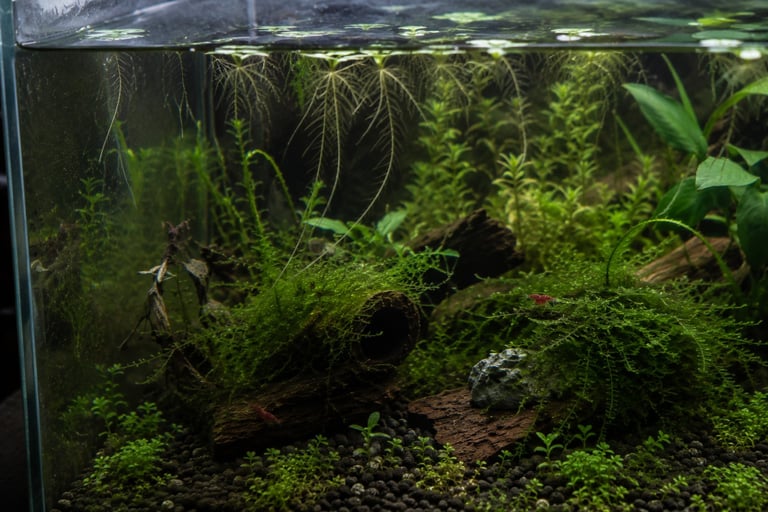
Cherry shrimp commonly become shy and difficult to spot after a water change. In heavily planted aquariums, they often retreat into moss, under driftwood, and among dense vegetation until conditions feel familiar again.
Shrimp have personalities, but they're also prey animals. Their survival instincts are incredibly strong. When something changes in the environment, their first response is often: "Find cover."
Hiding can simply be a protective behavior. This is why shrimp often disappear into moss, plants, driftwood, leaf litter, and small crevices. Many times, they reappear a few hours later as if nothing happened.
Key takeaway: Hiding is a natural protective instinct, not necessarily a sign of distress. Heavily planted tanks with plenty of cover often make shrimp feel safer.
Want to build a shrimp tank where your colony feels safe and stress-free? Download the free Tank Stability Checklist and learn what makes shrimp feel secure.
This is probably the biggest reason shrimp hide after water changes. A water change can alter water movement, temperature, smells and dissolved compounds, flow patterns, and overall environmental conditions. To us, it may seem minor. To a shrimp, it can feel significant.
Because shrimp prefer stability, even small changes can make them temporarily cautious. This doesn't necessarily mean the water change was harmful. It simply means they noticed it.
Key insight: This is often temporary. If the colony otherwise seems healthy and shrimp reappear within a few hours, there's likely nothing to worry about.
Shrimp love cover. The moment something changes, many of them instinctively seek shelter. You may find them under driftwood, deep in moss, behind sponge filters, inside dense plants, or beneath leaf litter.
This behavior can actually be a good sign. It means the shrimp are using the environment the way nature intended. Well-planted aquariums often make shrimp feel safer because they have somewhere to retreat. This is one reason heavily planted shrimp tanks tend to have calmer livestock. Also read: 10 foods cherry shrimp eat in mature planted aquariums.
What you need to know: If your shrimp have plenty of hiding spots and use them after a water change, your aquascape is doing its job. That's a sign of a well-designed shrimp habitat.
Shrimp are creatures of habit. They often spend their days grazing the same areas, following the same paths, and returning to favorite spots. A water change can interrupt these routines. The flow changes. The environment changes. Their normal grazing areas may temporarily feel different.
Some shrimp simply decide to wait things out until everything feels familiar again. Many hobbyists interpret this as a problem when it's actually just an adjustment period.
Key insight: Shrimp don't need perfect conditions — they need consistent conditions. A predictable routine matters more than chasing ideal parameters.
Want calmer shrimp that bounce back faster after maintenance?
Download our free checklist and learn the key factors that make shrimp feel secure in their environment.
Download Free Stability ChecklistThis one surprises a lot of beginners. Shrimp often become secretive before molting. They may hide more, become less active, spend time in cover, and avoid open areas.
If a shrimp was already close to molting, a water change may simply coincide with that timing. The water change didn't necessarily cause the molt — it may have simply happened around the same time. Because shrimp are vulnerable after shedding their exoskeleton, hiding behavior is completely normal.
Key insight: Molting and hiding often go together. If you find empty exoskeletons and your shrimp reappear after a day or two, this was likely the cause.
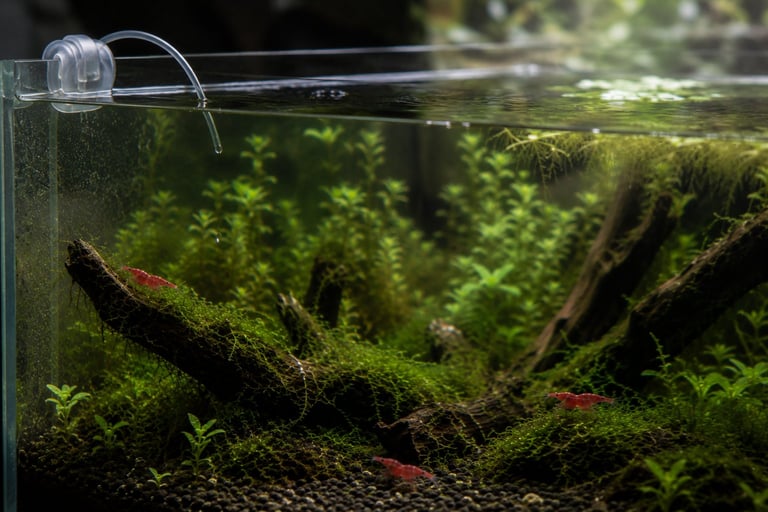
Mature planted shrimp aquariums often become more resilient over time. Slow, gentle water additions and stable routines can help make maintenance less stressful for cherry shrimp.
New aquariums can sometimes make shrimp more sensitive to changes. New tanks often have less biological maturity, less biofilm, fewer natural food sources, and less stable routines. Because of this, shrimp may react more dramatically to water changes. See also: why your aquarium never grows enough biofilm for shrimp.
Many hobbyists notice that as their aquarium matures, shrimp become much calmer. Older ecosystems often feel more predictable — and shrimp tend to love predictability.
What you need to know: Don't be discouraged if shrimp seem skittish in a newer tank. This behavior often improves as the ecosystem matures and stabilizes over time.
This is one of the reasons mature aquariums can become easier to maintain. Over time, healthy ecosystems develop rich biofilm, healthy plant growth, greater biological diversity, and more stable conditions.
As the aquarium matures, the shrimp often appear more comfortable, more confident, less reactive, and more predictable. Many experienced shrimp keepers find that their older tanks seem to bounce back from maintenance much more easily. The ecosystem itself becomes more resilient. Read more: why some shrimp tanks get easier to maintain every month and 7 things every self-sustaining aquarium has in common.
Think of it this way: a mature tank is like an old, comfortable home. A new tank is like moving into a place where the floorboards still creak and nothing feels settled yet. Shrimp notice the difference.
The moment their shrimp disappear, many hobbyists panic. Then they start doing another water change, moving decorations, testing everything repeatedly, buying products, and chasing solutions.
Ironically, these extra interventions can create even more instability. Instead, ask yourself:
Key insight: Most of the time, patience is the best solution. The urge to "do something" often creates more problems than it solves.
When shrimp hide, patience beats panic. Get the free checklist to understand what to monitor instead of guessing.
These behaviors are common and often not emergencies.
It's worth investigating if:
The entire colony remains hidden for extended periods
Multiple unusual behaviors occur together
Shrimp seem extremely stressed or lethargic
The aquarium recently experienced significant changes
Again, context matters. Shrimp behavior usually tells a story. The goal is to observe rather than immediately assume the worst.
Key takeaway: Isolated hiding after a water change is rarely cause for alarm. Multiple symptoms together warrant closer observation.
Many experienced shrimp keepers focus on one thing: consistency. Shrimp generally appreciate predictable routines, stable environments, gradual changes, and well-established ecosystems.
The more mature and stable your aquarium becomes, the easier it often is for shrimp to handle routine maintenance. This is one reason self-sustaining aquariums are so appealing — the ecosystem itself becomes more resilient over time.
Pro tip: Match the temperature of your new water to the tank, add it slowly rather than all at once, and avoid making multiple large changes at the same time.
Mature planted shrimp aquariums often become more resilient over time. Slow, gentle water additions and stable routines can help make maintenance less stressful for cherry shrimp.
These are often signs that your aquarium is moving toward long-term stability.
If your cherry shrimp hide after a water change, try not to assume the worst. In many cases, they're simply reacting to change, seeking cover, following natural instincts, preparing to molt, or adjusting to temporary differences.
Healthy shrimp do strange things sometimes. And hiding after a water change is one of the most common behaviors beginners notice. The goal isn't to eliminate every reaction — the goal is to build an aquarium that becomes increasingly stable and predictable over time. Because as ecosystems mature, shrimp often become more comfortable. And comfortable shrimp usually make keeping an aquarium much more enjoyable. See also: 9 reasons baby cherry shrimp disappear (and when to worry) and how long it takes cherry shrimp to establish a colony.
The best shrimp keepers aren't the ones who never see hiding behavior — they're the ones who understand it and don't overreact.
Want to build a shrimp tank with calmer shrimp, richer biofilm, and a more stable ecosystem? Download our Free Self-Sustaining Tank Stability Checklist and learn the key factors successful aquarists monitor when creating stable ecosystems. The checklist helps you identify common stability issues before they lead to shrimp stress, disappearing shrimp, algae outbreaks, or recurring aquarium problems.
Get Your Free ChecklistNo spam. Just a helpful guide for shrimp keepers.
Common questions about cherry shrimp hiding after water changes
Most cherry shrimp reappear within a few hours after a water change. In some cases, they may remain hidden for up to 24 hours, especially if the water change was larger than usual or if the tank is relatively new. If your shrimp haven't reappeared after 24-48 hours and you notice other concerning signs, it's worth investigating further. But in most cases, patience is all that's needed.
No — don't stop water changes entirely. Instead, focus on making them more consistent and gradual. Match your new water temperature to the tank, add it slowly, and maintain a predictable schedule. Over time, as your aquarium matures and shrimp become accustomed to the routine, you'll likely notice less hiding behavior.
A properly performed water change should not kill cherry shrimp. However, large, sudden changes in temperature, pH, or water chemistry can stress shrimp significantly. Using dechlorinated water that matches the tank's temperature is essential. If shrimp die after a water change, it's usually due to a parameter mismatch, chlorine/chloramine exposure, or an existing underlying issue that the water change exacerbated.
Look for clues beyond hiding behavior. If shrimp are simply hiding, you'll eventually spot them moving among plants or coming out to graze. Dead shrimp often turn pinkish and may be found on the substrate or filter intake. If you see no bodies, no unusual behavior besides hiding, and your water parameters are stable, the shrimp are most likely just being cautious.
There can be subtle differences between varieties, but generally all Neocaridina davidi varieties (Cherry Red, Blue Dream, Yellow Goldenback, Orange Sunkist, Green Diamond, Black Rose, Snowball, Red Rili, etc.) exhibit similar hiding behaviors. Individual shrimp personalities, tank maturity, and the amount of available cover tend to matter more than color variety.
Baby shrimp are more sensitive to environmental changes than adults. They're also much smaller and harder to spot, so they may be hiding in plain sight. Shrimplets rely heavily on biofilm and microorganisms for food, and a water change can temporarily disrupt these food sources. As your tank matures and develops richer biofilm, shrimplets typically become more resilient.
Continue learning about cherry shrimp behavior and aquarium stability with these expert guides
Learn three common mistakes that can cause cherry shrimp stress, including instability, constant changes, and overly sterile environments.
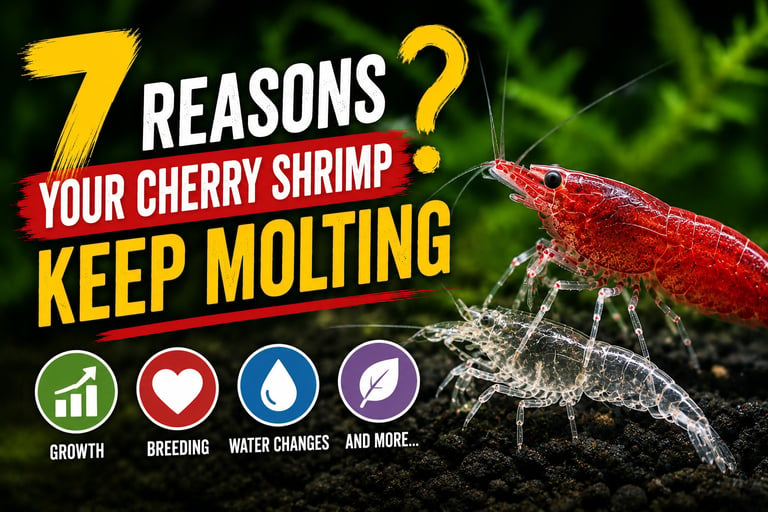
Finding empty shrimp shells everywhere? Learn why your cherry shrimp keep molting, when frequent molting is normal, and when it's worth paying attention.
The best shrimp tanks aren't the ones with the most expensive equipment — they're the ones where the ecosystem feels predictable. Our free checklist shows you what to focus on.
Spot stress triggers before shrimp react
Build a more resilient ecosystem
Reduce maintenance surprises
Free guide. No spam. Just practical shrimp keeping advice.